Journal · Explainer · 4 min read
How long should earbud batteries last?
Two numbers matter: hours per charge today, and how many charges before they shrink.
When they were new, your earbuds lasted the whole Delhi to Mumbai flight. Eighteen months later they give up before the meal cart arrives. Is that normal ageing, or did you get a bad pair?
Short answerIt is normal. Earbuds use very small lithium-ion cells, around 45 mAh in a typical design, and Battery University puts small wearables at about 300 charge cycles. A daily, heavy user can notice shorter playback within one to two years. Heat, full charge for long periods and deep drains speed this up; cool, moderate use slows it down.
The numbers: hours per charge and cycles per life
Start with size. Qualcomm's white paper on true wireless technology describes a reference earbud design with a 45 mAh battery in each bud, supporting up to 9 hours of playback. For comparison, Samsung lists the Galaxy S25 Ultra's battery at 5,000 mAh, more than 100 times larger.
Brand figures show what new earbuds deliver. Apple's AirPods Pro 3 specifications list up to 8 hours of listening with noise cancellation on, and up to 24 hours with the charging case. Apple notes these come from its own tests at 50% volume, and that actual life depends on settings and use.
Now the lifespan. Battery University states that consumer lithium-ion is typically specified at 300 to 500 cycles, that small wearable batteries deliver about 300 (its 2020 figure), and that modern smartphones are specified at 800 or more. Its storage data shows why heat matters: a cell kept at 25 °C and full charge keeps about 80% of capacity after a year, while one at 40 °C and full charge keeps about 65%.
Put those together. If you drain and refill your earbuds once a day, 300 cycles is roughly ten months of use. Most people use less than a full cycle a day, and partial cycles count as fractions, so a typical owner stretches that over a longer period. Apple's own service policy reflects the reality: its AirPods repair page says normal battery wear is not covered by the standard warranty, and under AppleCare it replaces the battery if capacity drops below 80%.
| Battery | Typical cycles |
|---|---|
| Small wearables, such as earbuds | About 300 |
| Consumer lithium-ion | 300 to 500 |
| Modern smartphones | 800 or more |
Source: Battery University
Capacity %
Source: Battery University storage table
Why tiny batteries age faster
Every charge cycle causes small, permanent changes inside a lithium-ion cell, and capacity slowly falls. A large phone battery spreads a day's use across a big reserve, so it rarely goes from full to empty. An earbud cell has no such margin. A two-hour commute may use most of it, every day, so it racks up full cycles quickly.
Earbuds also sit in a warm place. They live in your ears at body temperature, then go into a case that is often full and charging, in a pocket or bag. Battery University calls a full battery at high temperature the worst condition for lifespan.
Think of two water tanks feeding the same tap. The building's big tank barely moves in a day; the small one on the bathroom geyser empties and refills every morning. The small one wears its float valve out years sooner, through no fault of its build.
Signs the battery is ageing
Playback time per charge drops steadily, rather than suddenly. One bud dies noticeably earlier than the other, often the one you use alone for calls. The case needs charging more often. A sudden drop to minutes, swelling or heat in the case are not normal ageing; stop using them.
How to stretch the years
Three habits slow the fade. Keep the case out of hot places, since Battery University's data shows heat and a full charge together age cells fastest. Top up whenever convenient rather than running the buds flat, because shallow cycles wear less than full ones. And use one bud at a time for calls when you can, alternating sides, so the wear is shared.
If playback has already shortened, a lower volume and switching off features you do not need, such as noise cancellation in a quiet room, buy back time per charge. Apple's own playback figures are measured at 50% volume, which is a sensible daily target for both battery and hearing.
What to check before you buy
Look at playback hours per charge with noise cancellation on, not only the total with the case. The per-charge figure is the one that shrinks first.
Check the test conditions in the footnotes. Brand figures are usually measured at 50% volume; louder listening shortens them.
Ask about battery cover in the warranty. Many warranties exclude normal battery wear, so know what you are getting.
Look for a quick-charge figure, such as 5 minutes for 1 hour of playback, as Apple quotes for AirPods 4 and AirPods Pro 3. It makes an ageing battery easier to live with.
Myth corner
Myth: you should fully drain earbuds before charging to keep the battery healthy. Fact: lithium-ion has no memory effect. Battery University notes that partial discharges and partial charges reduce stress and extend life, so topping up in the case is kinder than running them flat.
The right one for you
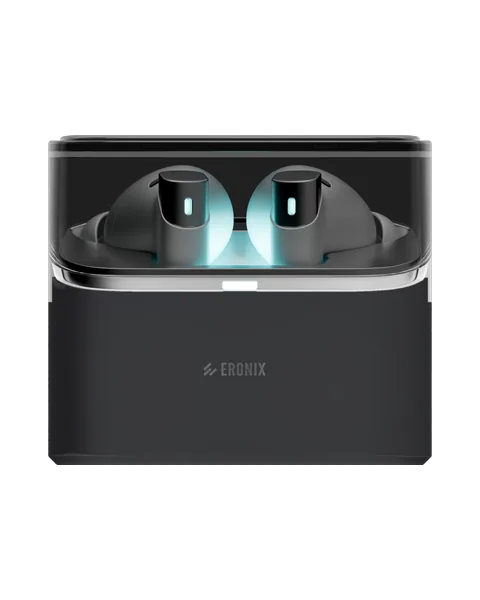
Batteries age more gently when each day's listening uses a smaller share of what they hold, so reserve matters as much as the headline hours. The Euphoria lists 5.5 hours of playback on a charge. It is matched to iPhone and Galaxy S, with 45 dB noise cancelling for the cabin.
Step by step
- Note the per-charge playback hours with noise cancellation on.
- Read the footnote for the test volume and conditions.
- Top up in the case rather than running the buds flat.
- Keep the case out of hot cars and direct sun.
- Check the warranty's terms on battery wear.
Questions people ask
How many years do wireless earbuds last?
It depends on use. Small wearable batteries deliver about 300 cycles according to Battery University. A heavy daily user who drains them fully each day can see noticeable fade in about a year; lighter users often get two to three years before playback time becomes inconvenient. Heat shortens this.
Can earbud batteries be replaced?
Usually not by the owner. The cells are small and sealed inside each bud. Some brands offer a battery service or a replacement bud for a fee; Apple, for example, replaces AirPods batteries under AppleCare if capacity drops below 80%. Check the brand's service policy before buying.
Why does one earbud die faster than the other?
One bud often does more work. It may handle the microphone for calls, act as the main link to the phone, or be used alone more often. Over time it completes more cycles and its battery ages faster. Alternating which bud you use alone can even out the wear.
Is it bad to keep earbuds in the case all the time?
Not by itself. The case keeps them charged and protected. The concern is heat: a full case left in a hot car or in direct sun holds the cells at full charge and high temperature, the combination Battery University identifies as worst for lifespan. Keep the case somewhere cool.
Sources
- The Evolution of True Wireless Technology (Qualcomm white paper) · 2020
- BU-808: How to Prolong Lithium-based Batteries (Battery University) · accessed 22 Nov 2026
- AirPods Pro technical specifications (Apple) · accessed 22 Nov 2026
- AirPods technical specifications (Apple) · accessed 22 Nov 2026
- AirPods repair and service (Apple Support) · accessed 22 Nov 2026
- Galaxy S25 Ultra specifications (Samsung New Zealand) · accessed 22 Nov 2026
Battery Management
Capacity is chemistry; longevity is software.
Read →Explainer · 5 min readWhat ANC can and cannot block
Why the bus engine fades but the conductor's voice does not, and what to check.
Read →Explainer · 5 min readLDAC, aptX, AAC: which codec your phone really uses
The logo on the earbud box is a promise. Your phone decides whether it is kept.
Read →Explainer · 5 min readCan a 100 W charger damage your phone?
The watts on the brick are a ceiling, not a push. Heat is what your battery remembers.
Read →Explainer · 6 min readNew 14-inch MacBook Pro with M6: charger and cable guide
No charger in the box in India. Here is the wattage and the cable that unlock fast charge.
Read →Explainer · 5 min readWhat to pack for a work trip: the charging and carry kit
One charger, two cables, one power bank: a kit built for the day, not the brochure.
Read →