Journal · Explainer · 5 min read
What ANC can and cannot block
Why the bus engine fades but the conductor's voice does not, and what to check.
You switch on noise cancelling on a Kolkata bus. The engine drone fades away, yet the conductor calling out the stops, and the horn outside, still come through. The headphones are not broken. They are doing exactly what ANC can do, and nothing it cannot.
Short answerActive noise cancelling removes steady, low-pitched sound such as engine drone, fan hum and road rumble by playing an opposite sound wave. It is weak against higher, sudden sounds such as voices, horns and clatter. Those are blocked mainly by the ear-tip or ear-cup seal. Common ANC reduction is 20 to 40 dB, per SoundGuys.
How much noise ANC removes, in decibels and hertz
SoundGuys calls 20 to 40 dB of reduction common, which brings background noise down to roughly a quarter to a sixteenth of its original level. It also notes that no design reaches total cancellation.
The catch is frequency. A peer-reviewed study by Sen M. Kuo and colleagues, published in Applied Sciences in 2018, tested three commercial ANC products alongside prototypes. In its tone test, the two headphones stopped reducing noise above about 1,000 Hz and 1,500 Hz, and the in-ear model above about 2,200 Hz.
The same study shows how much the physical seal matters. In a test with recorded MRI scanner noise, the in-ear model gave 15 to 25 dB of passive reduction from 500 to 3,200 Hz, simply from blocking the ear canal. Its active circuit added 5 to 10 dB below 1,000 Hz, but only 2 to 5 dB in the 1,100 to 3,000 Hz band. Both commercial headphones made things worse in the upper mid range, adding up to about 5 dB of noise between 900 and 3,200 Hz.
What does 20 dB mean in practice? Apple's support page for its earbud hearing protection feature works one example: 100 dBA of surrounding noise, minus 20 dB of attenuation, leaves an estimated exposure of 80 dBA. Apple cites the World Health Organization view that 80 dBA is safe for adults for up to 40 hours a week. Apple also says the feature is not designed for sustained sound above 110 dBA, or for sudden, extremely loud impulses such as fireworks or a jackhammer.
| Measure | Reduction |
|---|---|
| Typical ANC reduction | 20 to 40 dB |
| In-ear seal alone, 500 to 3,200 Hz | 15 to 25 dB |
| In-ear active circuit, below 1,000 Hz | 5 to 10 dB |
| In-ear active circuit, 1,100 to 3,000 Hz | 2 to 5 dB |
| Two commercial headphones, 900 to 3,200 Hz | Up to about 5 dB added noise |
Source: SoundGuys, accessed 22 Nov 2026; Kuo et al., Applied Sciences, 2018
Hz
Source: Kuo et al., Applied Sciences 8(7), 2018
How active noise cancelling works
Small microphones on the earcup or earbud sample the sound around you. A processor builds a mirror-image wave, its peaks where the noise has troughs, and plays it through the driver along with your music. When the two waves meet in your ear, they subtract.
There are three microphone layouts. Feedforward places the mic outside, where it hears noise early but is more prone to wind. Feedback places it inside the ear cup, where it hears what you hear and handles wind better, though SoundGuys says it is weaker at high frequencies. Hybrid uses both, for broader coverage, usually at a higher price.
Picture two people pushing a swing from opposite sides at the same moment. If their pushes match, the swing barely moves. That works for a slow, steady rhythm. It fails when someone else starts giving the swing quick, random taps, because nobody can match a push they cannot predict.
Why voices and horns get through
Two reasons. First, higher-pitched sound has a shorter wavelength. To cancel it, the sensor and the anti-noise would have to sit closer to the eardrum than current hardware can practically manage. Second, sudden sounds give the system no time. As Sonos explains, a horn or a baby's cry can be over before the headphones produce an opposing wave.
So voices, clatter and horns are mostly left to passive isolation, meaning the physical seal of tips, foam or cushions. A good fit does the high-frequency work that the electronics cannot.
Wind, dizziness and other side effects
Wind is a weak spot for feedforward designs, because the outer microphone is exposed to it. SoundGuys notes that feedback designs handle wind better, and hybrids combine the two.
A few listeners report dizziness, disorientation, headaches or nausea with ANC. SoundGuys describes one theory, that very low-frequency output stimulates the balance receptors in the inner ear. It suggests lowering the ANC level in the app, choosing a gentler model, or switching ANC off.
What to check before you buy
Test the seal first. Try every ear tip size in the box, and run the fit test in the companion app if there is one. Apple's own guidance says the tips should make a good seal with the ear canal for the best noise cancelling.
Test both kinds of noise in the store. Stand near the air-conditioner or a fan to judge low hum. Then listen to people talking nearby to judge the seal. Switch ANC on and off for each.
Ask which microphone layout it uses. If you ride a bike, walk on a windy road or travel by ferry, a feedback or hybrid design is less likely to suffer from wind.
Look for adjustable ANC levels. If strong cancelling leaves you dizzy or uneasy, a lower setting lets you keep most of the benefit.
Keep the microphones clean and uncovered. Apple notes that covered microphones can cause squeals, chirps and feedback, and that weaker bass or more background sound with ANC on can mean the earbuds need cleaning.
Myth corner
Myth: the best ANC creates complete silence. The Kuo study found commercial products stopped reducing noise above 1,000 to 2,200 Hz, and its two headphones even added noise in the upper mid range. What you hear as silence is mostly a quieter low end plus a good seal.
The right one for you
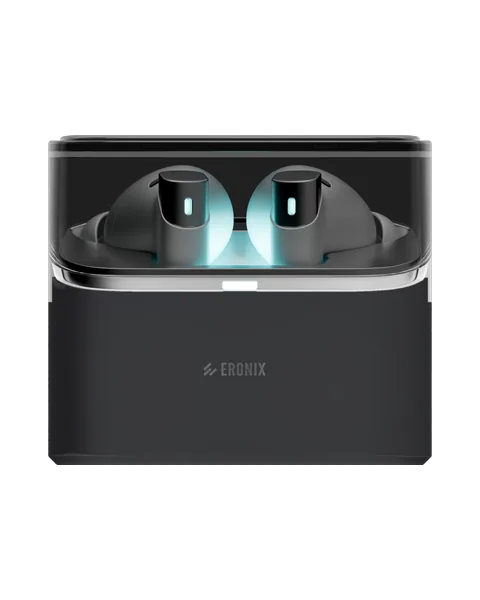
ANC earns its place against the steady drone of an engine or a cabin, and only with a good seal. The Euphoria lists ANC rated at 45 dB and 5.5 hours of playback on a charge. It suits iPhone and Galaxy S, with an IPX6 rating.
Step by step
- Try every ear tip or cushion size and run the app's fit test if one is offered.
- Listen near a fan or air-conditioner with ANC on, then off.
- Listen to nearby conversation to judge the passive seal.
- If you are often in wind, ask whether the ANC is feedforward, feedback or hybrid.
- Check the companion app offers adjustable ANC levels.
Questions people ask
Can ANC block people talking?
Only partly. Speech is higher-pitched and changes constantly, so the circuit struggles to match it. In a 2018 study in Applied Sciences, commercial ANC products stopped reducing noise above about 1,000 to 2,200 Hz. A tight ear-tip or ear-cup seal does more against voices than the electronics do.
Is ANC bad for your ears?
SoundGuys says ANC is generally not bad for your ears. By lowering background noise, it lets you listen at a lower volume, which helps avoid noise-induced hearing loss. A few people report dizziness or headaches. If that happens, SoundGuys suggests lowering the ANC level, choosing a gentler model or switching it off.
Why does noise cancelling sound worse in wind?
Feedforward ANC relies on a microphone on the outside of the earcup or earbud, and SoundGuys notes that this layout is more prone to wind and incidental noise. Feedback designs, with the microphone inside near the ear, handle wind better, and hybrid designs combine both microphones.
Is ANC better on earbuds or over-ear headphones?
The seal and microphone layout matter more than the format. In the Kuo study, the in-ear model gave 15 to 25 dB of passive reduction from 500 to 3,200 Hz from its seal alone, while both commercial headphones added a few decibels of noise in a similar range. Try both formats in the store.
Why does my ANC seem weaker than when it was new?
Apple advises that less bass or more background noise with ANC on can mean the earbuds need cleaning, and that covered microphones can cause squeals and feedback. Re-check the ear-tip fit too, since Apple says the tips should make a good seal with the ear canal for the best noise cancelling.
Sources
- SoundGuys: Active noise cancellation explained · accessed 22 Nov 2026
- SoundGuys: How noise cancelling headphones work · accessed 22 Nov 2026
- Kuo, S. M. et al., Development and Evaluation of Light-Weight Active Noise Cancellation Earphones, Applied Sciences 8(7), 1178 · 2018
- Wikipedia: Noise-cancelling headphones · accessed 22 Nov 2026
- Sonos: How do noise-cancelling headphones work? · accessed 22 Nov 2026
- Apple Support: If Active Noise Cancellation isn't working as expected on your AirPods · accessed 22 Nov 2026
- Apple Support: Use Hearing Protection with your AirPods Pro 2 or AirPods Pro 3 · accessed 22 Nov 2026
Active Noise Cancellation
Silence, computed in real time.
Read →Explainer · 1 min readHow active noise cancellation actually works
A race measured in fractions of a millisecond.
Read →Explainer · 5 min readLDAC, aptX, AAC: which codec your phone really uses
The logo on the earbud box is a promise. Your phone decides whether it is kept.
Read →Buying guide · 4 min readWhich charger does the Galaxy S26 Ultra need?
Sixty watts on the box. Here is what it takes to get it.
Read →Explainer · 1 min readWhat is Qi2, and why did wireless charging need magnets?
The standard that made wireless charging predictable.
Read →Explainer · 5 min readCan a 100 W charger damage your phone?
The watts on the brick are a ceiling, not a push. Heat is what your battery remembers.
Read →