Journal · Explainer · 1 min read
What is Qi2, and why did wireless charging need magnets?
The standard that made wireless charging predictable.
Published 20 August 2026 · Reviewed by 20 February 2027
Wireless charging had a dirty secret for a decade: most of the time, it was worse than it needed to be. Not because induction is a bad idea — because phones and pads rarely met in exactly the right place. A coil a few millimetres off-centre couples badly; energy that should have filled a battery left as heat. Every pad owner learned the ritual of the nudge.
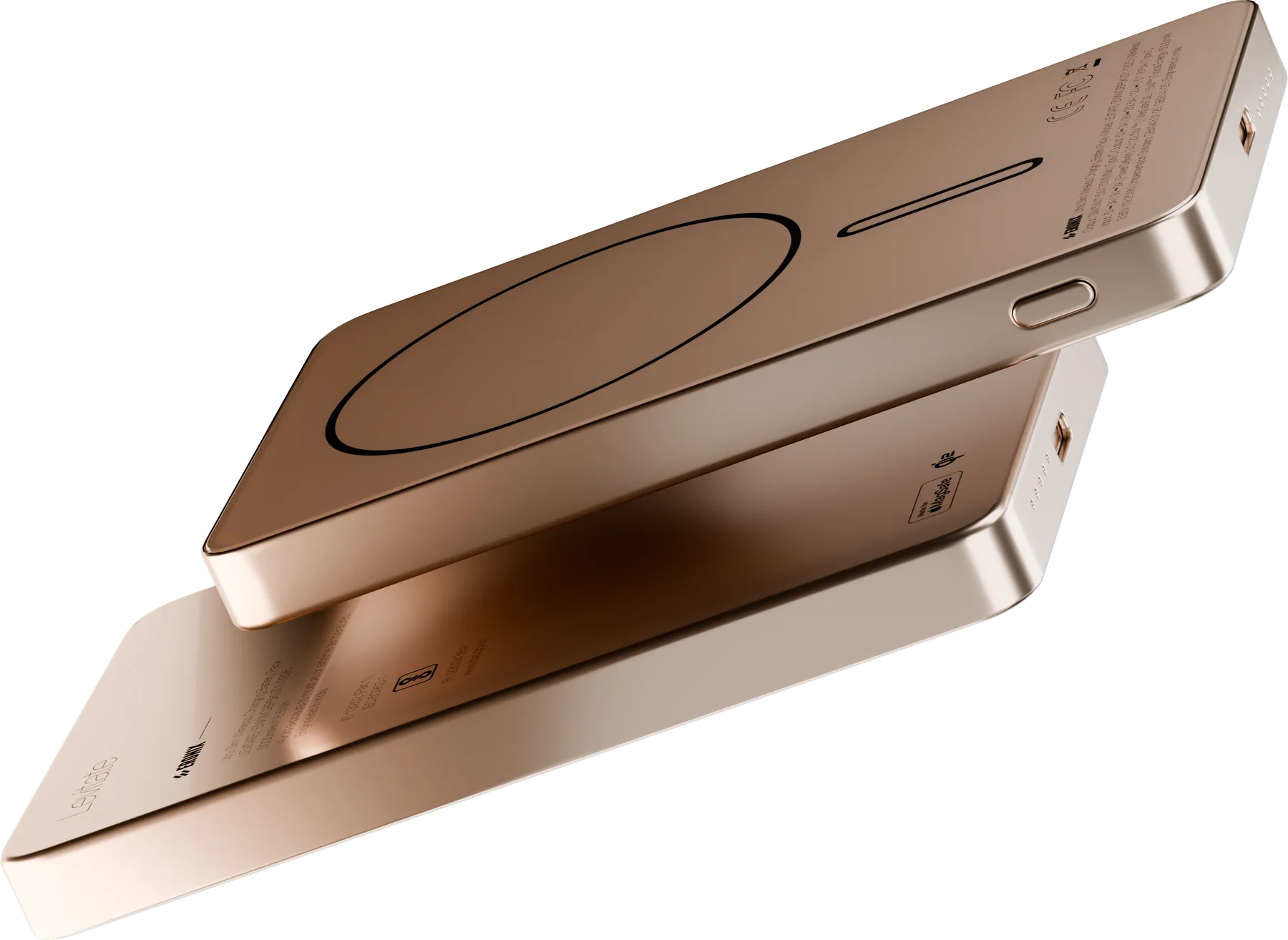
Qi2, the Wireless Power Consortium’s successor to the original Qi standard, fixes the problem mechanically. Its Magnetic Power Profile surrounds the charging coil with a defined ring of magnets, so any Qi2 device and charger align themselves — the phone clicks into the correct position and stays there.
Why alignment is the whole story
Inductive transfer efficiency falls off steeply with misalignment. Centre the coils and a large share of transmitted energy arrives; miss by a centimetre and the loss turns to heat, charging slows, and thermal protection may cycle the session on and off. Alignment was historically a user problem. Qi2 makes it a property of the hardware.
Magnets add a second, less obvious gift: attachment. Because the ring bears weight, a Qi2 battery can ride the phone itself — charging while both sit in a pocket. The standard quietly created a new accessory category.
What to check on a product page
Certification, stated plainly. Qi2 is a tested standard, not an aesthetic; magnets alone do not make a product Qi2. A trustworthy page states certification status explicitly — including when a product is still in the certification process. That is the standard ERONIX holds its own pages to.