Technology · Power
Magnetic Alignment
Position, made physical.
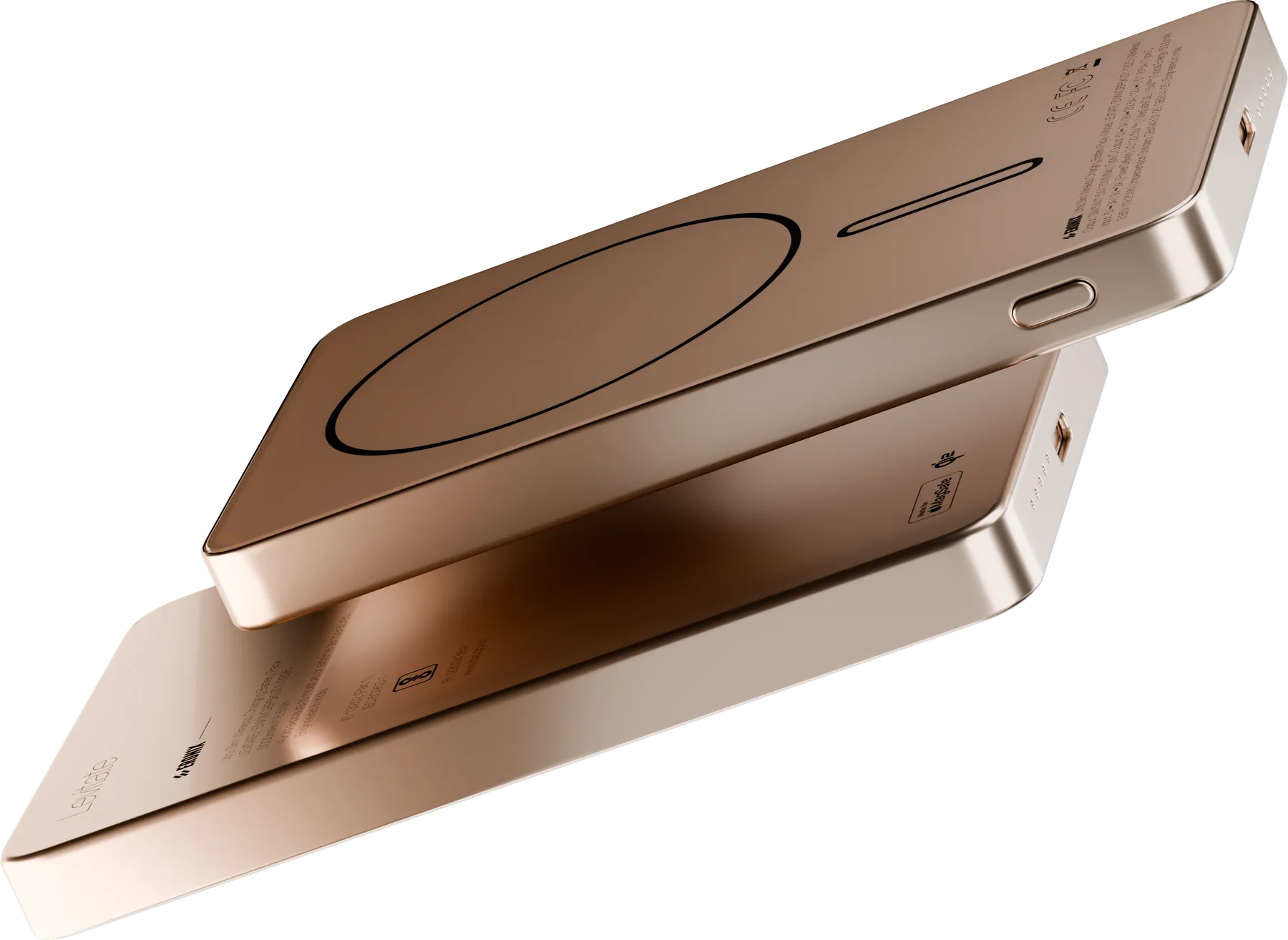
Magnetic alignment uses a ring of permanent magnets to place two objects in exactly the intended position — and to hold them there. In charging systems it guarantees coil alignment; in accessories it turns attachment itself into the interface.
Precision without attention
Good alignment usually costs attention: you look, you adjust, you check. A magnet array does this work physically — the fields guide the object over the last few millimetres and seat it precisely, every time, in the dark, one-handed. Design effort moves from instructing the user to shaping the field: magnet strength, polarity pattern and placement decide how attachment feels.
Holding force is a design decision
Too weak, and the accessory shears off in a pocket; too strong, and removal feels like a fight. The right force depends on mass, surface friction and use: a power bank that rides a phone in a jacket needs a very different figure from a desk mount. These are measurable, testable values — and worth publishing.
Honest limits
- Magnetic attachment depends on both sides: a phone or case without the ring provides nothing to hold.
- Strong magnet arrays must respect proximity guidance for cards and medical devices; responsible products document this.
Published 28 September 2026 · Reviewed by 28 March 2027 · All technology
GaN — Gallium Nitride
The semiconductor that let chargers shrink.
Read →PowerUSB-C Power Delivery
One connector, a negotiated contract.
Read →PowerPPS — Programmable Power Supply
Power Delivery, with a fine-adjustment dial.
Read →Explainer · 1 min readWhat is Qi2, and why did wireless charging need magnets?
The standard that made wireless charging predictable.
Read →Compatibility · 1 min readMagnetic power banks and cases: what fits what
The ring, the case, and the physics between them.
Read →