Technology · Power
GaN — Gallium Nitride
The semiconductor that let chargers shrink.
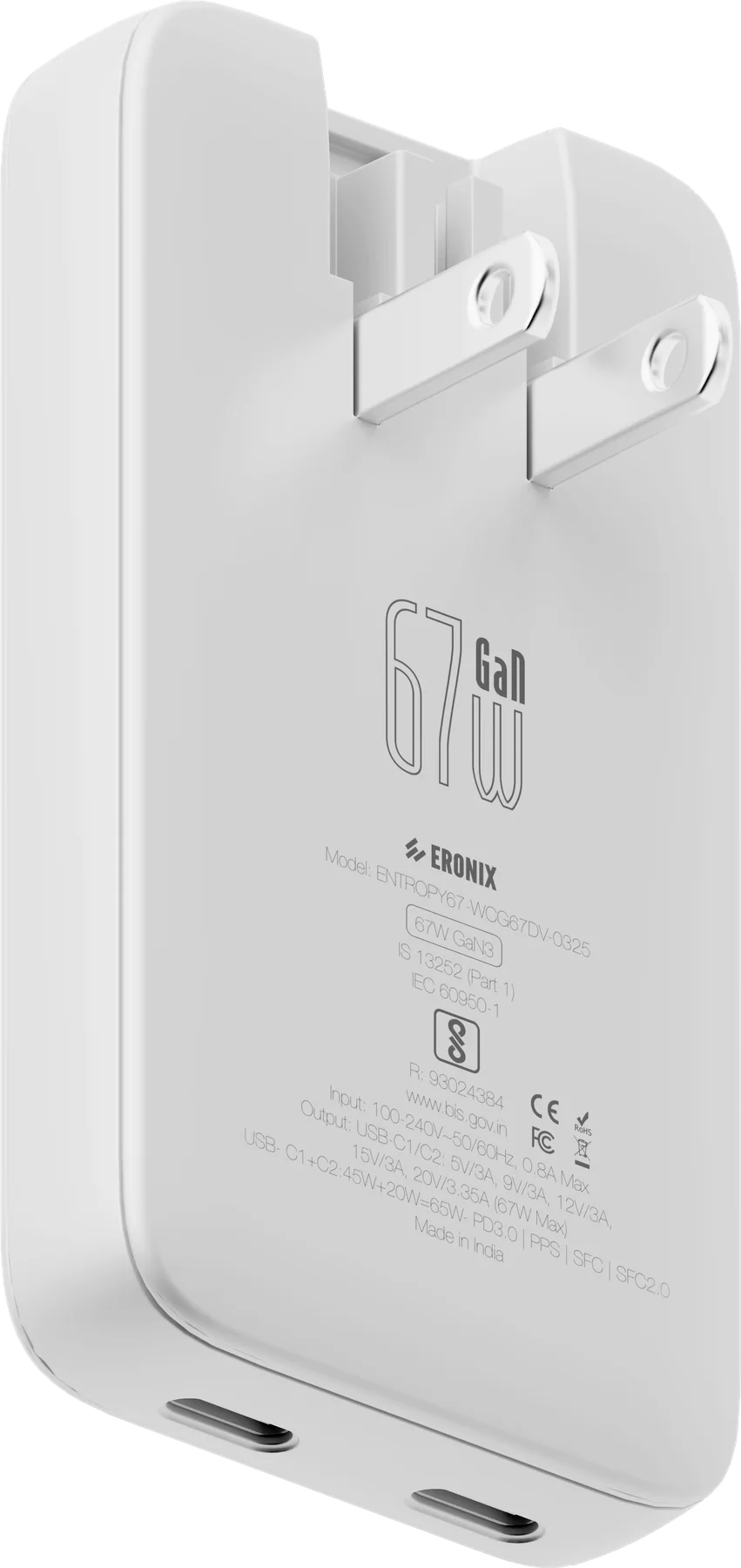
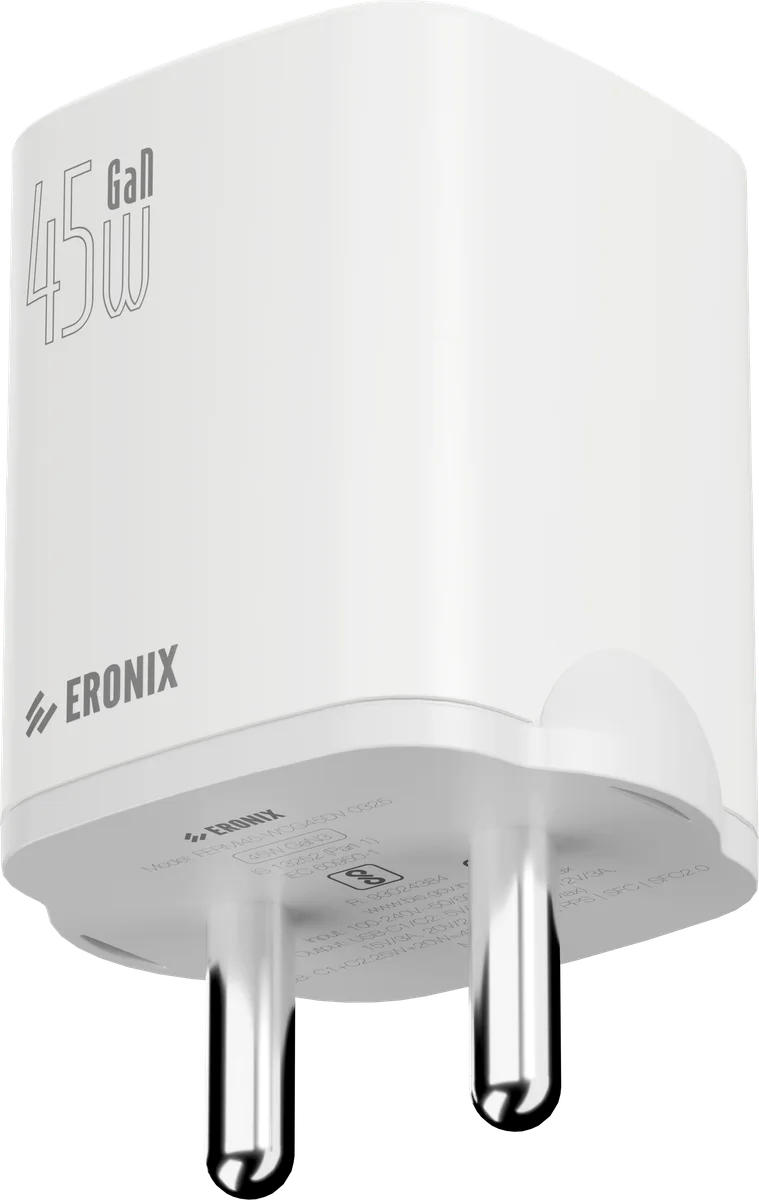
Gallium nitride (GaN) is a wide-bandgap semiconductor used in place of silicon in the switching stage of modern chargers. Because GaN transistors switch faster and conduct with lower losses, a GaN charger wastes less energy as heat — which is what allows high power output from a small enclosure.
Why silicon hit a wall
Every charger converts wall AC into the precise DC a device requests, by switching current on and off tens of thousands of times per second. Each switching event loses a little energy as heat, and silicon transistors — the industry default for decades — have a floor on how fast and how cleanly they can switch. To handle more power, silicon designs grew larger: bigger transformers, bigger heatsinks, the familiar laptop brick.
What changes with a wide bandgap
GaN’s crystal structure tolerates higher electric fields than silicon. In practice that means a GaN transistor can be physically smaller for the same voltage rating, switch at much higher frequencies, and lose less energy in each transition. Higher switching frequency shrinks the passive components around the transistor — transformers and inductors scale down as frequency goes up — so the whole power stage gets smaller together.
The result is the modern GaN charger: laptop-class output from an object that fits a palm, running cooler than the silicon brick it replaces.
What GaN does not do
GaN is an enabling component, not a quality guarantee. The charger around it still decides everything that matters: the converter topology, the thermal path from transistor to enclosure, the protection logic for over-current, over-voltage and over-temperature, and the honesty of the power-negotiation firmware. A badly designed GaN charger is simply a small bad charger.
Honest limits
- GaN improves efficiency; it does not remove heat. Sustained high output still requires deliberate thermal design.
- Not all GaN implementations are equal — “GaN” on a label says nothing about protection design or build quality.
- For low-power charging (a phone overnight), GaN’s advantages are real but modest; its case is strongest at high power in small volumes.
Published 28 September 2026 · Reviewed by 28 March 2027 · All technology
USB-C Power Delivery
One connector, a negotiated contract.
Read →PowerPPS — Programmable Power Supply
Power Delivery, with a fine-adjustment dial.
Read →PowerAVS — Adjustable Voltage Supply
The Power Delivery mode iPhone uses for its fastest charge.
Read →Buying guide · 1 min readHow much power does your laptop actually need?
Reading watts like a spec sheet, not a horoscope.
Read →Comparison · 1 min readGaN vs conventional chargers: what actually changed
Less mythology, more physics.
Read →