Technology · Power
USB-C Power Delivery
One connector, a negotiated contract.
USB Power Delivery (USB PD) is the negotiation standard that lets a USB-C charger and a device agree on voltage and current before serious power flows. It is why one good USB-C charger can serve a phone, a laptop and headphones — each device asks for what it can use, and the charger offers what it can supply.
The conversation before the current
When a USB-C device meets a PD charger, the two exchange messages over the cable’s communication line. The charger advertises its supported power profiles — combinations of voltage and current. The device selects one it can accept. Only then does the charger switch to that voltage. This handshake takes milliseconds and repeats whenever conditions change.
Why voltage steps matter
Power is voltage times current, and current is limited by connector and cable physics. To move more power, PD raises the voltage in defined steps — 5V for legacy loads, then higher fixed steps up to the levels laptops need. A device only receives a voltage it explicitly requested, which is what makes a powerful charger safe for a small device.
The cable is part of the system
Cables carry an electronic marker declaring their safe current rating; chargers respect it. This is why an under-specified cable silently limits charging: the negotiation honestly downgrades to what the cable can carry. High-power charging is always charger, cable and device agreeing — the weakest declaration wins.
Honest limits
- PD guarantees a safe agreement, not a fast one: a device receives only what it is designed to accept.
- Real charging speed also depends on the device’s battery state and temperature — negotiation is the ceiling, not the promise.
- Proprietary fast-charge systems exist alongside PD; a PD charger serves them at standard rates, not their proprietary peaks.
Published 28 September 2026 · Reviewed by 28 March 2027 · All technology
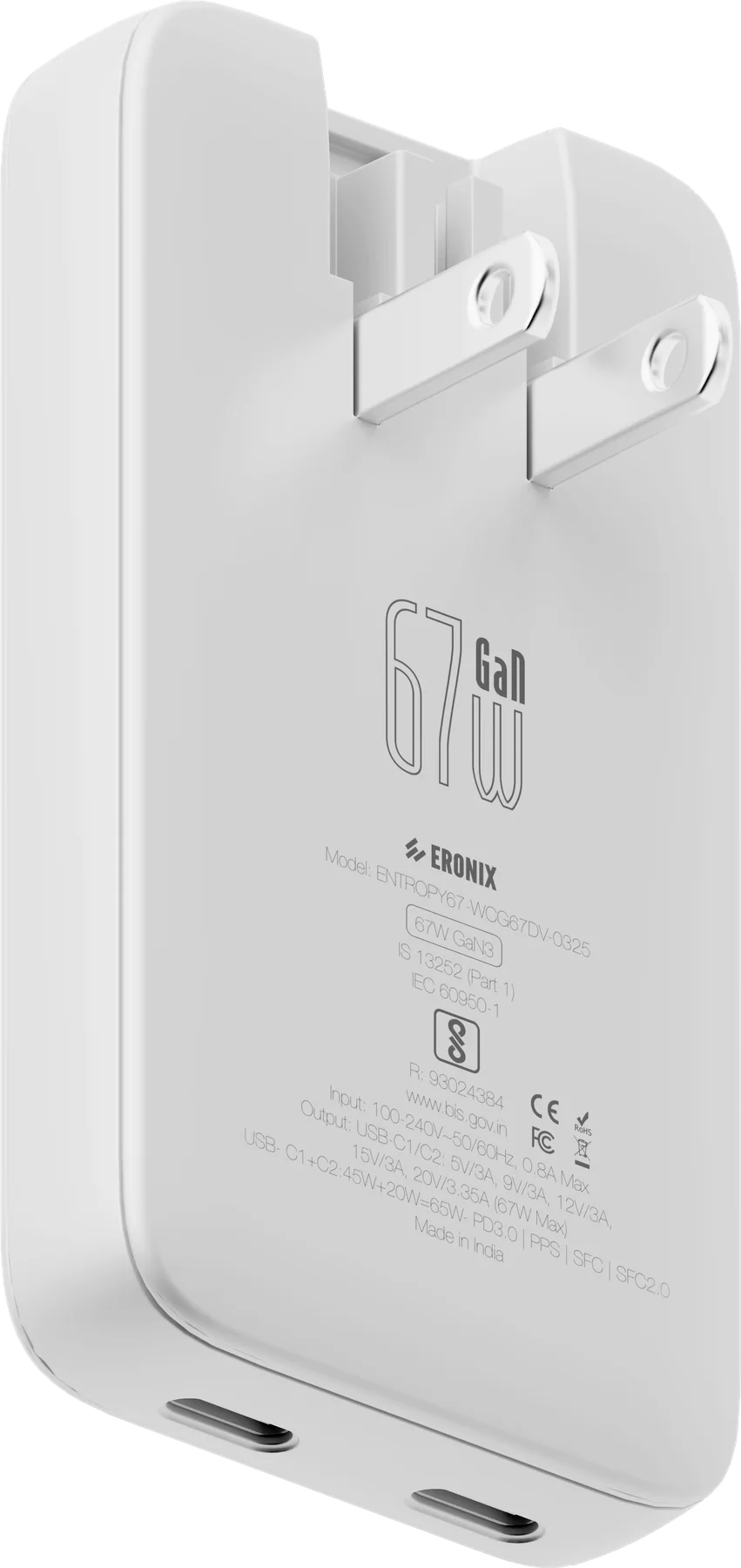
Entropy67
67 W GaN3, 14 mm thin, two USB-C ports. iPhone 18 to 50% in 15 minutes.
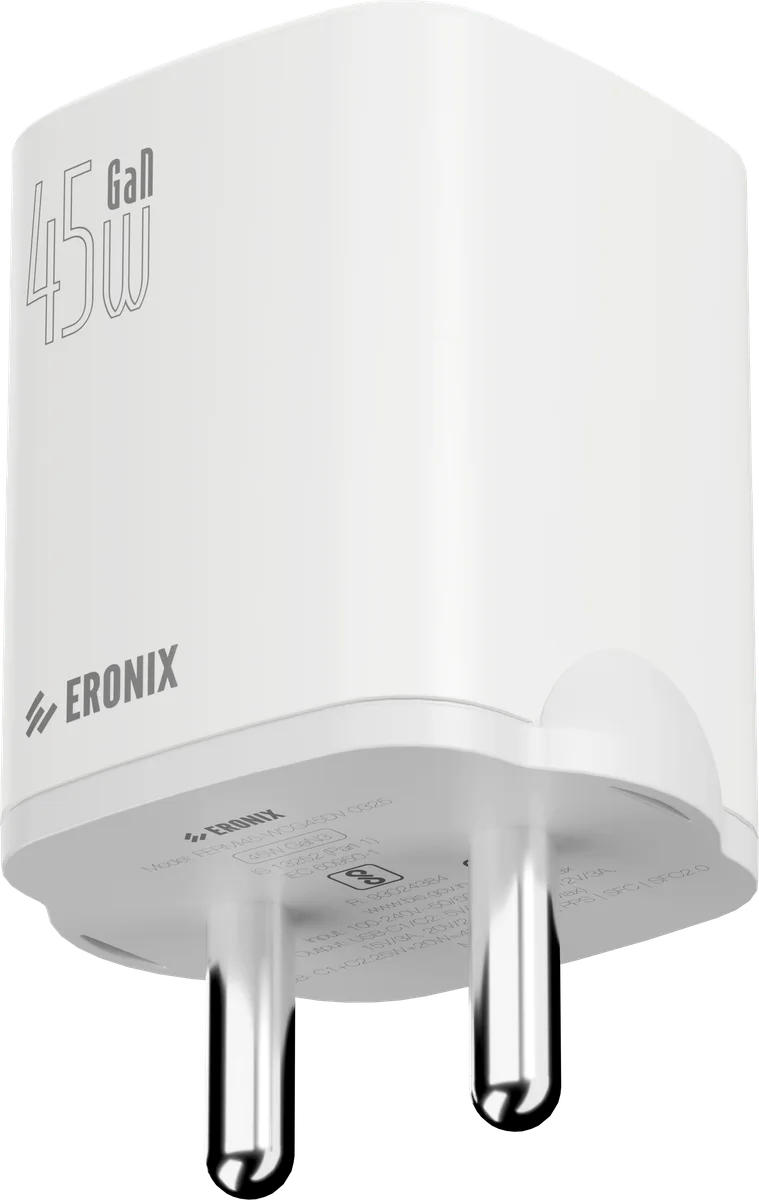
Fermi Series
GaN3 adapters at 30, 35, 45 and 65 W. One or two USB-C ports, PD 3.0 with PPS.
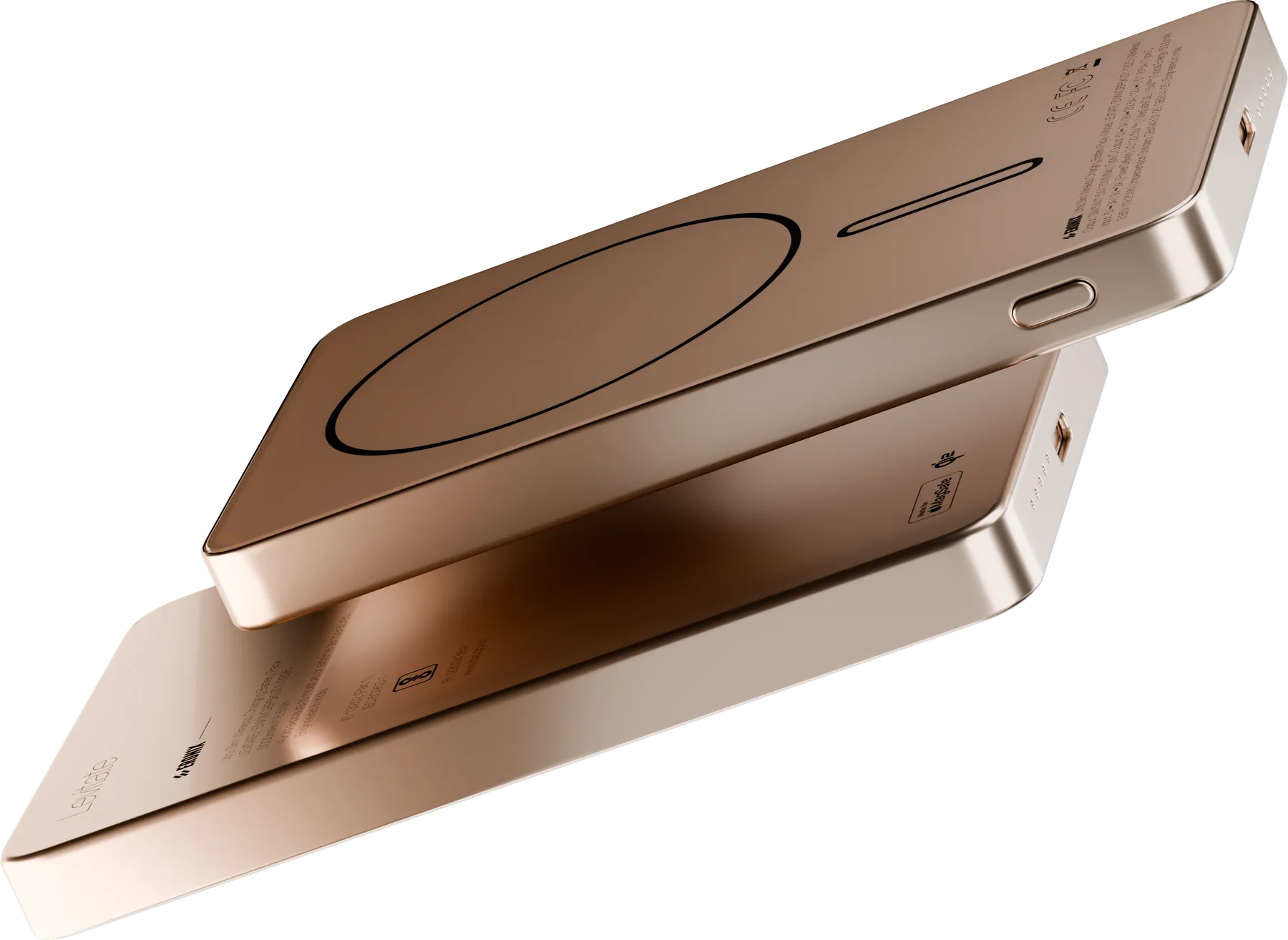
Levitate
5,000 mAh in 8 mm of aluminium and glass. Qi2 magnetic, 15 W wireless, 27 W USB-C.
GaN — Gallium Nitride
The semiconductor that let chargers shrink.
Read →PowerPPS — Programmable Power Supply
Power Delivery, with a fine-adjustment dial.
Read →PowerAVS — Adjustable Voltage Supply
The Power Delivery mode iPhone uses for its fastest charge.
Read →Buying guide · 1 min readHow much power does your laptop actually need?
Reading watts like a spec sheet, not a horoscope.
Read →Buying guide · 1 min readChoosing a USB-C charger: a short, honest checklist
Five checks that outlast any marketing cycle.
Read →