Technology · Audio
Battery Management
Capacity is chemistry; longevity is software.
Every portable ERONIX product lives on lithium cells, and every lithium cell ages. Battery management is the electronics and firmware that charge safely, report honestly, and slow ageing — deciding how fast to fill, when to stop, and how to treat a cell that will be asked to work for years.
What ages a cell
Heat, time at full charge, and deep discharge are the main accelerants of capacity loss. A cell held at 100% in a warm pocket ages faster than one cycled gently through the middle of its range. Good management systems shape charging around this: fast when useful, gentle near full, thermally supervised throughout.
Rated versus delivered
A battery’s rated capacity describes the cell; what you receive is less, spent on conversion and transfer losses — especially wireless transfer, where a meaningful fraction becomes heat between coils. Honest products publish both the rating and realistic delivered figures with their conditions, because the gap is physics, not deception — unless it goes unmentioned.
Small batteries, hard problems
Earbud cells are among the hardest battery engineering there is: tiny capacity, tight thermal envelopes, thousands of case cycles. Charge-rate discipline and cutoff behaviour decide whether year-two runtime resembles day-one runtime.
Honest limits
- All lithium batteries lose capacity with use; management slows the slope, nothing stops it.
- Runtime figures depend on volume, codec, ANC state and temperature — a single number is always a scenario.
Published 28 September 2026 · Reviewed by 28 March 2027 · All technology
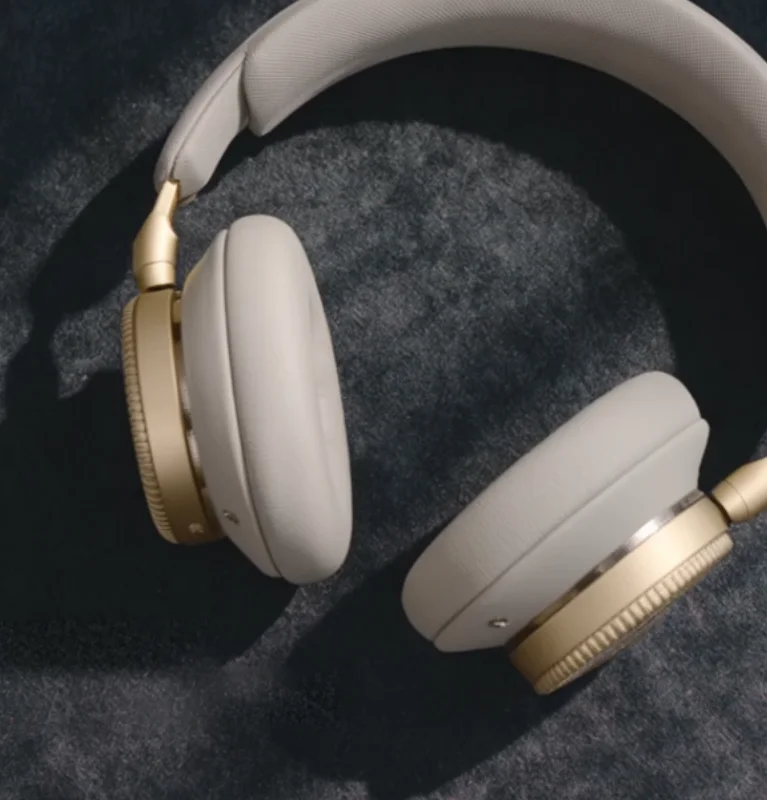
Aureum
Over-ear headphones with active noise cancellation, voiced to the Harman target.
Evoque
In-ear monitor voicing, ANC and spatial audio, in an aluminium flip case that charges on Qi2.
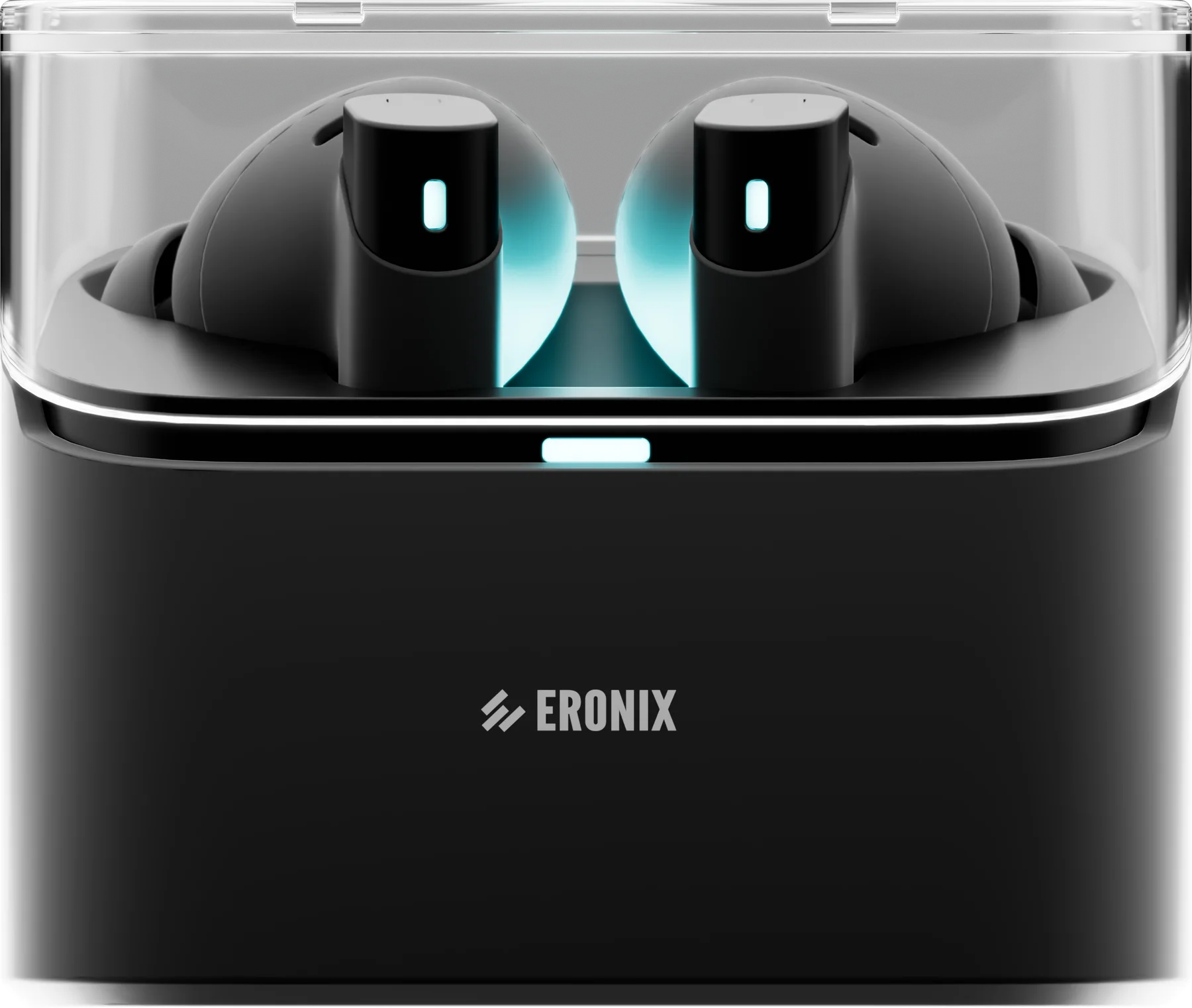
Euphoria
Quad-mic ANC to 45 dB, dual 13 mm drivers and four listening modes.
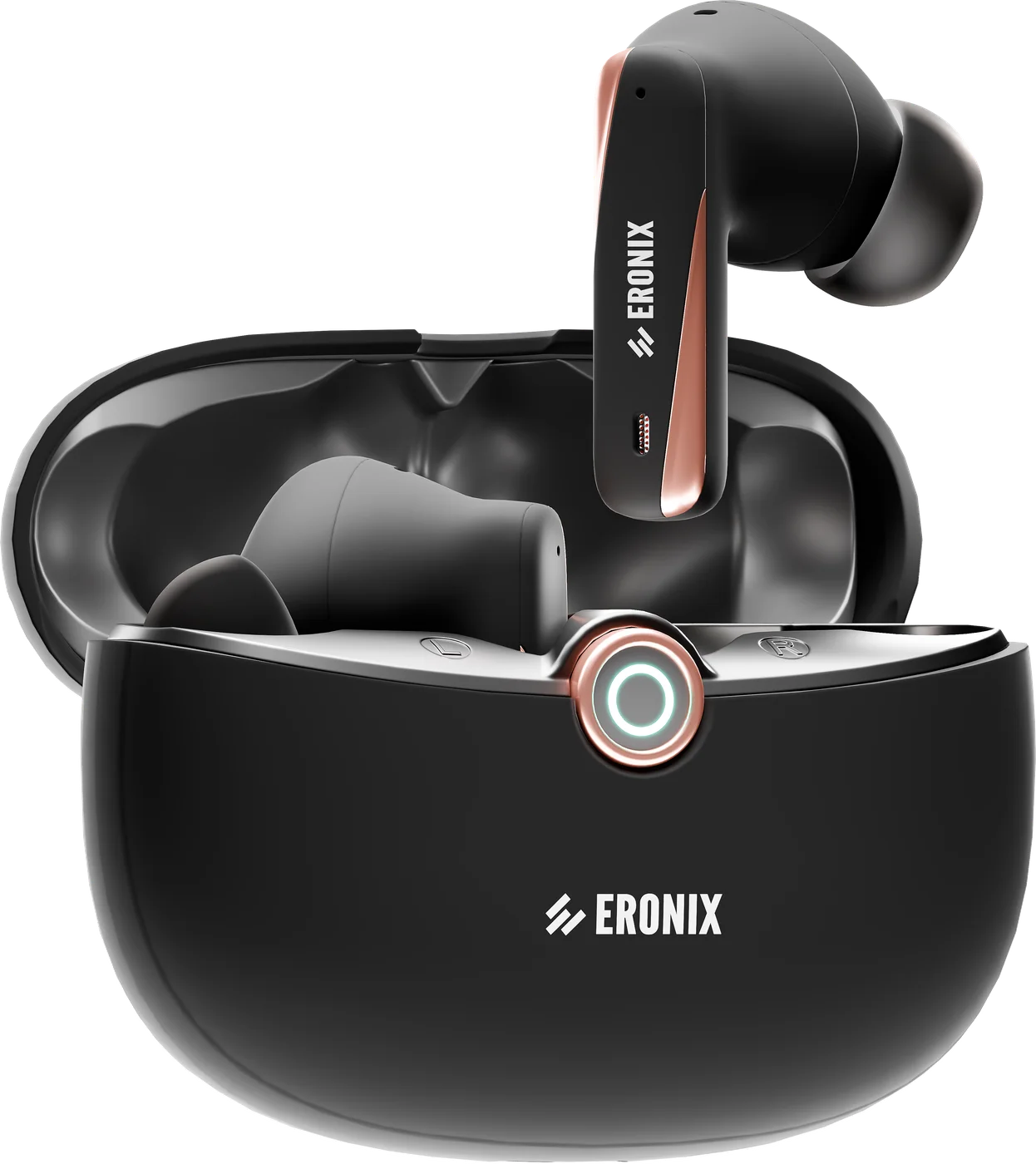
Jarvis
Four MEMS microphones and up to 35 dB ENC for calls. A lit halo on the case.
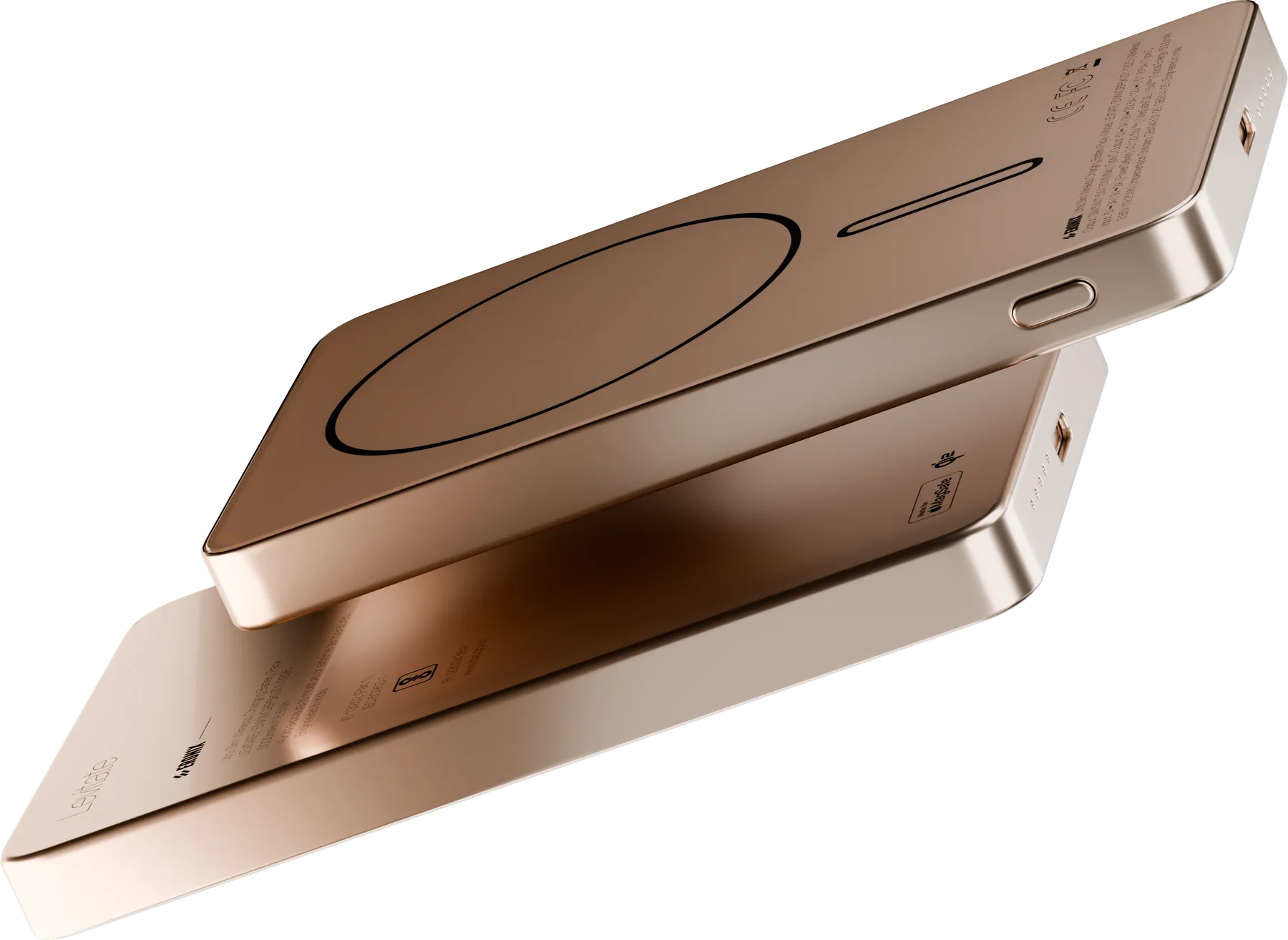
Levitate
5,000 mAh in 8 mm of aluminium and glass. Qi2 magnetic, 15 W wireless, 27 W USB-C.