Journal · Explainer · 4 min read
Is it fine to charge in the bathroom?
Your phone survives a splash. The charger, the socket and the wet floor do not.
The bathroom socket next to the mirror is often the most convenient one in an Indian flat: no one sits on it, and the phone can play music during a long shower. If your phone is rated IP68, what could go wrong?
Short answerIt is not a good habit. The phone's water rating covers the sealed phone, not the charger, the cable or the wall socket, which have no water protection at all. IP tests use fresh water, not steam or soapy water, and Apple rates iPhone for humidity without condensation. Charge outside the bathroom and bring a dry phone in.
What the water ratings really cover
Apple's technical specifications for the iPhone 16e list an IP68 rating under IEC 60529, for a maximum depth of 6 metres for up to 30 minutes. Apple adds that this resistance might decrease with normal wear, and it advises against charging an iPhone while it is wet.
The same specifications set the operating environment: 0 °C to 35 °C, and relative humidity of 5% to 95%, non-condensing. A bathroom after a hot shower is exactly where condensation happens, as you can see on the mirror. Cool glass and metal collect water from steam, and so can the inside edge of a charging port.
Wikipedia's summary of the IP code notes that standard IP testing uses fresh water, at fixed depths and durations, and that protection against other fluids, such as salt water, oils or solvents, is not covered by the rating. Shampoo, soap and hot steam are not what the test simulated, and the test makes no claim about them.
| Item | Water protection | Limit on file |
|---|---|---|
| iPhone 16e | IP68 | 6 m for up to 30 min, fresh water |
| iPhone operating range | Humidity 5% to 95% | Non-condensing; 0 °C to 35 °C |
| Wall charger | None | Connected to 230 V, 50 Hz mains |
| Cable | None | Replace if split or frayed |
Source: Apple Support; IP code (IEC 60529); WorldStandards, accessed 22 Nov 2026
How it works: two different risks in one room
The first risk is to the phone. A charging port with moisture inside conducts where it should not. Many phones detect moisture in the port and stop charging until it dries, which is a protective feature, not a fault. Pushing a cable into a wet port, or using a cable that has been splashed, can corrode the contacts over time.
The second risk is to you and the house. A wall charger is connected to mains, which in India is 230 V at 50 Hz, according to WorldStandards. It has no water seal; its vents and pin area are open to splashes and steam. Wet hands, a wet floor and a mains device within reach of water are a combination electricians design bathrooms to avoid.
Think of the phone as a sealed steel tiffin and the charger as a paper bag of hot food. The tiffin can sit in the rain. The bag cannot, however good its contents are. Charging joins the two with a cable, and the weakest one decides the risk.
Plugs add a third, quieter problem. WorldStandards notes that two-pin Type C plugs from imported chargers fit Indian Type D sockets but can sit loosely, which it calls sometimes unsafe. A loose plug in a damp room can arc at the pins, leaving black marks and heating the socket, long before anything visibly fails.
What fire services say about charging habits
Fire services stress charger habits more than locations, and their advice reads like a list of what a bathroom lacks. The London Fire Brigade says it attends an average of 24 fires a week started by chargers, batteries and cables, and advises against cheap counterfeit chargers and against overloading sockets. Honolulu's fire department advises using chargers approved for the device, replacing worn cords, and charging on a hard, non-flammable surface in a cool, airy spot.
A bathroom shelf beside a geyser, wet with condensation, meets almost none of those conditions.
A safer routine that keeps the music
Charge the phone in the bedroom or hall before the shower. A short top-up on a fast charger usually covers a long shower's music and more.
Leave the phone outside the wet zone, on a dry shelf by the door, or play music through a speaker placed outside the bathroom door.
After the shower, let the phone warm back to room temperature before plugging in. If it shows a moisture warning, wait for it to clear rather than forcing a charge.
What to check before you buy
Check the phone's IP rating and read the small print. Apple notes that water resistance fades with wear; a two-year-old phone with a cracked back is not the phone that was tested.
Check the charger has a verifiable BIS registration and a firm fit in the socket. A loose plug in a damp room is the worst of both.
Check the cable for any splits or exposed wire before every use near water.
Check for a moisture warning feature on your phone, and learn what it looks like, so you never override it.
Myth corner
Myth: an IP68 phone is shower-proof. The IP code test uses still, fresh water at a set depth and time. Hot water, steam, soap and pressure from a shower head are different conditions, and Apple's own specs rule out condensation. A rating is a safety margin for accidents, not a licence for daily showers.
The right one for you
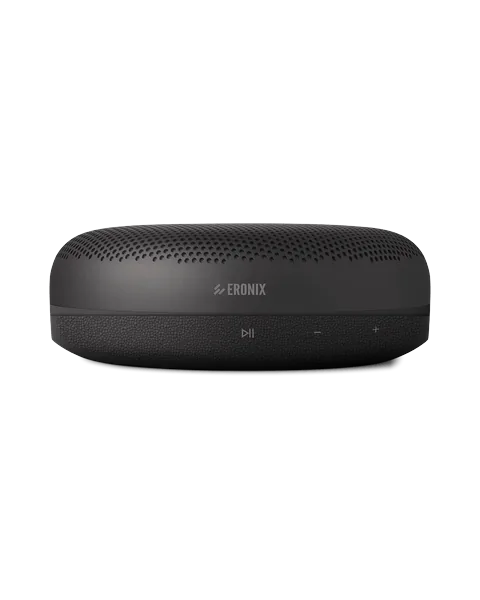
Keep the music and keep the phone dry. Charge the Tempo outside over USB-C, set it on a shelf by the bathroom door with the phone beyond it, and its IP67 rating means a splash from the shower is no matter.
It is palm-size, plays for 12 hours, and wears a fabric grille on an aluminium frame, in Black or Tan.
Step by step
- Charge the phone outside the bathroom before you shower.
- Keep the phone on a dry shelf away from spray and steam.
- Let the phone return to room temperature before charging after the shower.
- Wait for any moisture warning to clear before plugging in.
- Dry your hands before touching the charger or socket.
Questions people ask
Can I use my phone in the shower if it is IP68?
It is not advised. IP68 testing under IEC 60529 uses still, fresh water at a set depth and time. Shower water is hot, soapy and under pressure, and steam causes condensation, which Apple's specifications exclude from the iPhone's operating conditions. Keep the phone dry and out of the spray.
What should I do if my phone shows a liquid detected warning while charging?
Unplug the cable and do not force charging. Hold the phone with the port facing down and tap gently to remove water, then leave it in a dry place with air around it until the warning clears. Do not insert cotton buds or objects into the port, and do not use an external heat source.
Does bathroom steam damage phones?
Repeated exposure can. Apple lists iPhone operating humidity as 5% to 95% non-condensing, and a steamy bathroom produces condensation on cool surfaces. Moisture inside ports and speaker grilles can corrode contacts over time. Occasional exposure is unlikely to cause harm, but making it a daily habit raises the risk.
Is it dangerous to touch a charger with wet hands?
A wall charger is connected to mains voltage, and water makes the skin conduct far better. Well-made chargers are insulated, but a damaged cable, a cracked case or water around the socket removes that margin. Dry your hands before plugging in or unplugging any charger, in any room.
Sources
- iPhone 16e technical specifications (Apple Support) · accessed 22 Nov 2026
- IP code (Wikipedia summary of IEC 60529) · accessed 22 Nov 2026
- Electrical items safety (London Fire Brigade) · accessed 22 Nov 2026
- Electrical safety (Honolulu Fire Department) · accessed 22 Nov 2026
- India: plug, socket and voltage (WorldStandards) · accessed 22 Nov 2026
Thermal Management
The quiet discipline inside every serious power product.
Read →Explainer · 4 min readDoes fast charging kill the battery?
The watts on the charger matter less than the temperature of the phone
Read →Explainer · 5 min readCan a 100 W charger damage your phone?
The watts on the brick are a ceiling, not a push. Heat is what your battery remembers.
Read →Explainer · 4 min readIs it safe to charge your phone overnight?
Your phone does not overcharge. It sits full for hours, and that is what to fix.
Read →Explainer · 5 min readShould you let the battery drain to 0%?
The monthly full drain is a habit from older batteries. Here is what the chemistry says.
Read →Explainer · 4 min readHotel room charging: making one socket work
One socket behind the bed, three devices, a 7 am meeting. Here is the plan.
Read →