Journal · Explainer · 5 min read
What 'drivers' and 'mm' mean on a spec sheet
12 mm sounds bigger than 10 mm. Your ears may not agree, and here is why.
Two boxes sit side by side. One says 10 mm drivers, the other says 13 mm, and the second costs the same. The bigger number must mean bigger sound, surely? Before you choose by millimetres, it helps to know what is being measured.
Short answerA driver is the tiny loudspeaker inside each earbud or ear cup, and the mm figure is the diameter of its moving diaphragm. Size hints at how much air it can move, but does not decide sound quality on its own. Driver type, the maker's tuning and, above all, how well the earbud seals in your ear matter more.
The sizes and types, in numbers
Reference summaries of headphone design note that headphones reproduce deep bass with drivers only about 40 mm to 50 mm wide, the scale found in over-ear cups, and in-ear drivers are much smaller still. Because earbud drivers are so small to begin with, a difference of one or two millimetres on the box can look larger than it is.
The same summaries set out the main driver types. Dynamic, or moving-coil, drivers are the most common: a voice coil attached to a diaphragm sits in a magnet's field and pushes the diaphragm back and forth. Balanced armature drivers are tiny and efficient, used mainly in in-ear monitors and hearing aids, and are generally limited at the extremes, below about 20 Hz and above about 16 kHz, which is why some designs pair them with a small dynamic driver for bass. Planar magnetic and electrostatic drivers use large flat membranes and appear mostly in premium over-ear headphones; electrostatics need drive voltages of about 100 V to more than 1 kV.
Not every maker publishes a size. Apple's AirPods Max specification page, for example, describes an Apple-designed dynamic driver and gives no diameter at all.
| Type | Where you find it | Note |
|---|---|---|
| Dynamic (moving coil) | Most earbuds and headphones | Most common design |
| Balanced armature | In-ear monitors, hearing aids | Limited below about 20 Hz, above about 16 kHz |
| Planar magnetic | Premium over-ear | Large flat membrane |
| Electrostatic | Premium over-ear | About 100 V to more than 1 kV drive |
Source: Headphones reference summary (Wikipedia)
Why bigger is not automatically better
A loudspeaker in a room needs a large cone, often 15 or 18 inches for deep bass, because it has to move the air in the whole room. Headphones sit right at the ear and move only the tiny volume of air in the ear canal, so even a small driver can produce deep bass if it is sealed in.
That seal is the hidden variable. SoundGuys tested every tip size supplied with one pair of earbuds on the same ear-shaped fixture, and found that a poorly fitting tip made the bass drop significantly and left treble sounding roughly twice as loud by comparison. The same driver, in the same earbud, measured completely differently with a different tip. SoundGuys notes the test was run years ago on an older, non-standard rig with shallow ear canals, so read it as a demonstration of the effect rather than a precise figure.
Think of a drum. A large drum with its skin loose sounds weak; a small drum with a tight skin, played in a small room, can shake the walls. The size of the drum is only one part of the sound. The tension, the room and the player decide the rest. In earbuds, the tuning is the tension and the seal is the room.
What the other spec lines mean
Frequency response, such as 20 Hz to 20 kHz, describes the range the driver can reproduce, but not how evenly. Almost every earbud prints the same range, so it rarely separates one model from another.
Dual driver or hybrid means two drivers per earbud, usually a dynamic driver for bass and a balanced armature for treble. More drivers mean more tuning choices, not automatically better sound.
Diaphragm material, such as graphene-coated or titanium-coated, describes the stiffness of the moving part. Stiffer diaphragms can reduce distortion, but the effect depends on the whole design.
How to listen for the difference in a shop
Bring a song you know well, ideally one with a clear bass line and a solo voice. Play it at a moderate volume, not loud. Loudness flatters every pair and hides differences.
Push each earbud in gently and twist it slightly until the outside noise drops. If the bass suddenly fills in, you have found the seal, and that is the sound to judge.
Then switch to the second pair with the same song and volume. Listen for whether the voice sits clearly above the bass, whether cymbals sound crisp or harsh, and whether you would be comfortable listening for an hour. Those three answers tell you more than the millimetres on either box.
What to check before you buy
Try the earbuds in your ears if you can, with each tip size. A good seal changes bass more than any size difference on the box.
Look for the driver type as well as the size. A clearly described dynamic, balanced armature or hybrid design tells you more than a millimetre figure alone.
Read independent measurements where they exist. Labs such as RTINGS and SoundGuys publish frequency-response graphs that show how a pair is actually tuned.
Check that the earbuds come with several tip sizes. Three or more sizes make a good seal far more likely.
Do not pay extra for size alone. If two pairs differ only by a few millimetres on the box, compare fit, tuning and features instead.
Myth corner
Myth: a bigger driver always means more bass. Bass in earbuds depends heavily on the seal. SoundGuys' tip tests show the same driver losing much of its bass with a poor fit. A small, well-sealed driver can out-bass a large one that leaks.
The right one for you
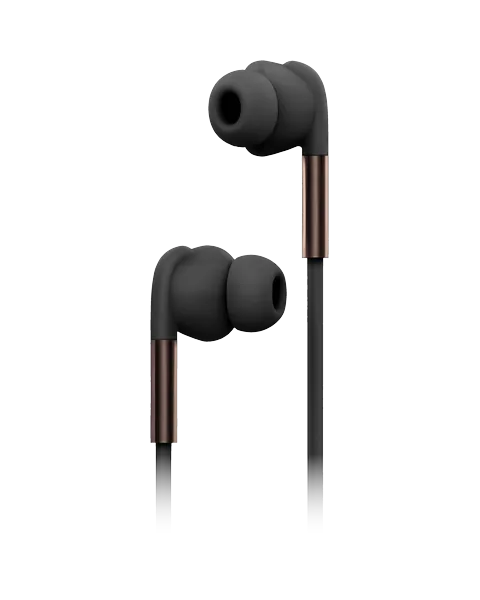
If fit decides the sound, start with the tips. The Xenon comes with three ear-tip sizes and describes its drivers in full: 14 mm dual titanium drivers, fed by a 24-bit, 96 kHz DAC in the cable. It plugs into any USB-C phone, iPhone 15 and later included, in a metal housing with nothing to charge.
Step by step
- Note the driver type and size on the box.
- Try every supplied ear tip and keep the one that seals best.
- Check an independent lab's frequency-response graph if available.
- Compare fit and tuning before paying more for a bigger number.
Questions people ask
Is a 12 mm driver better than a 10 mm driver?
Not by itself. A larger diaphragm can move more air, but in earbuds the seal, tuning and driver type usually matter more. SoundGuys' tests show fit alone can cause a significant bass drop. Compare how each pair sounds and fits, not just the number.
What is a dynamic driver?
A dynamic, or moving-coil, driver uses a voice coil attached to a diaphragm, sitting in a magnet's field. When current flows, the coil and diaphragm move and push air. It is the most common driver type in earbuds and headphones.
What is a balanced armature driver?
A balanced armature driver uses a pivoted magnetic armature to move a tiny diaphragm. It is small and efficient and is common in in-ear monitors and hearing aids. It is weaker at the extremes of hearing, so some earbuds pair it with a dynamic driver for bass.
Why do over-ear headphones have bigger drivers?
Over-ear cups have room for drivers of about 40 mm to 50 mm, the size reference summaries give for headphones that reproduce deep bass. The larger diaphragm sits a little further from the ear and moves more air. Earbuds sit inside the ear canal, so a much smaller driver can still produce full sound when sealed.
Does frequency response 20 Hz to 20 kHz mean good sound?
It means the driver can produce sound across that range, not that it does so evenly. Almost every pair lists a similar range. A measured frequency-response graph from an independent lab shows the real tuning far better.
Sources
- Headphones (Wikipedia summary of transducer types and sizes; secondary source) · accessed 22 Nov 2026
- SoundGuys: How your in-ears fit matters a lot · accessed 22 Nov 2026
- Apple: AirPods Max technical specifications · accessed 22 Nov 2026
Acoustics
What a driver actually does.
Read →Explainer · 4 min readHi-Res Audio on Bluetooth: what is real
The badge on the box is real. So is the compression that makes it fit.
Read →Explainer · 4 min readCleaning earbuds safely
Most earbud damage during cleaning comes from the toothpick, not the dirt.
Read →Explainer · 5 min readLDAC, aptX, AAC: which codec your phone really uses
The logo on the earbud box is a promise. Your phone decides whether it is kept.
Read →Explainer · 5 min readWhat ANC can and cannot block
Why the bus engine fades but the conductor's voice does not, and what to check.
Read →Explainer · 4 min readTransparency mode: how earbuds let the world back in
Your earbuds can hear the platform announcement for you. Here is how, and where it stops.
Read →