Journal · Comparison · 4 min read
Earbuds vs neckbands vs over-ear
Five grams or nearly four hundred. Weight says a lot about what each style does best.
The shop shelf has three walls: true wireless earbuds in pocket-sized cases, neckbands that rest on your collar, and over-ear headphones in large boxes. They all play music over Bluetooth. Which one fits the way you actually listen?
Short answerChoose by where you listen. Earbuds are the most portable, about 5 g per bud, and suit commutes and workouts. Over-ear headphones can weigh nearly 390 g but run far longer per charge, around 20 hours, and suit long flights and desk work. Neckbands sit between: always around your neck, with a bigger battery than earbuds and nothing to lose.
Side by side: weight and battery
Apple's specifications give a clean illustration within one family. Its AirPods Pro 3 earbuds weigh 5.55 g each, with a charging case of 43.99 g, and play for up to 8 hours with noise cancellation on, 24 hours with the case. Its AirPods Max over-ear headphones weigh 386.2 g and play for up to 20 hours on a single charge with noise cancellation on. A 5-minute charge gives about 1 hour on the earbuds and about 1.5 hours on the over-ears.
That is roughly 70 times the weight on your head for the over-ears, and about two and a half times the runtime per charge. The reason is battery space. Qualcomm's white paper on true wireless design describes a reference earbud with a 45 mAh battery in each bud. Over-ear headphones have room in each ear cup for a far larger cell.
Neckbands do not have a single representative pair to quote here, but the principle is the same: the band holds the battery and electronics, so it can carry a larger cell than an earbud while the buds themselves stay light.
| Measure | AirPods Pro 3 (earbuds) | AirPods Max (over-ear) |
|---|---|---|
| Weight | 5.55 g per bud; case 43.99 g | 386.2 g |
| Playback, noise cancellation on | Up to 8 h | Up to 20 h |
| Playback with case | Up to 24 h | Not applicable |
| 5-minute charge | About 1 h | About 1.5 h |
Source: Apple technical specifications, accessed Nov 2026
Hours
Source: Apple technical specifications (AirPods Pro 3, AirPods Max), accessed Nov 2026
The one number that decides it: hours away from a charger
If you listen in bursts, a commute, a workout, a call, earbuds with a case cover the day: the case refills them between sessions. If you listen for long unbroken stretches, a flight to Delhi and a connection onward, an over-ear pair's single-charge runtime matters more than the case total. Neckbands suit people who take many calls in a day and want the headset on them at all times.
Think of it like the difference between a water bottle and a matka. The bottle goes everywhere and you refill it often. The matka stays put but holds enough for the whole afternoon. Neither is better; each suits a different day.
How each style handles sound and noise
Earbuds seal inside the ear canal, so their isolation depends on the ear tip fit. In SoundGuys' fit tests on a measurement rig, the larger tips most consistently blocked low-frequency noise, and a poorly sealing tip lost much of the bass. A good fit makes small earbuds surprisingly quiet in a bus.
Over-ear headphones seal around the ear with cushions, which is easier to get right for most people and leaves room for larger drivers and microphones. SoundGuys explains that active noise cancellation works best on constant, low-frequency sounds such as engine hum, which is why over-ears are a frequent choice on flights.
Neckband earpieces sit in the ear like earbuds, so fit matters in the same way.
Comfort over a full day
Weight is felt differently by each style. Earbuds put their few grams inside the ear, so comfort depends on tip size and shape; a tip that is too large can ache within an hour. Neckbands spread their weight across the collar and back of the neck, and the earpieces stay light. Over-ear headphones rest their weight on the head and around the ears, so headband padding and clamping force matter most. In a warm Indian summer, over-ear cushions also trap heat around the ears, which some people find tiring on long commutes.
Calls, commutes and the people around you
Style also changes how you hear the world. Earbuds with a good seal and over-ears with noise cancellation can block traffic sounds you need on the road, so many have a transparency or ambient mode that lets outside sound in; use it when walking or riding. Neckbands make it easy to drop one earpiece out for a quick conversation at the counter.
What to check before you buy
Check single-charge playback hours with noise cancellation on, not only the total with a case. That is the number that matters for long sessions.
Check the fit. For earbuds and neckbands, look for several tip sizes in the box. For over-ears, check the cushions fully surround your ears and the headband does not press after 20 minutes.
Check water and sweat resistance if you will exercise. Look for an IP rating, such as IPX4 or above.
Check weight against your use. An over-ear pair that is comfortable in the shop can feel heavy after three hours; earbuds you forget you are wearing are easier to misplace.
Myth corner
Myth: over-ear headphones are always louder and therefore riskier for hearing. Fact: risk depends on the volume you choose and how long you listen, not the style. A good seal, on any style, lets you listen at lower volume in noisy places, which is the safer habit.
The right one for you
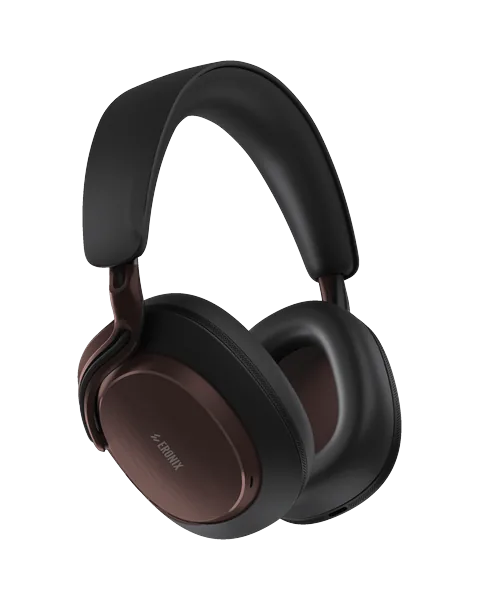
If you listen in long stretches at a desk or on a flight, Argent is the over-ear: adaptive noise cancelling, six microphones, 50 hours of playback, a metal yoke and ear pads you can replace.
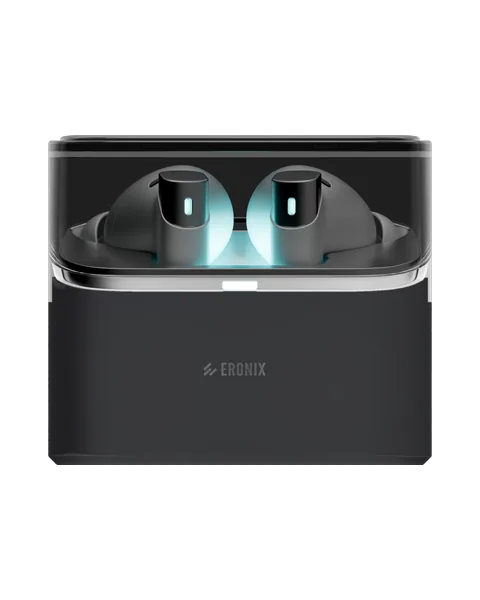
If you listen in bursts between the metro and the gym, Euphoria is the earbud: 45 dB noise cancelling, aptX HD, 5.5 hours of playback and an IPX6 rating. Both work with iPhone and Galaxy.
Step by step
- List where you listen most: commute, desk, gym or flights.
- Compare single-charge playback hours with noise cancellation on.
- Check fit: tip sizes for earbuds, cushion size for over-ears.
- Check the IP rating if you exercise.
- Wear them for a few minutes before deciding.
Questions people ask
Which is better for calls, earbuds or neckband?
Both can be good; microphone design matters more than the style. Neckbands keep the earpieces on you at all times, which suits people who take many calls a day. Earbuds are more discreet and portable. Check reviews of call quality in noisy settings for the specific pair you are considering.
Are over-ear headphones better for long flights?
Often, yes. They typically run longer on a single charge, around 20 hours on Apple's over-ear model compared with 8 on its earbuds, and their cushions plus noise cancellation handle constant engine hum well. Earbuds take less space and are more comfortable for sleeping on your side.
Do neckbands have better battery life than earbuds?
Usually, because the band holds a larger battery than a single earbud can. Earbuds compensate with a charging case that refills them during breaks. For long unbroken listening, a neckband or over-ear pair lasts longer; for listening in bursts, earbuds with a case often cover the whole day.
Which headphones are best for the gym?
Earbuds or neckbands, with a secure fit and an IP rating of IPX4 or higher for sweat. Over-ear headphones are heavier and can become hot during exercise. Wipe any style dry after a workout to protect its seals and mesh.
Sources
- AirPods Pro technical specifications (Apple) · accessed 22 Nov 2026
- AirPods Max technical specifications (Apple) · accessed 22 Nov 2026
- The Evolution of True Wireless Technology (Qualcomm white paper) · 2020
- How your in-ears fit matters a lot (SoundGuys) · 3 Dec 2024
- How noise cancelling headphones work (SoundGuys) · 12 Aug 2025
Acoustics
What a driver actually does.
Read →Explainer · 5 min readWhat ANC can and cannot block
Why the bus engine fades but the conductor's voice does not, and what to check.
Read →Explainer · 4 min readTransparency mode: how earbuds let the world back in
Your earbuds can hear the platform announcement for you. Here is how, and where it stops.
Read →Explainer · 4 min readCall quality: how earbud microphones handle noise
Your mouth is a hand's width from the mic. Everything else makes up for that.
Read →Explainer · 4 min readENC vs ANC: two different jobs
One protects your ears. The other protects the person on the other end of the call.
Read →Explainer · 4 min readEarbuds for flights: what actually matters
The engine hum is the easy part. Fit, battery and volume decide how you land.
Read →