Journal · Comparison · 5 min read
Fast charging on iPhone vs Galaxy
Two phones, two dialects of USB-C. The charger that speaks both is the one to own.
A couple shares one bedside socket. One has an iPhone, the other a Galaxy. Which phone fills faster, and can one charger serve both at full speed?
Short answerOn the newest flagships the gap has nearly closed. In independent tests the iPhone 18 Pro Max reached 50% in 15 minutes and the Galaxy S26 Ultra 85% in 30. The deciding factor is protocol: Galaxy super fast charging needs USB PD with PPS; the newest iPhones want USB PD with AVS.
Side by side: the measured numbers
Galaxy first. Samsung's launch announcement for the Galaxy S26 series lists a 60 W adapter for the S26 Ultra with a claim of up to 75% in about 30 minutes, 45 W and up to 69% for the S26+, and 25 W and up to 55% for the S26. In Android Authority's test, the S26 Ultra reached 37% in 10 minutes, 85% in 30 minutes and full in 42 minutes. It held the 60 W peak for only about two minutes, then about 48 W for some 16 minutes. The phone peaked at 39.6 °C.
Now iPhone. Apple's fast-charge page says the iPhone 18 Pro and Pro Max reach 50% in about 15 minutes with Apple's 40 W Dynamic Power Adapter with 60 W Max or a third-party 60 W or higher adapter using Adjustable Voltage Supply and USB PD 3.2. MacRumors, reporting a video test by Xiaobai's Tech Reviews, said the iPhone 18 Pro Max hit 50% in 15 minutes and 100% in as little as 55 minutes, with a peak of 52 W for the first 12 minutes. The iPhone 17 Pro models, by Apple's figures, reach 50% in about 20 minutes with a 40 W or higher adapter.
The two sets of tests used different methods and conditions, so read them as close neighbours rather than a precise race. On the flagships, both phones now put half a battery in roughly a quarter of an hour.
| Phone | Charging route | Measured result |
|---|---|---|
| iPhone 18 Pro Max | USB PD 3.2 with AVS, 60 W or higher | 50% in 15 min, peak 52 W |
| Galaxy S26 Ultra | USB PD 3.1 with PPS, 20 V 3 A, 60 W | 37% in 10 min, 85% in 30 min |
| iPhone 17 Pro | 40 W or higher USB PD | 50% in about 20 min (Apple) |
| Galaxy S26 | 25 W adapter | Up to 55% in about 30 min (Samsung) |
Source: Apple support; Samsung; Android Authority; MacRumors
Battery %
Galaxy S26 Ultra (Android Authority)iPhone 18 Pro Max (Xiaobai's Tech Reviews via MacRumors)
Source: Android Authority; MacRumors reporting Xiaobai's Tech Reviews
The one number that decides it: the protocol
Both phones use USB Power Delivery, the standard that lets a charger and a device agree on voltage and current. The difference is in the fine control. The USB-IF's own summary explains that USB PD added an adjustable voltage supply mode, where a device can request intermediate voltages instead of fixed steps.
Galaxy phones use a version called PPS, Programmable Power Supply, which lets the phone adjust voltage in small steps. Android Authority's test notes the S26 Ultra needs USB PD 3.1 with PPS at 20 V and 3 A from a single port to reach 60 W. Without PPS, a Galaxy falls back to slower charging. ChargerLAB's test of the earlier S24 Ultra showed the point: a 140 W USB-C charger from another maker, lacking the right PPS range, delivered only about 22 W, while PPS chargers reached about 44 W.
The newest iPhone Pro models use AVS, Apple's specified route to their top speed. Older iPhones simply use standard USB PD. Apple says iPhone 15 and iPhone 16 models fast charge with any 18 W or higher USB PD adapter.
Think of it as two languages spoken in one house. Both phones speak USB PD, the common tongue, and will always charge. But each reaches its best speed only when the charger also speaks its regional dialect.
Heat and the long tail
Peak watts last minutes. Both phones slow down sharply as they fill, because lithium-ion cells accept charge less easily near full. Battery University notes that stress on a cell is greatest in the second half of a charge. This is why the gap between 0 to 50% and 50 to 100% is so large on both phones, and why a higher-watt charger barely changes the final half hour.
Older iPhones and Galaxy models
The comparison changes a step down the range. Apple lists iPhone 17 models at 50% in about 20 minutes with a 40 W or higher adapter, and iPhone 17e and iPhone Air at 50% in about 30 minutes with 20 W or more. Samsung lists its base Galaxy S26 at a 25 W adapter and up to 55% in about 30 minutes. In every case, the phone sets the ceiling and the charger only decides whether you reach it.
What to check before you buy
For a Galaxy Ultra, check the charger lists PPS, and that one USB-C port can deliver 20 V at 3 A or more. Without PPS, a big wattage number does not help.
For the newest iPhone Pro models, check for USB PD 3.2 with AVS and 60 W or more, as Apple's page specifies. For iPhone 15 to 17, any 18 W or higher USB PD charger fast charges; 40 W or more gets iPhone 17 models their quoted speed.
For a shared charger, look for USB PD with both PPS and AVS listed. That covers both phones at their best.
Use the cable that came with the phone. Android Authority notes Samsung's included 3 A cable is enough for the S26 Ultra's 60 W.
Myth corner
Myth: a Samsung charger harms an iPhone, or the other way round. Fact: both phones negotiate power through USB PD before any voltage rises, so a mismatched charger simply delivers a slower, safe speed. The risk is only to your time, not to the battery.
The right one for you
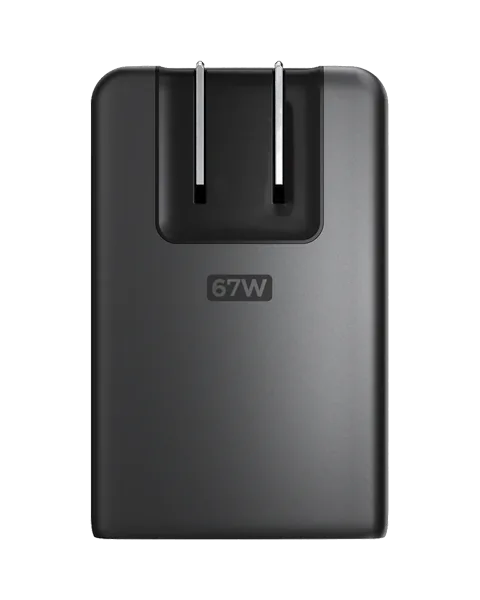
For one bedside socket and two phones, the charger has to speak both dialects. The Entropy67 lists PPS and AVS from 5 to 20 V at 3.35 A, with 67 W from a single port, which covers the 60 W PPS profile the Galaxy S26 Ultra asks for and the 60 W AVS route Apple specifies for the iPhone 18 Pro. With both phones plugged in, its two USB-C ports share the power as 45 + 20 W or 35 + 30 W, and each phone reaches its full speed when it has the charger to itself. The body is 14 mm thin.
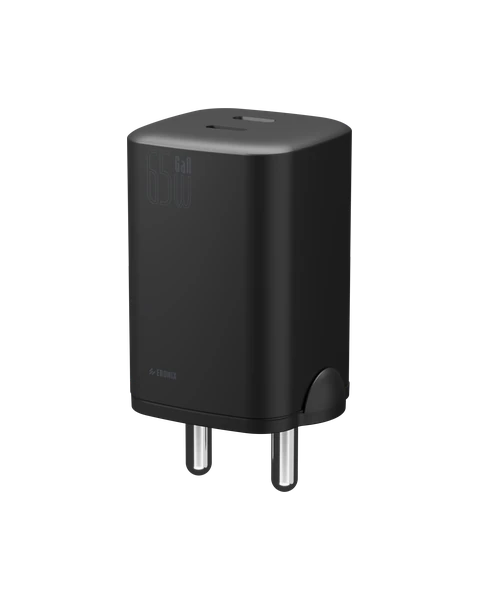
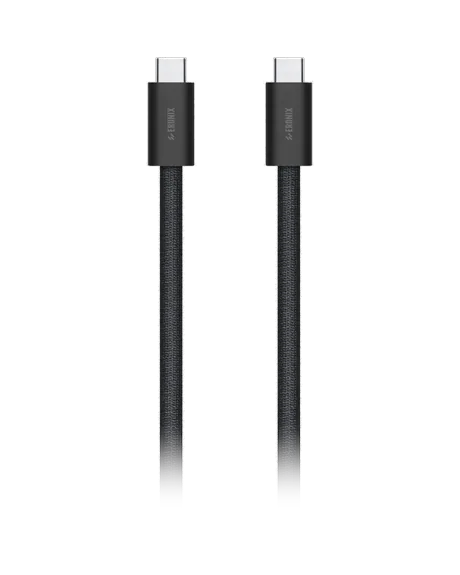
For a Galaxy S26 Ultra on its own, Fermi65 is the ERONIX charger matched to it, with the Power Cable 240 W.
Step by step
- Find your phone's top charging speed on the maker's support page.
- For Galaxy, check the charger lists USB PD with PPS.
- For the newest iPhone Pro, check for USB PD 3.2 with AVS and 60 W or more.
- For a shared charger, choose one listing both PPS and AVS.
- Use the cable that came with the phone.
Questions people ask
Does Galaxy charge faster than iPhone?
On current flagships they are close. Android Authority measured the Galaxy S26 Ultra at 85% in 30 minutes and full in 42 minutes. A test reported by MacRumors showed the iPhone 18 Pro Max at 50% in 15 minutes and full in about 55 minutes. Methods differed, so treat these as comparable rather than a precise ranking.
Can one charger fast charge both an iPhone and a Samsung?
Yes, if it supports USB PD with PPS for the Galaxy and, for the newest iPhone Pro models, AVS. With a 60 W or higher rating on a single port, such a charger reaches the top speed of both. Any USB PD charger will charge both phones safely, just not always at full speed.
What is PPS on a charger?
PPS stands for Programmable Power Supply, part of the USB Power Delivery standard. It lets the phone request fine voltage and current steps instead of fixed levels, which reduces heat in the phone. Samsung's super fast charging relies on it. Without PPS, Galaxy phones fall back to a slower mode.
Why does my phone charge fast to 50% and then slow down?
Lithium-ion batteries accept charge more slowly as they fill, and charging near full adds stress and heat. Phones therefore cut power after the first half. Battery University notes that stress is greatest in the second half of a charge, which is why the final stretch to full takes so long.
Sources
- Samsung unveils Galaxy S26 series (Samsung Newsroom) · accessed 22 Nov 2026
- Galaxy S26 Ultra 60W charging tested (Android Authority) · accessed 22 Nov 2026
- Fast charge your iPhone (Apple Support) · accessed 22 Nov 2026
- iPhone 18 Pro Max test shows much faster charging from 0% to 100% (MacRumors) · 17 Sep 2026
- 45W Compatibility Test of Samsung Galaxy S24 Ultra (ChargerLAB) · accessed 22 Nov 2026
- USB Charger (USB Power Delivery) (USB-IF) · accessed 22 Nov 2026
- Ultra-fast chargers (Battery University) · accessed 22 Nov 2026
PPS — Programmable Power Supply
Power Delivery, with a fine-adjustment dial.
Read →Buying guide · 5 min readWhich charger does the iPhone 18 Pro need?
Half a battery in 15 minutes, but only if your charger speaks one new word: AVS.
Read →Explainer · 5 min readUSB Power Delivery explained in one page
How a charger and a phone agree on power before it flows, and how to read the label.
Read →Comparison · 4 min readSingle-port vs multi-port chargers
The big number on the box is shared. The table on the back says what each device gets.
Read →Buying guide · 4 min readWhich charger does the iPhone 18 Pro Max need?
The biggest iPhone battery yet, filled to half in the time it takes to drink a chai.
Read →Comparison · 5 min read20 W vs 30 W for an iPhone: is the difference worth it?
Four minutes on one iPhone, eight on another: the number that decides it is your phone's.
Read →