Journal · Explainer · 5 min read
Leather that ages well: caring for a leather case
Less care than you think, and the three things that actually damage leather
Six months in, your leather case has darkened where your fingers rest, the edges have a soft sheen, and there is a faint blue tint from your jeans pocket. Is it ageing, or is it being ruined?
Short answerMost of it is normal patina, and it is harmless. Clean the case with a soft cloth, a little warm water and mild hand soap, let it dry naturally, and keep it away from long sun, heat and damp. Avoid heavy oils and saddle soap. Dye transfer and mould are the real enemies.
What the experts say, in numbers
Apple's cleaning guide for its iPhone leather cases says the natural leather may acquire a patina and change colour from skin oils and direct sunlight. It says to take the case off the phone, then clean it gently with a clean cloth, warm water and mild hand soap, and it warns that cleaning itself may affect the colour. Leather cleaners and conditioners can change the colour too, and water, oil, makeup and dyed fabrics such as denim can stain tanned leather. Apple also asks owners to keep the case away from prolonged intense sunlight, heat and humidity.
The Canadian Conservation Institute, which advises museums on caring for leather, gives the clearest numbers on the environment leather likes. It recommends a stable relative humidity of 45 to 55 per cent and a temperature of about 18 to 20 °C. Below 30 per cent humidity, leather loses moisture and becomes brittle. Above 65 per cent, mould can grow and the fibres start to break down.
The same guidance has a surprise for anyone who oils their leather every month. The institute no longer recommends leather dressings. It says research has shown dressings are generally not effective at preserving leather, and that the oils in them oxidise over time and stiffen it further. It advises against saddle soap as well, because its strong alkalinity degrades leather and its oils can leave a white, scummy deposit.
| Condition | Figure | What happens |
|---|---|---|
| Relative humidity | 45 to 55 per cent | Stable and safe |
| Temperature | About 18 to 20 °C | Stable and safe |
| Dry air | Below 30 per cent | Leather loses moisture, turns brittle |
| Damp air | Above 65 per cent | Mould can grow, fibres break down |
Source: Canadian Conservation Institute, CCI Notes 8/2
How patina forms, and why it is not damage
Leather is animal skin whose protein fibres have been stabilised by tanning. The finished surface is slightly porous, so it takes up small amounts of skin oil from your hands and darkens a little where you hold it most. Light also slowly changes the dyes and the leather itself. Over months, that gives the even, deeper tone people call patina.
Think of it like a wooden handrail in an old house. Hands polish it, it darkens where it is used most, and nobody calls that wear. It is the same material telling the story of use. A scratch on leather often softens over a few days as the surrounding fibres relax.
What is damage? Cracking from drying out next to heat, mould spots from long periods of damp, dye from dark denim, and stains from oil, perfume or sanitiser. Those are worth preventing, because they do not fade on their own.
A simple care routine for Indian weather
Weekly: wipe the case with a dry, soft microfibre cloth. That is enough for most days.
Monthly, or after a spill: remove the phone, dampen a cloth with warm water and a drop of mild hand soap, wipe gently, then wipe again with a cloth dampened in plain water. Let it air-dry at room temperature. Never use a hair dryer or keep it on a hot dashboard.
In the monsoon: if the case gets soaked, take the phone out, blot it with a dry towel and let both dry separately in a ventilated room. Do not seal a damp case in a bag or drawer for days; that is how mould starts.
Why the monsoon matters: the institute's mould threshold of about 65 per cent relative humidity is below what many Indian coastal cities see for weeks at a time during the rains. A case kept inside a closed bag in that air stays damp far longer than one left out in a ventilated room, so let it breathe overnight.
In summer: a car parked in the sun is the harshest place for leather. Carry the phone with you, or keep it shaded.
Sanitiser: alcohol-based gels can strip colour and dry the surface. Let your hands dry fully before picking up the phone.
What to check before you buy
Ask what kind of leather it is. Full-grain and top-grain leathers patina in an even, attractive way; coated or bonded material usually does not, and may peel instead.
Look at the edges. Neatly finished, sealed edges resist fraying and absorb less sweat than raw cut edges.
Check the inside lining. A soft microfibre lining protects the phone's finish and keeps grit from scratching the back.
Read the care note. A maker that tells you how its leather will age, and how to clean it, has thought about the material.
If you wear dark raw denim, choose a darker shade; dye transfer shows least on darker leather.
Myth corner
Myth: leather needs regular oiling to stay healthy. For a phone case, it mostly does not. The Canadian Conservation Institute found dressings generally ineffective and warns that excess oil can stiffen leather over time, while Apple says conditioners can change the colour. A damp cloth and a little mild soap do the job.
The right one for you
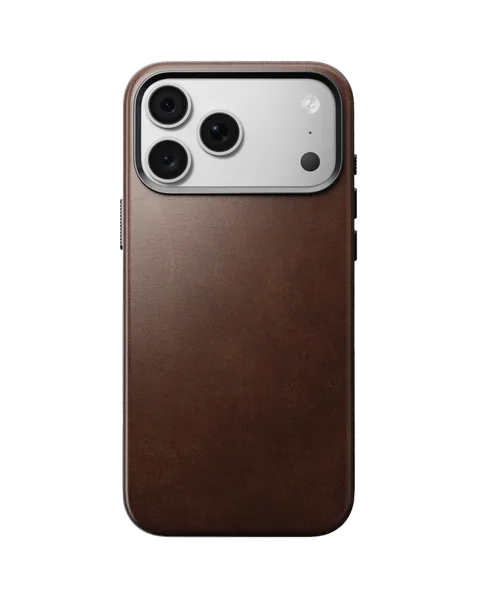
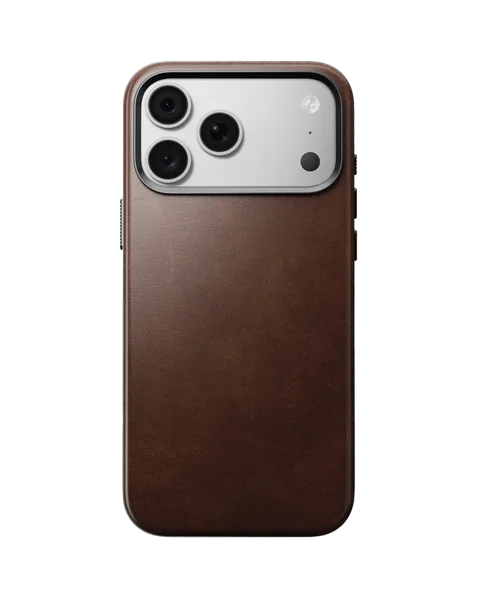
Everything above rewards one choice: full-grain leather. The Leather Case for iPhone 18 Pro, and its twin for the 18 Pro Max, are cut from full-grain leather over a microfibre lining, so the surface is free to take on your hand over the years.
Both come in Black or Tan, with aluminium buttons and a raised lip round the camera. If you live in dark denim, Black is the kinder shade.
Step by step
- Remove the phone from the case.
- Wipe with a soft cloth dampened with warm water and a drop of mild hand soap.
- Wipe again with a cloth dampened in plain water.
- Let the case air-dry at room temperature, away from sun and heaters.
- Refit the phone only when the case is fully dry.
Questions people ask
How do I remove a denim dye stain from a leather case?
Act early. Remove the phone and wipe the area with a cloth lightly dampened with warm water and mild hand soap, then plain water, and let it air-dry. Apple notes dyed materials like denim can stain tanned leather, and old dye stains may not come out fully, so avoid harsh solvents that strip colour.
Can I use a leather conditioner on my phone case?
Use it sparingly, if at all. Apple says leather cleaners and conditioners can change the colour of its leather cases, and the Canadian Conservation Institute warns that excess oil can stiffen leather as it oxidises. Test any product on the inside edge first.
What do I do if my leather case gets mould?
Move it to a drier, ventilated room and let it dry slowly; mould needs humidity above about 65 per cent to grow, according to the Canadian Conservation Institute. Brush the dry powder off outdoors, then wipe with a damp cloth and mild soap. Deep growth may leave a permanent mark.
Why has my leather case become darker?
That is patina. Skin oils and light gradually darken natural leather, most of all where your hand rests. Apple states its leather cases will change in appearance with use. It is cosmetic and does not weaken the leather.
Is it safe to wipe a leather case with sanitiser?
It is best avoided. Alcohol can dry the surface and lift colour. If you need to clean it, use a cloth with warm water and mild soap, and let it dry naturally before putting the phone back in.
Sources
- Apple Support: How to clean your Apple products (iPhone leather case) · accessed 22 Nov 2026
- Canadian Conservation Institute: Care of Alum, Vegetable and Mineral-tanned Leather (CCI Notes 8/2) · accessed 22 Nov 2026
Magnetic Alignment
Position, made physical.
Read →Compatibility · 1 min readMagnetic power banks and cases: what fits what
The ring, the case, and the physics between them.
Read →Explainer · 1 min readWhat is Qi2, and why did wireless charging need magnets?
The standard that made wireless charging predictable.
Read →Buying guide · 6 min readWhich charger does your 25 W magnetic (Qi2.2) puck need?
The puck can only give what the adapter feeds it, and heat takes its share first.
Read →Comparison · 5 min read20 W vs 30 W for an iPhone: is the difference worth it?
Four minutes on one iPhone, eight on another: the number that decides it is your phone's.
Read →Buying guide · 5 min readWhich charger does a 15 W MagSafe puck need?
The puck is only as fast as the plug behind it. Here is the adapter that unlocks 15W.
Read →