Journal · Comparison · 4 min read
MagSafe charger vs Qi2.2 charger
Same 25 W on the box. The difference is who else in your house can use it.
Two magnetic chargers sit on the shelf. One says MagSafe and comes from Apple's own approval programme. The other says Qi2 25W, the consumer name for the Qi v2.2 standard. Both promise 25 W. If they charge an iPhone 17 at the same speed, what are you actually choosing between?
Short answerOn a recent iPhone, both reach up to 25 W with a 30 W or higher adapter rated at 15 V and 2 A, so speed is effectively the same. MagSafe is Apple's own approved system. Qi2 25W is the open Wireless Power Consortium standard that Android phones use too. For mixed-phone homes, Qi2 25W is more flexible.
The one number that decides it: 25 W, and who gets it
Apple's MagSafe Charger support page lists up to 25 W on its 25 W-tier chargers for the iPhone 18 Pro and Pro Max, 17 Pro and Pro Max, iPhone 17, 16 Plus and 16 Pro Max. The iPhone Air reaches 20 W, the iPhone 16 and 16 Pro 22.5 W, and the iPhone 17e and iPhone 15 and earlier 15 W. Apple specifies a 30 W or greater adapter rated at 15 V and 2 A or more for 25 W.
The Wireless Power Consortium announced Qi v2.2.1, branded Qi2 25W, in July 2025, saying it delivers nearly 70% more power than the original 15 W Qi2 and that Apple iPhone and major Android phones were joining the ecosystem. Belkin notes Qi2 25W chargers are backward compatible, powering older Qi2 phones at up to 15 W.
Macworld's testing found Qi2 25W taking an iPhone 16 Pro to 50% in about 32 to 34 minutes on average, against about 45 minutes at 15 W. It also notes that full 25 W on Qi2 25W chargers requires iOS 26 or later.
| iPhone | Peak wireless |
|---|---|
| 18 Pro and Pro Max, 17 Pro and Pro Max, 17 | 25 W |
| 16 Plus and 16 Pro Max | 25 W |
| 16 and 16 Pro | 22.5 W |
| iPhone Air | 20 W |
| 17e, and 15 and earlier | 15 W |
Source: Apple Support: How to use your MagSafe Charger, accessed Nov 2026
Minutes
Source: Macworld, accessed Nov 2026
How the two systems relate
Apple built MagSafe for the iPhone 12 in 2020: a charging coil ringed by magnets that snap the charger into perfect alignment. The Wireless Power Consortium's Qi2 later brought magnetic alignment to the open Qi standard at 15 W, and Qi2 25W raises it to the same 25 W that Apple's latest MagSafe chargers offer.
The practical difference is who does the testing. MagSafe chargers are approved by Apple for iPhone, for a fee the maker pays Apple, Macworld notes. Qi2 chargers are tested under the WPC's programme, which Belkin says starts with 691 test cases, and work across brands. Chargers marked only MagSafe Compatible are a different category altogether, approved by neither, and typically limited to 7.5 W.
Think of two plug sockets in a hotel room: one fits only one country's plugs, the other is a universal socket that fits them all, including that same country's. Both deliver the same power to that plug. The universal one simply welcomes more guests. MagSafe is the dedicated socket; Qi2 25W is the universal one.
Android phones and Qi2 25W
Belkin's guide lists the Galaxy S26 Ultra at 25 W and the Pixel 10 Pro XL at 25 W with built-in magnets. It notes current Samsung models need a magnetic case for Qi2 alignment, and 9to5Google reported that the Galaxy S26 series ships without built-in Qi2 magnets. For these phones, a Qi2 25W charger plus the right case is the route to fast magnetic wireless charging.
Small differences that can still matter
Accessory behaviour is set by the phone, not the charger. Apple notes that connecting a wired USB-C accessory while on MagSafe caps the iPhone 17 Pro models at 10 W and the iPhone 17 and Air at 16 W, and that if the battery gets too warm, software might limit charging above 80%. Those limits apply on either type.
Heat limits do differ by design. Macworld reports Qi2 25W chargers work to stricter surface temperature limits of about 40 °C. A charger that stays cool lets the phone stay at its top speed longer, so independent thermal tests are worth more than the logo when two chargers look alike.
What to check before you buy
Read the logo carefully. MagSafe, Qi2 25W, Qi2 and MagSafe Compatible are four different things. Only the first two reach 25 W.
Check your phone's limit. On Apple's list, the iPhone Air tops out at 20 W and the iPhone 15 and earlier at 15 W on either type.
Use the right adapter: 30 W or more, rated at 15 V and 2 A, as Apple specifies for 25 W. A 20 W adapter gives lower speed.
For iPhone 16 models on a Qi2 25W charger, update to iOS 26 or later, which Macworld says is required for 25 W.
If you share chargers with Android users, choose Qi2 25W and check their phone has magnets or a magnetic case.
Myth corner
Myth: only Apple's MagSafe charger gives an iPhone 25 W wireless. Fact: Qi2 25W chargers also deliver 25 W to supported iPhones, as Macworld's tests show, provided the phone runs iOS 26 or later and the adapter supplies 15 V at 2 A.
The right one for you
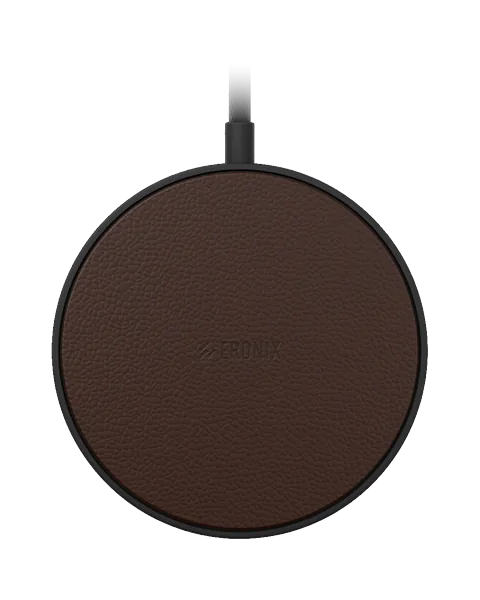
The Magnetic Charger delivers Qi2.2 25 W on iPhone 17 and later, on an aluminium ring with a 1.5 m braided cable, in Black or Tan.
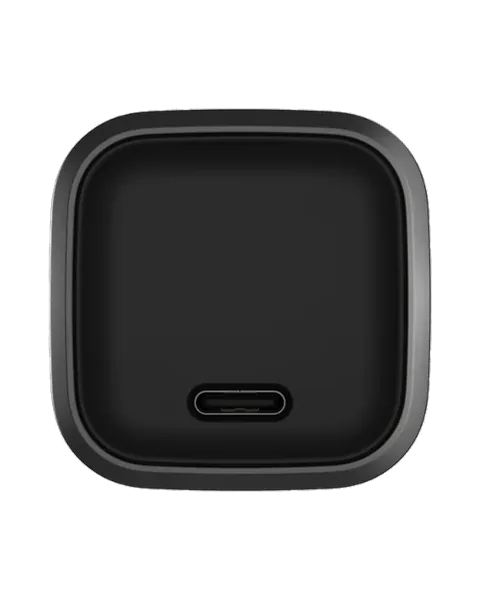
The adapter is not in the box, so pair it with the Fermi30: its fixed rails include 15 V at 2 A, the step Apple specifies for 25 W wireless.
Together they suit an iPhone 17 or 18 at the bedside, and the Fermi30 itself weighs just 42 g.
Step by step
- Check your phone's maximum wireless power on the maker's support page.
- Choose a MagSafe or Qi2 25W charger for 25 W; avoid MagSafe Compatible for speed.
- Pair it with a 30 W adapter rated at 15 V and 2 A.
- Update iPhone 16 models to iOS 26 or later for Qi2 25W.
- For Android, add a magnetic case if the phone lacks magnets.
Questions people ask
Is Qi2.2 the same as Qi2 25W?
Yes in practice. The Wireless Power Consortium announced Qi version 2.2.1 under the consumer name Qi2 25W in July 2025. It raises the magnetic Qi2 standard from 15 W to 25 W, and the WPC says it delivers nearly 70% more power than the original Qi2.
Does a Qi2 25W charger work with older iPhones?
Yes, at lower speeds. Apple lists the iPhone 15 and earlier at up to 15 W on MagSafe, and Belkin notes Qi2 25W chargers are backward compatible at up to 15 W. iPhones from the 12 onwards have the magnets needed for alignment, while the 16e uses plain Qi without magnets.
What adapter do I need for 25 W MagSafe or Qi2 charging?
Apple specifies a 30 W or greater USB-C adapter rated at 15 V and 2 A or more for 25 W on its MagSafe Charger. Qi2 25W chargers usually state a similar requirement on the box. With a 20 W adapter, both work but charge more slowly.
Is MagSafe Compatible the same as MagSafe?
No. MagSafe Compatible chargers have magnets but are not approved by Apple and are typically limited to 7.5 W, according to Macworld. Approved MagSafe and Qi2 25W chargers reach up to 25 W on supported iPhones.
Sources
- Apple Support: How to use your MagSafe Charger · accessed 22 Nov 2026
- Wireless Power Consortium: Qi2 25W news release · 23 Jul 2025
- Macworld: Qi2 vs MagSafe, which wireless charger is best for your iPhone · 21 Oct 2026
- Belkin India: Everything you need to know about Qi2 25W wireless charging · accessed 22 Nov 2026
- 9to5Google: Samsung Galaxy S26 charging speeds and Qi2 · 25 Feb 2026
- MacRumors: MagSafe guide · accessed 22 Nov 2026
Qi2
Wireless charging, aligned by magnets.
Read →Explainer · 4 min readMagSafe vs Qi2: same magnets, different rules
They feel identical when they click on. The difference is in who sets the rules.
Read →Comparison · 5 min readDesk stand vs pad vs puck: which wireless charger?
Three shapes, one physics problem: getting two coils to line up and stay there.
Read →Buying guide · 5 min readWhich charger does a 15 W MagSafe puck need?
The puck is only as fast as the plug behind it. Here is the adapter that unlocks 15W.
Read →Buying guide · 4 min readWhich charger does the iPhone 16 need?
Why 30 W is the sweet spot for this iPhone, even though it rarely takes 30 W
Read →Buying guide · 4 min readWhich charger does the iPhone 16e need?
The 16e charges like its siblings on a cable and very differently without one.
Read →