Journal · Explainer · 4 min read
Ear tips: the cheapest upgrade in audio
Before you blame the earbuds, check the little silicone sleeve holding them in your ear.
Your new earbuds sounded thin in the shop, the noise cancelling barely worked on the metro, and the left one keeps slipping out. Before you return them, look at the small soft tip on the end. It may be the whole problem.
Short answerThe ear tip decides how well the earbud seals your ear canal, and the seal decides bass, noise cancelling and comfort. A tiny gap can remove most of the deep bass. Trying every size in the box, and sometimes a different size for each ear, is the cheapest sound upgrade you can make.
How much bass a poor seal costs
The best number comes from an Audio Engineering Society paper on insert earphones. Its abstract reports that a leak as small as 0.5 mm across and 2.5 mm long can cut bass at 50 Hz by about 15 dB. That is the depth of a kick drum or the low rumble in a film score, reduced to a hint.
SoundGuys reached the same conclusion with real earbuds in December 2024. In its tests, the bass curve dropped sharply when tips did not fit, while the higher notes stood out by comparison, so the sound became bright and tinny. Large silicone tips that fit the test ear blocked low-frequency noise most consistently.
Apple builds this into its earbuds. Its support guide for AirPods Pro says the box includes three to five tip sizes depending on the model, etched inside each tip from XXS to L, with medium fitted at the factory. The same guide notes you might need a different size for each ear. MacRumors reports that AirPods Pro 3 ship with five sizes, adding XXS for the first time.
| Tip type | How it seals | Trade-off |
|---|---|---|
| Silicone | Flexible dome, many shapes | Quality varies between makers |
| Foam | Squeezed, then expands to fill the canal | Wears out sooner, harder to clean |
| Double or triple flange | Two or three stacked rings | Loses much of its gain if the fit is poor |
| Hybrid (foam-infused silicone) | Silicone shell, softer feel | Designed for a specific earbud generation |
Source: SoundGuys, Dec 2024; Apple Support
How a seal makes bass
An earbud's driver is tiny. It makes strong bass only because it is pushing air in a small, closed space: your ear canal. Seal that space and a small movement creates a large change in pressure, which your eardrum hears as deep sound. Open a gap and the air escapes.
Think of blowing up a balloon with a pinhole in it. You can blow harder, but the air leaks out as fast as you push it in. At high frequencies the air moves too quickly to escape through the hole, which is why the AES paper found the leak hurts bass far more than treble.
The seal also matters for noise cancelling. Active noise cancelling works best on low, steady sounds, such as bus engines and air-conditioner hum. If outside noise leaks in around the tip, the earbud has more to cancel and less control over what reaches your ear.
Depth matters too. InnerFidelity's tip measurements, republished by Stereophile, note that a tip pushed too deep can meet the bend in the ear canal and partly block the opening, which muffles the sound. A good seal sits just inside the canal entrance, firm but not forced.
Foam, silicone and flanges
Silicone tips are the default. They are washable, last long and come in many shapes. SoundGuys notes that quality varies widely between makers.
Foam tips are squeezed, inserted and then expand to fill the canal. SoundGuys finds they isolate better and feel less like suction. They wear out sooner and are harder to clean.
Double- and triple-flange tips stack two or three rings. They can isolate well when they fit, but SoundGuys found that a poor fit undid much of that gain.
Hybrid tips mix the two. Apple describes the AirPods Pro 3 tips as foam-infused silicone, softer than the previous generation.
What to check before you buy
Try every size in the box. Start with medium, which is usually fitted, then go one size up. If a tip feels too large, go one size down. A tip that feels slightly snug often seals better than one that feels like nothing.
Run the fit test if your earbuds have one. Many companion apps play a sound and measure what the inner microphone hears. Apple calls its versions the Ear Tip Fit Test on AirPods Pro 1 and 2 and, on AirPods Pro 3, the Acoustic Seal Test, which needs iOS 26 or later.
Do a quick bass check. Play a track with a steady bass line, then press each earbud gently inward. If the bass jumps, the tip is not sealing on its own.
Match the nozzle. Replacement tips must fit the earbud's nozzle width. Apple warns that AirPods Pro tips are designed for each specific generation, so check the model before you buy.
Replace worn tips. Tips that have gone stiff, torn or loose on the nozzle no longer seal. SoundGuys suggests cleaning tips about once a week with daily use.
Myth corner
Myth: the bigger the tip, the more bass. Fact: the best tip is the one that seals without being forced. A tip that is too large can fold or bottom out in the canal and leave a gap, which costs bass rather than adding it.
The right one for you
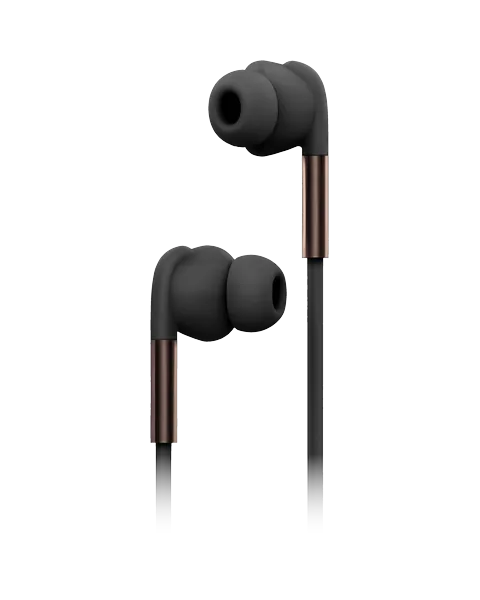
If you are choosing a new pair, count the tip sizes in the box before you judge the sound. Xenon, the ERONIX USB-C wired earphone, comes with ear tips in three sizes, so you can find the seal first and hear its 14 mm dual titanium drivers as intended.
It works with every USB-C phone, including iPhone 15 and later, through its own 24-bit/96 kHz DAC in the cable. The housing is metal, and there is nothing to charge.
Step by step
- Fit the medium tips and play a track with steady bass.
- Press each earbud gently inward; if the bass jumps, try one size larger.
- Run your earbuds' fit test if the app offers one.
- Use different sizes for left and right if that seals better.
- Replace tips that have gone stiff, torn or loose.
Questions people ask
Should I use a different ear tip size in each ear?
If it gives a better seal, yes. Ear canals are rarely identical, and Apple's AirPods Pro guidance notes that you may need different sizes for left and right. Use the fit test or the bass check on each side separately and keep whichever size seals each ear.
How do I clean silicone ear tips?
Remove the tips from the earbuds, wash them in lukewarm water with a little mild soap, rinse, and let them dry completely before refitting. Never let water reach the earbud's mesh or nozzle. SoundGuys suggests cleaning about once a week with daily use, and after every workout.
Are foam ear tips better than silicone?
Foam usually isolates better and moulds to the ear, so many people hear more bass and less outside noise. Silicone lasts longer, is washable and costs less. Foam suits commutes and flights; silicone suits workouts and daily carry. Many people keep a set of each.
Why does one earbud sound quieter or have less bass?
Usually that side is not sealing. Try one size up on that ear, insert it with a slight twist, and check that the tip has not slid partly off the nozzle. If both earbuds sound equal when pressed in gently, the tip is the cause, not the earbud.
Do third-party ear tips affect noise cancelling?
They can help or hurt. A tip that seals better gives noise cancelling less leakage to fight, so it often improves. A tip that changes how deep the earbud sits can also change the sound, and some fit tests are tuned for the original tips, so retest after changing.
Sources
- AES E-Library paper on insert earphone leakage and bass response (abstract) · accessed 22 Nov 2026
- How your in-ears fit matters a lot (SoundGuys) · 3 Dec 2024
- Finding the right ear tips (SoundGuys) · 21 Nov 2024
- Choose your AirPods Pro ear tips (Apple Support) · accessed 22 Nov 2026
- AirPods Pro 3 Use Acoustic Seal Test for Optimizing Sound Quality and ANC (MacRumors) · 16 Sep 2025
- Comply foam tips and the effects of tip selection (InnerFidelity, via Stereophile) · accessed 22 Nov 2026
Acoustics
What a driver actually does.
Read →Explainer · 1 min readHow active noise cancellation actually works
A race measured in fractions of a millisecond.
Read →Explainer · 5 min readWhat ANC can and cannot block
Why the bus engine fades but the conductor's voice does not, and what to check.
Read →Explainer · 4 min readTransparency mode: how earbuds let the world back in
Your earbuds can hear the platform announcement for you. Here is how, and where it stops.
Read →Explainer · 4 min readEarbuds for flights: what actually matters
The engine hum is the easy part. Fit, battery and volume decide how you land.
Read →Explainer · 5 min readLDAC, aptX, AAC: which codec your phone really uses
The logo on the earbud box is a promise. Your phone decides whether it is kept.
Read →