Journal · Explainer · 4 min read
Does a leather case protect as well as silicone?
The material on the outside matters less than four details you can check in ten seconds
Pick up a leather case and a silicone case of the same phone and the silicone one feels softer, so it must protect better. Does it?
Short answerNot necessarily. In everyday drops, design matters more than material. A raised lip around the screen and camera, firm corners, full edge coverage and a snug fit protect a phone in leather or silicone alike. Leather resists scuffs and ages well; silicone grips better and cushions edges. Choose the design first, the material second.
What we know, and what is not published
We looked for an independent, standardised drop test comparing leather cases with silicone cases of the same design, of the kind ChargerLAB or RTINGS publish for chargers and headphones. We did not find one in our research. Case makers do publish their own drop claims, but they use different heights, surfaces and phones, so the figures do not compare cleanly. This article therefore explains the mechanics and gives you checks, rather than a ranking.
What the material sources do tell us is how each surface behaves. The Leather Working Group's ISO-based definitions describe leather as a hide with its fibre structure largely intact, with any surface coating limited to 0.15 mm. That dense fibre network is why leather resists tearing and surface scuffs. Silicone is a soft, elastic rubber; it compresses and springs back.
Apple's cleaning guidance hints at how they age. It says its leather cases may acquire a patina from skin oils and sunlight and can be stained by water, oil, makeup or dyed fabrics. Its silicone and clear cases are wiped inside and out with a soft, slightly damp cloth that leaves no lint, with no household cleaners, aerosols, solvents or abrasives. Both last for years with basic care; they simply wear differently.
| Measure | Leather | Silicone |
|---|---|---|
| Grip | Smoother | Grippier |
| Scuffs and wear | Resists abrasion; marks become patina | Can pick up lint; edges may stretch |
| Water | Dislikes soaking; dry it out | Shrugs off water |
| Ageing | Changes character with use | Looks the same until it wears |
Source: Leather Working Group; Apple Support; Canadian Conservation Institute
How a case actually protects a phone
A drop is a short, sharp transfer of energy. Most damage happens where the phone meets the ground first, usually a corner or the glass. A case protects in three ways: it spreads the impact over a larger area, it slows the stop by compressing, and it keeps glass from touching the ground at all.
Think of it like a cricket helmet. The hard shell spreads a ball's impact; the foam inside slows the stop; and the grille keeps the ball away from the face. Leather plays the shell's part well. Silicone plays the foam's part well. The grille is the raised lip, and it matters most of all.
That is why a well-built leather case usually has a firm inner shell or frame under the leather. The leather handles the surface; the structure underneath handles the shock.
Leather and silicone side by side
Grip: silicone is grippier in the hand and on a sofa arm, which prevents some drops in the first place. Leather is smoother but less likely to cling to pocket lining.
Scuffs and wear: leather resists abrasion and turns its marks into patina. Silicone can pick up lint and, over time, may stretch or mark at the edges.
Heat and damp: leather dislikes long soaking and direct sun; silicone shrugs off water but can trap heat during wireless charging if it is thick.
Feel and ageing: leather changes character with use; silicone looks much the same until it wears.
Which suits which owner
If you often drop your phone from a hand or a table, grip and a deep lip matter most. A silicone case, or a leather case with a pronounced lip and padded corners, both suit you; prioritise the lip.
If your phone lives in a pocket or bag with keys and coins, abrasion is the daily threat. Leather resists it well and turns small marks into character rather than tears.
If you charge wirelessly every night, choose a thinner, magnet-aligned case in either material, because thick cases add distance between the coils.
If you work outdoors in heat and rain, silicone tolerates water better; leather needs drying out after a soaking, as the Canadian Conservation Institute's damp-storage guidance makes clear.
What to check before you buy
Set the phone face down on the counter. The screen glass should not touch; the case lip should hold it just above the surface. Do the same with the camera side down.
Press the corners. They should feel firm or padded, not thin and flexible.
Check edge coverage around the buttons and port. Open sections leave more of the frame exposed.
Look inside. A rigid inner shell or frame under a leather exterior gives it structure; a soft microfibre lining protects the phone's finish.
Confirm it works with how you charge. Magnetic or MagSafe-compatible cases keep wireless chargers aligned.
Myth corner
Myth: soft silicone always protects better than leather. Softness alone does not decide it. A case without a raised lip lets the glass hit the ground first, whatever it is made of, and a leather case built on a firm frame with a good lip can protect very well. Check the design, not just the feel.
The right one for you
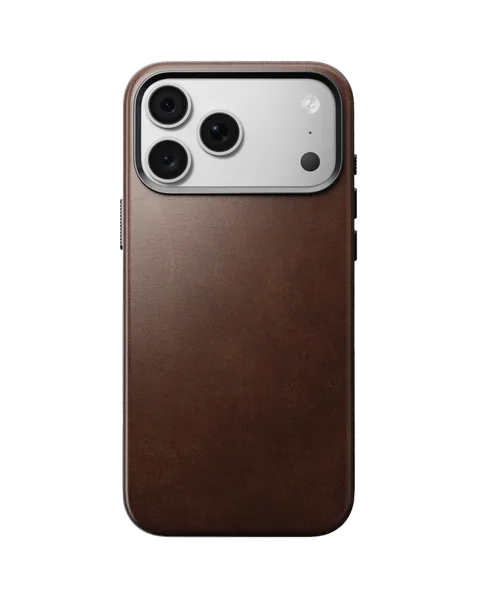
For an iPhone 18 Pro, the ERONIX Leather Case brings the details this guide asks you to check: a raised camera lip, a microfibre lining that protects the phone's finish, and a magnet ring compatible with MagSafe to keep wireless chargers aligned.
The full-grain leather takes on your hand over the years, and the buttons are aluminium. It comes in Black or Tan.
Step by step
- Place the phone in the case face down; check the glass does not touch the surface.
- Repeat with the camera side down.
- Press each corner to feel for firm or padded protection.
- Check edge coverage around buttons and the port.
- Choose leather or silicone for grip, feel and ageing once the design passes.
Questions people ask
Is a leather case good for drop protection?
It can be, if it is built well. Protection comes mainly from a raised lip around the screen and camera, firm corners and a rigid inner frame. A leather exterior handles scuffs and abrasion; the structure underneath handles the shock of a drop.
Which lasts longer, a leather or a silicone case?
Both can last years with care. Leather wears into a patina and resists abrasion, though water and oil can stain it, as Apple notes. Silicone resists water but may stretch, mark or collect lint over time. Your habits decide more than the material.
Does a leather case get damaged in the monsoon?
Prolonged soaking and damp can mark leather and, in very humid storage, encourage mould. Wipe it dry, let it air-dry at room temperature, and do not seal a damp case in a bag. Silicone is less affected by water.
Do leather cases work with MagSafe and wireless charging?
Many do, if they are designed with magnets or as MagSafe-compatible. Thickness matters: a thin case lets a wireless charger work efficiently, while a thick case adds distance between coils and may slow charging and add heat.
Should I add a screen protector with a leather case?
A case lip protects the screen from flat drops, but not from scratches or a direct hit on the glass. A screen protector adds that layer. Choose a case whose lip still sits above the protector.
Sources
- Leather Working Group: List of Definitions v1.1 (ISO, UNECE and CEN terms) · accessed 22 Nov 2026
- Apple Support: How to clean your Apple products (leather, silicone and clear cases) · accessed 22 Nov 2026
- Canadian Conservation Institute: Care of Alum, Vegetable and Mineral-tanned Leather (CCI Notes 8/2) · accessed 22 Nov 2026
Magnetic Alignment
Position, made physical.
Read →Explainer · 5 min readLeather that ages well: caring for a leather case
Less care than you think, and the three things that actually damage leather
Read →Explainer · 1 min readWhat is Qi2, and why did wireless charging need magnets?
The standard that made wireless charging predictable.
Read →Explainer · 4 min readFull-grain, top-grain, PU: leather terms explained
Six words on a price tag, and what each one tells you about the case in your hand
Read →Buying guide · 6 min readWhich charger does your 25 W magnetic (Qi2.2) puck need?
The puck can only give what the adapter feeds it, and heat takes its share first.
Read →Comparison · 5 min read20 W vs 30 W for an iPhone: is the difference worth it?
Four minutes on one iPhone, eight on another: the number that decides it is your phone's.
Read →