Journal · Explainer · 4 min read
Lossless audio on streaming apps: can you hear it?
The app says lossless. Between the app and your ear, the earbuds usually decide otherwise.
CD-quality audio needs about 1,411 kbps. The AAC link from an iPhone to its earbuds carries roughly a fifth of that. So you flip on Lossless in your music app, put in wireless earbuds, and the songs sound much the same as before. Is the difference too subtle for your ears, or is something else in the way?
Short answerUsually something else is in the way. CD-quality lossless audio needs about 1,411 kbps, and most Bluetooth codecs carry far less, so wireless earbuds re-compress the stream before you hear it. To hear true lossless you need a wired connection or a lossless Bluetooth codec on both phone and earbuds. Even then, the difference is small for many listeners.
The numbers between the app and your ear
Apple's 2021 announcement of lossless on Apple Music describes two tiers. Lossless runs from 16-bit at 44.1 kHz, CD quality, up to 24-bit at 48 kHz, using the Apple Lossless Audio Codec. Hi-Res Lossless goes up to 24-bit at 192 kHz, and Apple says it needs external equipment such as a USB digital-to-analogue converter.
A CD-quality stereo stream works out to about 1,411 kbps: 44,100 samples a second, 16 bits each, two channels. What Hi-Fi?'s codec guide uses the same 1,411 kbps figure as the threshold for carrying CD audio without losing information.
Bluetooth codecs mostly sit well below it. SoundGuys lists AAC, which iPhones use, at around 250 to 264 kbps and SBC up to about 320 kbps. What Hi-Fi? gives aptX HD at 576 kbps and LDAC at up to 990 kbps. Sony's LDAC page notes that in its Best effort mode, LDAC switches between 330, 660 and 990 kbps depending on connection quality.
The exception is aptX Lossless. What Hi-Fi? reports that it carries CD-quality 16-bit, 44.1 kHz audio losslessly at around 1,100 to 1,200 kbps over Classic Bluetooth, and that lossless hi-res audio over Bluetooth is not yet possible. Both the phone and the earbuds must support it.
| Codec | Bit rate | Lossless |
|---|---|---|
| SBC | Up to about 320 kbps | No |
| AAC | About 250 to 264 kbps | No |
| aptX HD | 576 kbps | No |
| LDAC | 330, 660 or 990 kbps | No |
| aptX Lossless | About 1,100 to 1,200 kbps | Yes, CD quality |
| CD-quality stream | About 1,411 kbps | Reference |
Source: What Hi-Fi?; SoundGuys; Sony, accessed 22 Nov 2026
kbps
Source: What Hi-Fi?; SoundGuys, accessed 22 Nov 2026
How lossy and lossless differ
A lossless codec is like a zip file. It packs the music smaller for transport, and unpacks it bit for bit identical to the original. A lossy codec, like AAC or LDAC, throws away detail it predicts you will not notice, based on how human hearing works, and keeps the rest.
Picture a parcel service that, to save space, quietly removes items it thinks you will never miss. With a good packer, you open the box and everything you care about is there. With a careless one, you notice gaps. Modern lossy codecs are very good packers at high bit rates; their losses are hardest to hear on simple tracks and easiest on dense, complex recordings.
So the chain matters more than the badge. A lossless file sent over AAC to earbuds has been converted to AAC on the way. The phone, not the app, makes that decision, based on the codec both ends share.
The phone usually shows which codec is in use. On Android, the Bluetooth details for the connected earbuds, or the developer options, list the active codec. On iPhone, wireless earbuds use AAC or SBC, so the answer is the same for every pair. Knowing the codec tells you whether the lossless badge in your app can reach your ears at all.
Can you actually hear it?
Sometimes, and it depends on more than the format. Hearing changes with age: Wikipedia's summary of presbycusis notes that young adults may already lose tones above about 15 to 16 kHz. Background noise on a bus or in an office hides fine detail. And the earbuds' fit and tuning change the sound far more than the codec; a small seal leak, one Audio Engineering Society paper found, can cut bass at 50 Hz by about 15 dB.
In a quiet room, on good wired headphones, with a familiar, well-recorded track, some listeners can pick lossless from a high-bit-rate lossy stream. On wireless earbuds in daily life, fit, noise and tuning are almost always the bigger variables.
What to check before you buy
Check which codecs both your phone and earbuds support. A lossless file plays as AAC or SBC if that is all the pair shares.
If true lossless matters to you, look for aptX Lossless on both devices, or plan for wired listening with a USB-C or external DAC for hi-res.
Spend on fit first. Try every tip size and check the seal; it changes what you hear more than a codec.
Compare at home in quiet, switching the app's quality setting on a track you know well, before paying more for data or hardware.
Check data use. Lossless streams use far more mobile data than standard quality.
Myth corner
Myth: LDAC is lossless because it is high resolution. LDAC is a high-bit-rate lossy codec, up to 990 kbps. That is below the roughly 1,411 kbps CD-quality lossless needs, so it re-compresses a lossless source, though at a generous rate.
The right one for you
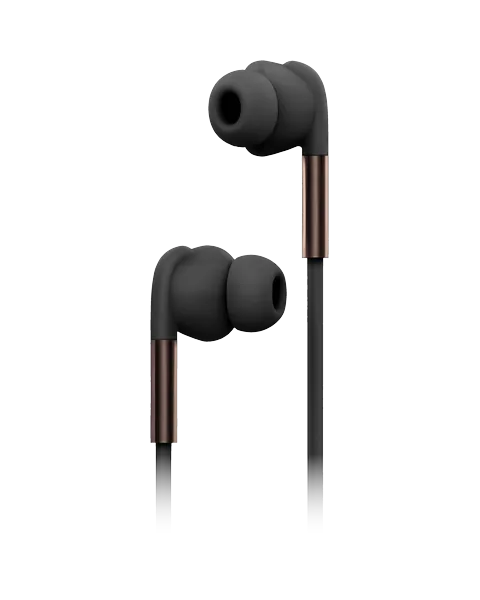
Wired is the simplest way to hear what Lossless sends. The Xenon plugs into the USB-C port of an iPhone 15 or later, or any USB-C phone, and carries its own 24-bit / 96 kHz DAC in the cable, above the 24-bit, 48 kHz ceiling of Apple Music's Lossless tier.
Its 14 mm dual titanium drivers sit in a metal housing, with ear tips in three sizes to get the seal right first.
Step by step
- Check which codecs your phone and earbuds share in Bluetooth or developer settings.
- Fit the right ear tips and check the seal.
- Pick a familiar, well-recorded track and listen in a quiet room.
- Switch the app between high quality and lossless and compare.
- Use wired headphones if you want true lossless playback.
Questions people ask
Do AirPods play lossless audio?
Over standard Bluetooth with an iPhone, AirPods receive audio through the AAC codec, which is lossy, so a lossless Apple Music track is re-encoded on the way. What Hi-Fi? lists iPhones as supporting AAC and SBC. For true lossless from an iPhone you need a wired connection.
Is lossless worth it on wireless earbuds?
Mostly not, unless both phone and earbuds support a lossless codec such as aptX Lossless. Otherwise the stream is re-compressed to the shared codec. Fit, background noise and tuning usually affect what you hear far more. Lossless is more worthwhile with wired headphones in a quiet room.
What bitrate is lossless audio?
CD-quality stereo, 16-bit at 44.1 kHz, runs at about 1,411 kbps uncompressed. Lossless codecs such as ALAC and FLAC shrink files without discarding data. Hi-res lossless, such as 24-bit at 192 kHz, needs much more and, according to Apple, external equipment like a USB DAC.
Does lossless use more mobile data?
Yes, much more than standard streaming, because the files are larger. If you stream on mobile data, consider lossless only on Wi-Fi or download albums in advance. With wireless earbuds that re-compress the stream anyway, the extra data often brings little audible benefit.
Sources
- Apple Newsroom: Apple Music announces Spatial Audio and Lossless Audio · 17 May 2021
- What Hi-Fi?: What are the best Bluetooth codecs? aptX, AAC, LDAC and more explained · accessed 22 Nov 2026
- SoundGuys: Bluetooth codecs explained · accessed 22 Nov 2026
- Sony: LDAC · accessed 22 Nov 2026
- Wikipedia: Presbycusis · accessed 22 Nov 2026
- Audio Engineering Society E-Library: insert earphone leakage and bass response (abstract) · accessed 22 Nov 2026
Wireless Audio
Bluetooth, codecs, and the milliseconds that matter.
Read →Explainer · 4 min readHi-Res Audio on Bluetooth: what is real
The badge on the box is real. So is the compression that makes it fit.
Read →Explainer · 4 min readWired vs wireless audio today
Bluetooth has closed most of the gap. Here is exactly where wired is still ahead
Read →Explainer · 5 min readLDAC, aptX, AAC: which codec your phone really uses
The logo on the earbud box is a promise. Your phone decides whether it is kept.
Read →Explainer · 4 min readCleaning earbuds safely
Most earbud damage during cleaning comes from the toothpick, not the dirt.
Read →Explainer · 5 min readWhat 'drivers' and 'mm' mean on a spec sheet
12 mm sounds bigger than 10 mm. Your ears may not agree, and here is why.
Read →