Journal · Explainer · 4 min read
Wired vs wireless audio today
Bluetooth has closed most of the gap. Here is exactly where wired is still ahead
A CD-quality stream needs about 1,411 kbps. Standard Bluetooth A2DP, as Sony describes it, runs at 328 kbps. Even the strongest common Bluetooth codecs compress the music. So is wired audio still better, and does it matter on a crowded train?
Short answerWired still has three clear advantages: true lossless playback, almost no delay, and no battery to charge. Wireless now leads on convenience, noise cancelling, calls and features such as spatial audio. In quiet listening with good files, wired can sound cleaner; in daily use on the move, most people will hear the fit and noise long before the codec.
The numbers on each side
Bit rate. CD-quality audio, 16-bit at 44.1 kHz in stereo, works out to about 1,411 kbps: 16 bits, times 44,100 samples a second, times two channels. What Hi-Fi?'s codec guide gives SBC up to about 320 to 345 kbps, which makers often cap near 256 kbps to save battery; AAC up to about 264 to 320 kbps depending on the source; aptX 352 kbps; aptX HD 576 kbps; and LDAC up to 990 kbps. Sony says LDAC moves between 330, 660 and 990 kbps depending on conditions, and claims about three times the data of standard Bluetooth.
Lossless. What Hi-Fi? says almost every Bluetooth codec is lossy. The main exception is aptX Lossless at about 1.1 to 1.2 Mbps for CD quality, and it needs both phone and earbuds to support it. A wire carries the full signal.
Streaming services push further. Apple Music's lossless tier, announced in 2021, starts at CD quality and reaches 24-bit at 48 kHz, while Hi-Res Lossless goes to 24-bit at 192 kHz and, Apple says, needs an external USB DAC. No mainstream Bluetooth codec carries that.
Latency. Wikipedia's summary of the Bluetooth specifications gives classic Bluetooth audio a latency of roughly 100 to 200 ms, against 20 to 30 ms for LE Audio. What Hi-Fi? notes aptX Low Latency kept delay under 40 ms. A wired connection adds effectively none, which is why rhythm games and live monitoring still favour wires.
| Format | Bit rate | Lossless |
|---|---|---|
| CD quality over a wire | About 1,411 kbps | Yes |
| SBC | About 320 to 345 kbps | No |
| AAC | About 264 to 320 kbps | No |
| aptX | 352 kbps | No |
| aptX HD | 576 kbps | No |
| LDAC | 330, 660 or 990 kbps | No |
| aptX Lossless | About 1.1 to 1.2 Mbps | Yes, at CD quality |
Source: What Hi-Fi? codec guide; Sony, LDAC
kbps
Source: What Hi-Fi? codec guide; Sony, LDAC
How each path carries sound
With wired earphones, the phone or a small DAC turns the digital file into an analogue signal and sends it down copper to the drivers. Nothing is squeezed and nothing is delayed beyond the electronics.
With wireless, the phone compresses the audio with a codec, sends it over the 2.4 GHz radio, and the earbuds decode it and drive their own tiny amplifier. Think of sending a sofa by courier. Wired is carrying it through the door whole. Wireless takes the legs off, packs it flat, and reassembles it on arrival. A good packer leaves no visible marks; a hurried one loses a screw. The codec is the packer.
Wireless earbuds also do things wires cannot. They run noise cancelling with their own microphones, tune the sound with built-in EQ, and track your head for spatial audio. Those features often matter more to what you hear on a bus than the last few hundred kilobits.
Which suits which listener
Commuters and travellers: wireless, ideally with ANC. Engine and traffic noise mask fine detail far more than codec compression does.
Home listening with lossless files: wired, or wireless with aptX Lossless if both your phone and earbuds support it.
Gamers and musicians: wired for zero delay, or LE Audio and low-latency modes as the next best option.
Calls all day: wireless, for the microphones, the comfort of no cable to the phone, and voice processing.
Battery, comfort and hearing
Wireless brings a battery to manage. Apple rates AirPods Pro 3 at up to 8 hours of music with noise cancelling on, for example, and most earbuds need their case to last a full day. Wired earphones never run flat.
Noise cancelling can protect your hearing indirectly. The WHO advises keeping a phone at no more than 60 per cent of maximum volume. Earbuds that block the bus engine let you listen at a lower level than open wired earphones in the same seat.
What to check before you buy
For wireless, check the codecs on both sides. LDAC or aptX only helps if your phone supports the same one; iPhones use AAC.
For wired, check your phone's port. Most new phones have only USB-C, so you need USB-C earphones or a USB-C DAC adapter.
Check latency claims for video and games. Look for LE Audio or a named low-latency mode rather than a vague promise.
Judge fit before format. A wired earphone that seals poorly will lose more bass than any codec ever takes away.
Myth corner
Myth: Bluetooth always sounds noticeably worse than wired. In controlled, quiet listening, trained ears can sometimes hear differences at lower bit rates. In everyday use, the earbuds' tuning, fit and noise cancelling usually make a bigger difference than the codec. The wire's real advantages are lossless playback, zero latency and no charging.
The right one for you
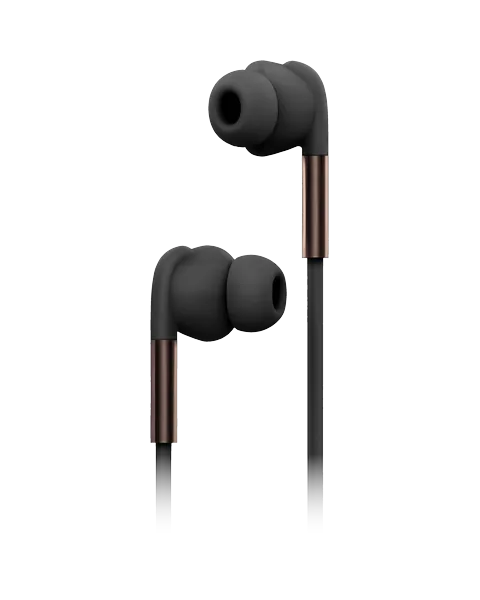
If you lean towards the wire, the Xenon carries its own 24-bit/96 kHz DAC in the cable, with 14 mm dual titanium drivers in a metal housing. It fits every USB-C phone, iPhone 15 and later, with nothing to pair and nothing to charge.
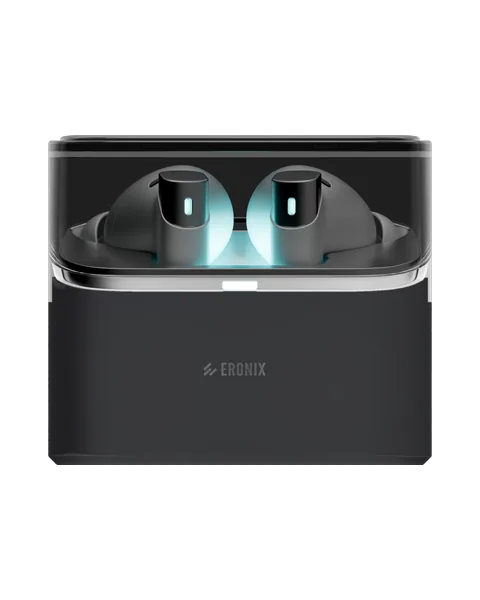
If the commute decides it, the Euphoria brings 45 dB noise cancelling and 5.5 hours of playback, for iPhone and Galaxy S, with aptX HD for Android phones that support it.
Step by step
- Decide where you listen most: on the move, at home or while gaming.
- For wireless, match a codec your phone supports, such as AAC, aptX or LDAC.
- For wired, check whether you need USB-C earphones or a USB-C DAC.
- Check latency features if you watch video or play games.
- Test fit first, then listen to a familiar track at moderate volume.
Questions people ask
Can Bluetooth earbuds play lossless audio?
Mostly no. What Hi-Fi? says nearly every Bluetooth codec is lossy. aptX Lossless can carry CD-quality audio at about 1.1 to 1.2 Mbps, but both the phone and earbuds must support it. Apple Music's Hi-Res Lossless, up to 24-bit at 192 kHz, needs a wired USB DAC, according to Apple.
Are wired earphones better for gaming?
Yes, for timing. A wired connection adds almost no delay, while classic Bluetooth audio runs at roughly 100 to 200 ms, according to Wikipedia's summary of the specifications. LE Audio cuts that to about 20 to 30 ms, and aptX Low Latency was rated under 40 ms, so newer wireless options narrow the gap.
Does LDAC sound as good as wired?
LDAC carries up to 990 kbps, which Sony says is about three times standard Bluetooth's data. That is close to but still below the roughly 1,411 kbps of CD-quality audio, and it is lossy. In practice it often drops to 330 or 660 kbps in busy radio conditions, so a wired link remains the reference.
Do I need a DAC for wired earphones on a new phone?
If your phone has no 3.5 mm jack, yes: either USB-C earphones with a built-in DAC or a small USB-C to 3.5 mm adapter that contains one. Apple notes that Hi-Res Lossless playback needs an external USB DAC, while CD-quality lossless plays natively on Apple devices.
Sources
- What Hi-Fi?: What are the best Bluetooth codecs? aptX, AAC, LDAC and more explained · accessed 22 Nov 2026
- Sony: LDAC · accessed 22 Nov 2026
- Apple Newsroom: Apple Music announces Spatial Audio and Lossless Audio · May 2021, accessed 22 Nov 2026
- Bluetooth (Wikipedia: specification version history and LE Audio) · accessed 22 Nov 2026
- Apple Newsroom: Introducing AirPods Pro 3 · accessed 22 Nov 2026
- WHO: Deafness and hearing loss, safe listening · accessed 22 Nov 2026
Wireless Audio
Bluetooth, codecs, and the milliseconds that matter.
Read →Explainer · 5 min readWhat ANC can and cannot block
Why the bus engine fades but the conductor's voice does not, and what to check.
Read →Explainer · 4 min readTransparency mode: how earbuds let the world back in
Your earbuds can hear the platform announcement for you. Here is how, and where it stops.
Read →Explainer · 4 min readCall quality: how earbud microphones handle noise
Your mouth is a hand's width from the mic. Everything else makes up for that.
Read →Explainer · 4 min readENC vs ANC: two different jobs
One protects your ears. The other protects the person on the other end of the call.
Read →Comparison · 4 min readEarbuds vs neckbands vs over-ear
Five grams or nearly four hundred. Weight says a lot about what each style does best.
Read →