Journal · Explainer · 4 min read
Noise cancelling headphones for Indian commutes
Metro rumble, auto engines, horns. What noise cancelling removes, and what it should not.
An hour on the metro, then a crowded bus, then an auto through traffic. Without headphones it is exhausting; with ordinary earbuds you push the volume up until the music fights the engine. Do noise cancelling headphones actually make an Indian commute calmer?
Short answerYes, for the right sounds. Active noise cancelling works best on low, steady noise, such as train rumble, engine drone and air conditioning, and less well on sudden, higher-pitched sounds like horns and conversation. Its biggest benefit is that you can listen at a lower, safer volume. A good seal matters as much as the electronics.
The numbers: how loud a commute is
Wikipedia's summary of noise research puts road traffic and construction at about 70 to over 100 dB, and notes that repeated exposure above about 85 dB is associated with a higher risk of hearing damage. The 2018 WHO environmental noise guidelines for Europe, as that summary reports, recommend a day-evening-night average for road traffic below 53 dB. Even the bottom of the traffic range sits well above that.
Listening time adds up on top of that. The WHO's safe-listening guidance allows 40 hours a week at 80 dB, but only 12 hours 30 minutes at 85 dB and 4 hours at 90 dB. A commuter who listens two hours a day, five days a week, uses 10 hours. At 85 dB that is most of the weekly allowance; at 90 dB, pushed up to beat the traffic, it is more than double.
What noise cancelling can remove has known limits. Wikipedia's article on active noise control, summarising the acoustics literature, says cancellation works best at low frequencies and becomes unpredictable above about 1,000 Hz. An early working model, an active earmuff from 1957, covered about 50 to 500 Hz with up to about 20 dB of reduction. Designs have improved since, but the pattern holds: deep sounds cancel well, sharp ones much less.
| Average level | Weekly allowance | 10 h of listening |
|---|---|---|
| 80 dB | 40 h | Well within |
| 85 dB | 12 h 30 min | Most of it |
| 90 dB | 4 h | More than double |
Source: WHO, safe listening guidance
How noise cancelling works on a moving train
SoundGuys explains the basics. Small microphones on the earcups or earbuds sample the outside noise, and the electronics create an inverted copy, an anti-noise wave. When the two meet in your ear, they largely cancel. Steady, predictable sounds, like an engine drone, are easier to recognise and cancel than sudden, random ones, such as people talking.
Commute noise is a mix of both. The rumble of a metro carriage, a bus engine idling and the hiss of air conditioning are low and steady, ideal targets. A horn, a conductor's call or a phone ringing nearby are sudden and higher-pitched, so they come through more, softened rather than removed.
That is where passive isolation takes over. SoundGuys notes that physically blocking sound, through a well-sealed ear tip or a closed ear cup, is separate from active cancelling. Isolation handles the higher frequencies that ANC struggles with. Together, they cover the full range.
Think of it like noise-reducing glass on a train window and a thick curtain together. The glass, like ANC, is tuned to cut the deep rumble of the tracks; the curtain, like a good seal, muffles the sharper sounds from the corridor. Either alone leaves a gap.
Safety on the street and platform
On a train or bus, strong cancelling is a comfort. On foot, crossing roads, or on a crowded platform, you need to hear horns, announcements and people behind you. Most noise-cancelling earbuds and headphones offer a transparency or ambient mode that lets outside sound in through the microphones. Use it whenever you are walking or waiting at an edge.
If you feel dizzy, disoriented or uneasy with strong cancelling, SoundGuys notes that some listeners report this, sometimes with headaches. It suggests lowering the cancellation strength in the companion app, choosing a gentler mode, or switching ANC off for a while.
What to check before you buy
Check the seal first. Try every tip size, or wear over-ears for a few minutes. If outside noise floods in at the edges, no amount of ANC will fix it.
Look for a transparency or ambient mode that is quick to switch, ideally with a single press, so you use it every time you step off the train.
Test with your own commute sounds. Play a recording of traffic or a train from your phone speaker, or try the headphones near an air-conditioning unit. The low hum should fade sharply.
Check battery life with ANC on. Makers often quote battery life with cancelling off; your commute needs the ANC-on figure, plus margin for delays.
Consider comfort and heat. On humid days, earbuds may suit some people better than over-ear cups, and vice versa for long train rides.
Myth corner
Myth: noise cancelling headphones block everything, so they are dangerous on roads. They cut low, steady sounds most and let sudden, higher-pitched sounds like horns through more, according to the acoustics summarised on Wikipedia. That still lowers awareness, so use transparency mode when walking. The bigger everyday risk is turning volume up without ANC.
The right one for you
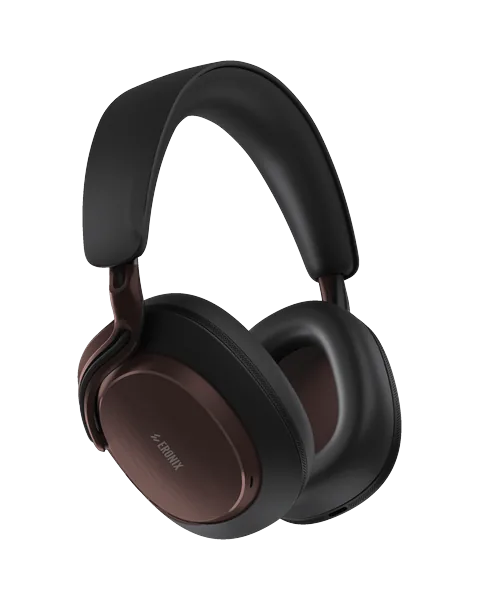
For the metro and the bus, this guide asked for strong cancelling of low, steady noise and a good seal. The Argent is built for the daily commute: adaptive noise cancelling over the ear, six microphones, a metal yoke and ear pads you can replace, for iPhone and Galaxy.
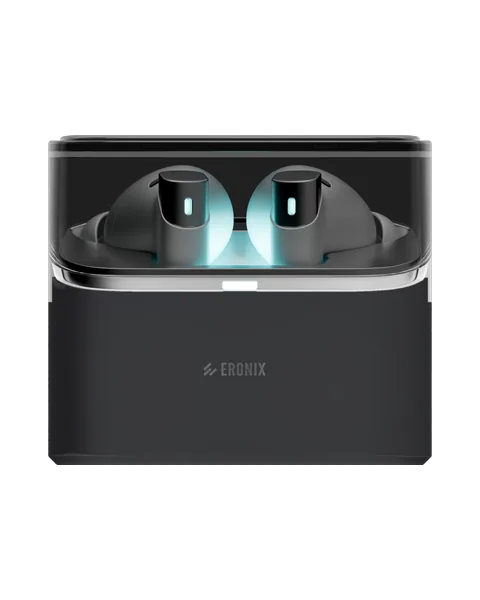
If humid days favour earbuds, the Euphoria brings 45 dB noise cancelling and an IPX6 rating, with 5.5 hours of playback on a charge.
Step by step
- Try every ear tip size until outside noise drops noticeably.
- Switch ANC on and test it against a steady hum, such as an air conditioner.
- Set a quick control for transparency mode and use it when walking.
- Keep volume below 60 percent of maximum on your commute.
- Check battery life with ANC on against your longest commute.
Questions people ask
Do noise cancelling earbuds block car horns?
Not fully. Active noise cancelling is most effective at low, steady frequencies and becomes unpredictable above about 1,000 Hz, according to the acoustics literature summarised on Wikipedia. Horns are sudden and higher-pitched, so they come through softened. Use transparency mode when walking near traffic.
Is it safe to use ANC on a metro or local train?
Seated or standing inside, yes, and it can let you listen at a lower volume, which the WHO links to safer listening. On platforms and while boarding, switch to transparency mode so you can hear announcements, doors and people around you.
Can noise cancelling protect my hearing?
Indirectly. By cutting background noise, ANC lets you hear music clearly at lower volume. The WHO allows 40 hours a week at 80 dB but only 12 hours 30 minutes at 85 dB, and recommends keeping device volume below 60 percent of maximum.
Are over-ear or in-ear ANC headphones better for commuting?
Both can work. Over-ears often isolate well and are comfortable for long rides, but are bulkier and warmer. Earbuds are compact and suit crowded transport and humid weather. In both, a good seal decides much of the result, because passive isolation handles sounds ANC misses.
Why do I feel dizzy or uneasy with noise cancelling on?
Some listeners report dizziness or disorientation with strong cancelling, sometimes with headaches, as SoundGuys notes. One theory is that very low-frequency effects stimulate the balance organs. Lowering the cancellation strength in the companion app, choosing a gentler mode or switching ANC off for a while usually helps.
Sources
- Noise pollution, Wikipedia · accessed 22 Nov 2026
- Active noise control, Wikipedia · accessed 22 Nov 2026
- WHO: Deafness and hearing loss, safe listening · accessed 22 Nov 2026
- SoundGuys: How noise cancelling headphones work · accessed 22 Nov 2026
Active Noise Cancellation
Silence, computed in real time.
Read →Explainer · 5 min readWhat ANC can and cannot block
Why the bus engine fades but the conductor's voice does not, and what to check.
Read →Comparison · 4 min readEarbuds vs neckbands vs over-ear
Five grams or nearly four hundred. Weight says a lot about what each style does best.
Read →Explainer · 4 min readWired vs wireless audio today
Bluetooth has closed most of the gap. Here is exactly where wired is still ahead
Read →Explainer · 4 min readHeadphones for work from home
Your colleagues hear your microphone, not your music. Choose for the eight-hour call day.
Read →Explainer · 4 min readTransparency mode: how earbuds let the world back in
Your earbuds can hear the platform announcement for you. Here is how, and where it stops.
Read →