Journal · Comparison · 5 min read
Open-ear vs in-ear for workouts
On the road you want to hear the auto behind you. In the gym you want to hear the beat.
A morning run on an Indian road is not a quiet track. There are two-wheelers cutting close, a bus horn every minute and dogs that take an interest. The same person at the gym an hour later wants the opposite: shut out the clang of plates and focus. Can one pair do both?
Short answerFor running or cycling outdoors, open-ear designs are safer, because they leave the ear canal open and you hear traffic. In a gym, sealed in-ear earbuds give more bass and focus. Sealed in-ears block roughly 10 to 15 dB passively; open-ear designs, almost nothing. Either should be rated at least IPX4 for sweat.
Isolation, bass and sweat in numbers
Isolation. Wikipedia's summary of headphone research puts sealed in-ear models at about 10 to 15 dB of passive isolation, before any noise cancelling, which can add 20 dB or more on low, steady sounds. Open-ear and bone-conduction designs are built to keep the canal open and isolate almost nothing.
Bass. An Audio Engineering Society paper on insert earphones reports that a leak only about 0.5 mm in diameter can reduce bass at 50 Hz by about 15 dB. An open-ear design is, in effect, all leak. Its low end will always sound lighter than a sealed earbud's.
Sweat. Apple's support page lists its earbuds at IPX4, IP54 or IP57 depending on model, approved for non-water sports and exercise but not swimming, showers or saunas. Wikipedia's summary of the IP code describes IPX4 as protection against water splashed at the enclosure from any direction.
| Measure | Sealed in-ear | Open-ear |
|---|---|---|
| Passive isolation | About 10 to 15 dB | Almost none |
| Bass at 50 Hz | Full with a seal; a 0.5 mm leak cuts about 15 dB | Lighter, no seal |
| Hears traffic | Limited | Yes |
| Suits | Gym, treadmill, indoor cycling | Road running, cycling, walking |
Source: Headphones (Wikipedia); AES E-Library, accessed 22 Nov 2026
Hours per week
Source: World Health Organization, Safe listening, accessed 22 Nov 2026
How it works: why a sealed ear changes what you hear
A sealed earbud turns the ear canal into a tiny closed chamber. The driver only has to move a small volume of air, so bass comes easily, and the seal stops outside sound. That is ideal for focus, and risky near traffic.
An open-ear design sits outside the canal and sends sound in through the air, or through bone in front of the ear. Outside sound reaches the eardrum unhindered, mixed with your music. You hear the horn, but you also hear the gym's speakers fighting your playlist.
Think of it like a car window. Rolled up, the music is rich and the street disappears. Rolled down, the street comes in with the breeze. On a busy road, most drivers would rather hear what is coming.
Movement adds a second difference. A sealed earbud is held by friction in the canal, so jaw movement, sweat and impact can slowly break the seal, and you notice it as bass suddenly thinning mid-run. An open-ear design is held by a hook or band around the ear or head, so it does not depend on the seal at all. Its sound stays the same when it shifts slightly, which is one reason runners like it.
Road safety and the volume trap
Wikipedia's summary notes that several countries and states have made it illegal to wear headphones while driving or cycling, and that noise-cancelling headphones add extra risk where sound is a safety cue, such as near traffic. Whatever local rules say, the logic holds for runners too.
Open-ear designs have their own trap. Because they do not block noise, you may turn the volume up to hear over traffic. The WHO lists 80 dB as safe for 40 hours a week but 90 dB for only 4. The same summary cites a Finnish study that advised exercisers to listen at half their normal volume for half an hour. Keep open-ear volume modest; the point is to hear the world.
Which to choose for which workout
Road running, cycling, walking in traffic: open-ear. Awareness first, and keep the volume low.
Gym, treadmill, indoor cycling: sealed in-ear, with a secure fit. Bass and focus, and no traffic to worry about.
Yoga and stretching: either, as long as nothing presses when you lie on your side.
Swimming: neither, unless a product is specifically rated and designed for it. Apple's page explicitly excludes swimming for its earbuds.
Both in one: in-ear earbuds with a good transparency mode let outside sound in through microphones. They are not the same as an open ear, but they help on mixed routes.
What to check before you buy
Check the IP rating on the box. IPX4 or better for sweat. A higher first digit, such as IP54 or IP55, adds dust protection, which helps on dusty roads.
Check the fit by moving. Jump, shake your head and look down at the counter. In-ear tips should stay put; open-ear hooks should not slide.
Check the controls work with sweaty fingers. Physical buttons or squeeze controls are often easier than touch panels mid-run.
Check the case rating too. Apple notes that the MagSafe and wireless cases for its first AirPods Pro are not water resistant at all. If earbuds get wet, Apple advises letting them dry for at least two hours before use or charging.
Myth corner
Myth: sweatproof earbuds can be rinsed under the tap after a workout. Apple's guidance says its earbuds are sweat and water resistant, not sweatproof or waterproof, and should be kept away from running water and soaps. Wipe them with a dry cloth instead.
The right one for you
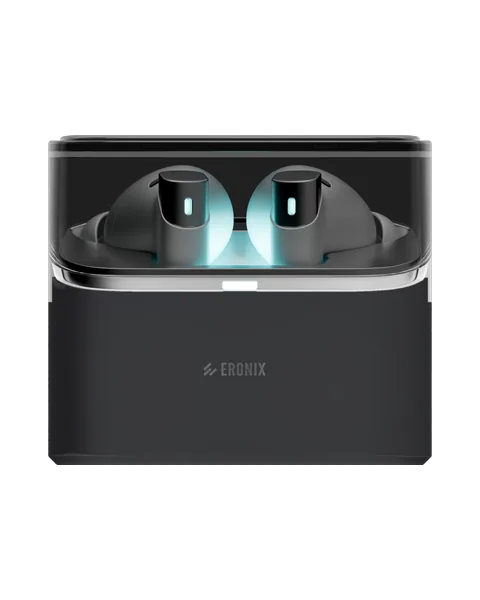
The road and the gym ask for opposite things, so the honest answer is two pairs. For the road, the Sirocco uses open-ear clips with directional drivers, so traffic stays audible while the music plays; it is rated IP55 for sweat and rain, with 8 hours on the earbuds and 32 more from the case.
For the gym, the Euphoria adds noise cancelling rated 45 dB and an IPX6 rating, so the clang of plates fades and the volume can stay low. The Sirocco works with any phone; the Euphoria with iPhone, Galaxy S and OnePlus number-series phones.
Step by step
- Decide where you exercise most: roads or indoors.
- Choose open-ear for roads and sealed in-ear for the gym.
- Check the box for IPX4 or better.
- Test the fit by jumping and shaking your head at the counter.
- Wipe earbuds dry after every session and let them dry before casing.
Questions people ask
Are open-ear earbuds good for the gym?
They work, but a gym is noisy, and open-ear designs block almost no sound, so music competes with speakers and clanging weights. Many people then raise the volume. Sealed in-ear earbuds suit the gym better; open-ear designs make more sense outdoors where hearing traffic matters.
What IP rating do workout earbuds need?
IPX4 or better. IPX4, as summarised on Wikipedia, means water splashed from any direction has no harmful effect, which covers sweat and light rain. Ratings such as IP54 add dust protection. Even IP57 earbuds are not meant for swimming or showers, according to Apple's support page for its own models.
How do I stop earbuds falling out while running?
Try every tip size and choose the one that seals with gentle pressure; a slightly larger tip often holds better. Insert with a small twist to seat it. Wing tips or hooks help some ears. If nothing stays, an open-ear hook design may suit your ear shape better.
Is it safe to run with noise-cancelling earbuds?
On roads, it is risky. Noise cancelling removes steady background sound, and Wikipedia's summary notes ANC can mask sounds needed for safety, such as traffic. If you run with in-ear earbuds outdoors, use transparency mode and keep the volume low, or choose an open-ear design.
Sources
- Headphones (Wikipedia) · accessed 22 Nov 2026
- About sweat and water resistance of AirPods (Apple Support) · accessed 22 Nov 2026
- AES E-Library: insert earphone leakage and bass response (abstract) · accessed 22 Nov 2026
- IP code (Wikipedia summary of IEC 60529) · accessed 22 Nov 2026
- Deafness and hearing loss: Safe listening (World Health Organization) · accessed 22 Nov 2026
Acoustics
What a driver actually does.
Read →Comparison · 4 min readEarbuds vs neckbands vs over-ear
Five grams or nearly four hundred. Weight says a lot about what each style does best.
Read →Explainer · 5 min readWhat ANC can and cannot block
Why the bus engine fades but the conductor's voice does not, and what to check.
Read →Explainer · 4 min readTransparency mode: how earbuds let the world back in
Your earbuds can hear the platform announcement for you. Here is how, and where it stops.
Read →Explainer · 5 min readIP ratings for earbuds: sweat, rain and showers
Two digits on the box decide if earbuds survive the monsoon. Neither covers the shower.
Read →Explainer · 5 min readLDAC, aptX, AAC: which codec your phone really uses
The logo on the earbud box is a promise. Your phone decides whether it is kept.
Read →