Journal · Comparison · 5 min read
ANC earbuds vs ANC headphones
Same idea, two shapes. The deciding number is how long they stay on your head.
On a Mumbai local or a long-haul flight you will see both: tiny earbuds tucked into ears and large headphones clamped over them. Both claim active noise cancellation. Is one simply quieter, or are they built for different days?
Short answerBoth shapes use the same electronics, and both cancel low, steady noise such as engine hum far better than voices. Over-ear headphones add more passive blocking and usually two or three times the battery. Earbuds weigh a few grams and fit in a pocket. Choose by how many hours at a stretch you will wear them.
The numbers side by side
Apple publishes unusually complete specs for one model of each shape, which makes them a fair reference for the category. Its in-ear AirPods Pro 3 list each earbud at 5.55 g and up to 8 hours of listening with noise cancellation on. Its over-ear AirPods Max list 386.2 g and up to 20 hours with noise cancellation, using eight microphones for the cancelling alone. That is about 35 times the weight of the pair of earbuds for two and a half times the battery.
What are they fighting? A study in Canadian Acoustics that measured commercial flights recorded 80 to 85 dB(A) of continuous noise in the cabin during flight, and 60 to 65 dB(A) before takeoff. That is the steady roar both shapes are designed for.
Where does cancelling work? Wikipedia's summary of active noise control says cancelling suits low frequencies, the region of engines, fans and traffic rumble; an early 1957 earmuff design worked from about 50 to 500 Hz. Above about 1,000 Hz, sound waves cancel and reinforce unpredictably, which is why voices and clatter leak through any ANC product.
| Measure | In-ear (AirPods Pro 3) | Over-ear (AirPods Max) |
|---|---|---|
| Weight | 5.55 g per earbud | 386.2 g |
| Listening with ANC on | Up to 8 h | Up to 20 h |
| 5-minute charge gives | About 1 h | About 1.5 h |
| Microphones for cancelling | Not stated here | 8 |
Source: Apple technical specifications, accessed 22 Nov 2026
Hours per charge
Source: Apple technical specifications, accessed 22 Nov 2026
How it works: anti-noise plus a good seal
SoundGuys describes ANC as phase inversion: microphones sample the noise outside, and the electronics play an inverted copy that cancels it inside. Steady sounds such as engine hum are easy to predict and cancel. Sudden or changing sounds, such as speech, are much harder.
Everything above the ANC range is handled by passive isolation, the plain physical blocking of sound. This is where the shapes differ. An over-ear cup seals a large cushion around the ear. An earbud seals a small tip inside the ear canal. SoundGuys' fit testing found that the better the tip fits, the more isolation you get, and that a poor seal makes bass drop significantly.
Think of it like a room in a noisy street. ANC is the air purifier that removes one steady smell. Passive isolation is the closed window. A great purifier with the window open still lets the street in. For earbuds, the window is the ear tip; for headphones, it is the cushion.
Battery and charging: the hidden difference
Battery is where the size gap shows most. A headphone has room for a large cell across its headband and cups, which is how Apple's over-ear model reaches 20 hours with ANC on. An earbud has to fit a cell inside a shell that weighs a few grams, which is why Apple's in-ear model lists 8 hours per charge with ANC, and relies on the case for the rest of the day.
That makes the two shapes behave differently on a long day. Earbuds work in short sessions with top-ups in the case; they are never far from full if you pause for a meal. Headphones run all day without a break, but when they are flat they are flat, unless you can plug in. Apple's published quick-charge figures, about an hour from five minutes for its earbuds and about one and a half hours from five minutes for its headphones, show how both shapes try to cover the gap.
For a buyer, the practical question is simple: will you have the case with you? If yes, earbuds can match a headphone's day. If you need one uninterrupted stretch of 10 hours or more, the headphone is the safer choice.
Which shape suits which day
Flights and long train journeys: headphones usually make more sense. Longer battery covers a full day of travel, and the large cushions give strong passive blocking over many hours. The trade-off is space in the bag.
Daily commute and walking: earbuds. A few grams in the ear, a case that fits in a pocket, and enough battery for both legs of most commutes. Choose the right tip size, or ANC performance falls away.
Office and calls: either. Earbuds are discreet; headphones are often more comfortable for a full workday if they clamp gently. Neither will fully silence a colleague's voice, because speech sits above the strong ANC range.
Hot weather: worth weighing in India. Over-ear cushions trap heat around the ear, which some people find uncomfortable in summer. Earbuds avoid this but can feel tiring in the canal after several hours.
What to check before you buy
Check the battery figure with ANC on. Makers often quote a larger number with ANC off. The ANC-on number is the one you will live with.
Check the tip sizes for earbuds. Apple ships five sizes with its in-ear model; more sizes mean a better chance of a proper seal, which matters as much as the electronics.
Check the clamp and weight for headphones. Wear them for five full minutes at the counter. Pressure on the jaw or the top of the head will feel ten times worse after two hours.
Check the quick-charge figure. Apple lists 5 minutes of charging for about 1 hour of listening in the earbuds and about 1.5 hours in the headphones. A fast top-up before a trip can matter more than total battery.
Myth corner
Myth: good ANC makes the world silent. Active cancelling works mainly on low, steady sounds such as engine and fan hum. Voices, keyboard taps and announcements sit higher, and only passive sealing reduces them. Expect a quieter world, not a silent one.
The right one for you
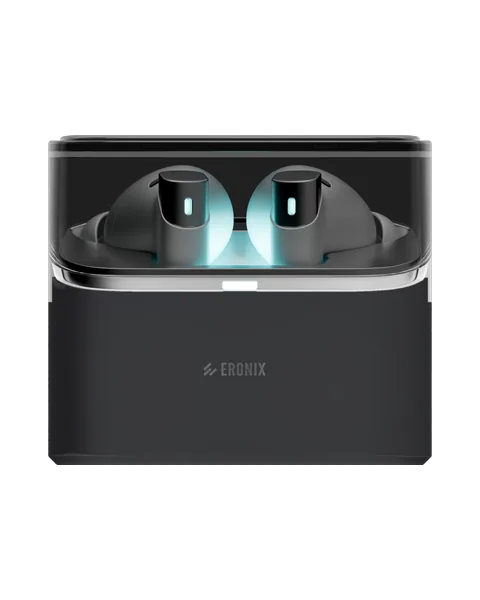
If your days come in sessions with a case in your pocket, the Euphoria earbuds list noise cancelling to 45 dB and 5.5 hours of playback, with aptX HD and an IPX6 rating.
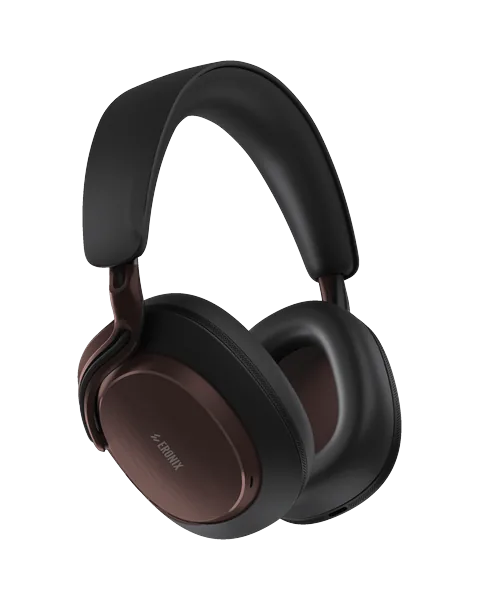
If you want one long stretch without a top-up, the Argent over-ear lists adaptive noise cancelling with six microphones and 50 hours of playback, on a metal yoke with ear pads you can replace. Both are made for iPhone and Galaxy.
Step by step
- Decide how many hours at a stretch you will wear them on a typical day.
- Compare the battery figure with ANC switched on, not off.
- Try every ear tip size or wear headphones for five full minutes before buying.
- Test with noise near you: switch ANC on and off near a fan or a busy road.
- Check the quick-charge time for travel days.
Questions people ask
Do over-ear headphones cancel more noise than earbuds?
Often they block more overall, mainly through passive isolation from large cushions, while the active cancelling itself works on the same low frequencies in both. Well-fitted earbuds with the right tip can come close. A poor tip seal is the most common reason earbuds feel weaker at blocking noise.
Are ANC earbuds good enough for flights?
For short and medium flights, yes, if the tips seal well. Cabin noise measured by a Canadian Acoustics study was 80 to 85 dB(A) in flight, mostly low hum that ANC handles well. For long-haul flights, battery life matters: earbuds often run about 8 hours with ANC, so use the case to top up.
Why can I still hear voices with noise cancellation on?
Active cancelling is most effective at low frequencies, where engine and fan noise live, and above about 1,000 Hz it becomes unpredictable. Speech is less steady and sits higher, so it is much harder to predict and cancel. Voices are reduced mainly by passive sealing, so a better fit helps more than a stronger ANC setting.
Is ANC safe for my ears?
ANC itself does not harm hearing, and it can help by letting you listen at a lower volume in noisy places. SoundGuys notes that some listeners report dizziness, and one theory links it to low-frequency effects on the balance organs. If you feel uneasy, lower the ANC strength or switch it off and take breaks.
Sources
- How noise cancelling headphones work (SoundGuys) · accessed 22 Nov 2026
- How your in-ears fit matters a lot (SoundGuys) · accessed 22 Nov 2026
- Active noise control (Wikipedia) · accessed 22 Nov 2026
- In-cabin noise levels during commercial aircraft flights (Canadian Acoustics) · accessed 22 Nov 2026
- AirPods Pro technical specifications (Apple) · accessed 22 Nov 2026
- AirPods Max technical specifications (Apple) · accessed 22 Nov 2026
Active Noise Cancellation
Silence, computed in real time.
Read →Comparison · 4 min readEarbuds vs neckbands vs over-ear
Five grams or nearly four hundred. Weight says a lot about what each style does best.
Read →Explainer · 5 min readWhat ANC can and cannot block
Why the bus engine fades but the conductor's voice does not, and what to check.
Read →Explainer · 4 min readEarbuds for flights: what actually matters
The engine hum is the easy part. Fit, battery and volume decide how you land.
Read →Explainer · 4 min readSafe listening: how loud is too loud?
Hearing damage is a dose: loudness times time. Five decibels changes it a lot.
Read →Explainer · 4 min readTransparency mode: how earbuds let the world back in
Your earbuds can hear the platform announcement for you. Here is how, and where it stops.
Read →