Journal · Explainer · 4 min read
How to get a proper seal with earbuds
Three seconds of technique: lift, twist, settle. Then one simple test to prove it worked.
You chose the right ear tip size, yet one earbud still sounds hollow on the morning walk and the noise cancelling fades whenever you chew. The size may be right. The way it goes in may not be.
Short answerLift the outer ear gently up and back with the opposite hand, insert the tip with a small twist, and rotate the earbud until it locks against the ridges of your ear. Then test: with nothing playing, voices around you should sound distant and muffled. If they do not, the seal is not there yet.
What a seal is worth, in decibels
Etymotic Research, a maker of in-ear earphones, rates the passive noise isolation of its sealed earphones at 35 to 42 dB, about 35 dB with triple-flange tips and up to 42 dB with foam, according to its ER4 user manual. That isolation exists only with a seal. Its manual's own test is blunt: if you can easily hear people around you with the earphones switched off, the seal is not good enough.
The cost of a leak is just as large. An Audio Engineering Society paper reports that a gap as small as 0.5 mm across and 2.5 mm long can reduce bass at 50 Hz by about 15 dB. A seal is not a refinement. It is most of the low end.
| Tip or earbud | How to insert | Then |
|---|---|---|
| Silicone tip | Lift the ear up and back, insert with a gentle twist | Let go once outside noise is blocked |
| Foam tip | Roll into a thin cylinder, lift the ear, insert | Hold still about 5 seconds while it expands |
| Stem earbud | Insert the tip, rotate the stem towards your face | Press gently and adjust for each ear |
Source: Etymotic Research ER4 manual; Apple AirPods User Guide
Isolation (dB)
Source: Etymotic Research, ER4 user manual
Why the ear canal fights you
The ear canal is not a straight tube. It bends, usually up and back, before it reaches the eardrum, and its shape changes slightly as your jaw moves. An earbud pushed straight in meets the bend at an angle and leaves a gap on one side.
Think of fitting a cork into a bottle whose neck is slightly bent. Push straight and it jams crooked. Tilt the bottle so the neck lines up, and the cork slides in square. Lifting your ear lines up the neck. Etymotic's manual gives the same cue for its own earphones: pull gently up and out on the back of the ear, then insert.
This is the same technique hearing specialists teach for foam earplugs. Boys Town National Research Hospital describes reaching across the head with the opposite arm and tugging the outer ear upward and backward to open the canal before inserting.
The technique, step by step
For silicone tips: reach over your head with the opposite hand and lift the top of your ear up and slightly back. Place the tip at the canal opening and insert it with a gentle twist. Etymotic's manual says to twist it in until outside noise is blocked. Let go of the ear.
For foam tips: roll the foam into a thin cylinder between finger and thumb first. Lift the ear, insert, and hold the earbud still for about 5 seconds while the foam expands, as Etymotic advises.
For stem earbuds: Apple's guide for AirPods Pro is to insert the tip into the canal opening, rotate the stem towards your face, and press gently to secure it, adjusting angle and rotation for each ear.
Settle and check: walk around for 10 to 15 minutes. Apple's guidance says a good fit feels snug and secure without excess pressure. A tip that is too small feels loose or falls out when you turn your head; one that is too large feels compressed.
What to check before you buy
Count the tip sizes in the box. Three is the minimum; four or five, including an extra-small size, give a far better chance of a seal for smaller canals.
Look for a fit test in the app. Many earbuds play a tone and measure what the inner microphone hears. Apple's version is called the Ear Tip Fit Test, or the Acoustic Seal Test on AirPods Pro 3.
Try the shape in your ear if the shop allows it. Earbuds with a body that rests in the bowl of the ear, the concha, hold the tip in place better during walks and calls.
Check for spare foam or hybrid tips from the maker. Some ears seal far better with foam.
Signs your seal has broken
Bass thins out when you talk or chew. Noise cancelling suddenly lets traffic hum through. Your own footsteps sound loud and thumpy. One side sounds quieter than the other. Each means the tip has backed out slightly; re-seat it with the lift-and-twist and repeat the quiet-room test.
Sweat and heat loosen silicone over a long session, so re-seat both earbuds at the start of a workout and again after the warm-up.
Myth corner
Myth: pushing the earbud in deeper always seals better. Fact: a tip forced too deep can meet the canal's bend and partly block it, which muffles sound, as InnerFidelity's tip measurements noted. Etymotic's manual also warns to remove tips by twisting slowly, not pulling. Aim for snug and square, not deep.
The right one for you
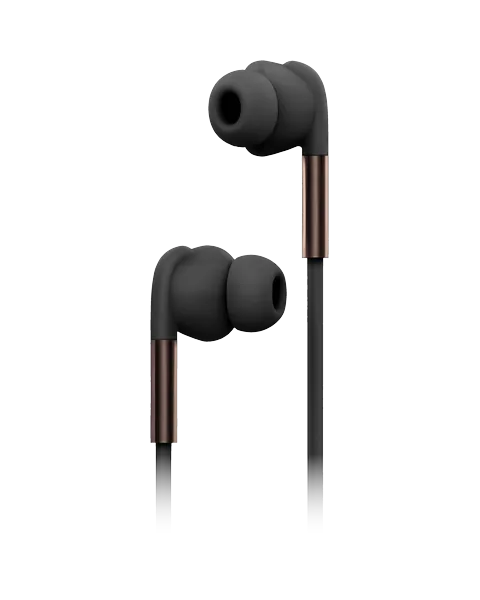
A seal starts with having more than one size to try. Xenon, the ERONIX USB-C wired earphone, ships with ear tips in three sizes, the minimum this article sets, so the lift-and-twist has a tip that fits your canal to work with.
Once it seals, its 14 mm dual titanium drivers and the 24-bit/96 kHz DAC in the cable do the rest. The housing is metal, it works with every USB-C phone including iPhone 15 and later, and there is no battery to run down mid-walk.
Step by step
- Reach over your head with the opposite hand and lift the top of your ear up and back.
- Insert the tip at the canal opening with a gentle twist; roll foam tips thin first and hold 5 seconds.
- Rotate the earbud or its stem until it locks into the bowl of your ear.
- Walk for 10 to 15 minutes, then run your app's fit test if it has one.
- If outside voices still sound clear with playback off, try the next tip size.
Questions people ask
Why do my earbuds keep falling out?
Usually the tip is too small, or it was pushed straight in and is resting on the canal bend. Try one size larger, lift the ear up and back while inserting, and rotate the earbud so its body locks into the bowl of your ear. Different sizes in each ear are normal.
Is it safe to pull my ear while inserting earbuds?
Yes, if gentle. Hearing clinics teach the same up-and-back lift for foam earplugs to straighten the canal. Lift lightly with the opposite hand, insert, and release. Stop if anything hurts, and see a doctor about pain, discharge or excess earwax.
How do I know if my earbuds have a good seal without an app?
Switch playback off and listen. With a good seal, nearby voices and the fan should sound distant and muffled, and your own voice will sound boomy. Then play a track with steady bass: if pressing the earbud gently inward makes the bass jump, the seal is incomplete.
Should earbuds feel tight?
Snug, not tight. Apple's guidance describes a good fit as snug and secure without excessive pressure. Soreness after an hour usually means the tip is too large or too deep. A slightly smaller tip, seated with the lift-and-twist, often seals as well and feels better.
Can earwax affect the seal or the sound?
Yes. Wax on the tip or in the earbud's mesh reduces volume and changes the sound; Etymotic tells owners to replace its filter when loudness drops. Wipe tips and nozzles regularly with a dry cloth. For blocked ears, see a doctor rather than cleaning the canal yourself.
Sources
- ER4PT User Manual (Etymotic Research, via Full Compass) · accessed 22 Nov 2026
- AES E-Library paper on insert earphone leakage and bass response (abstract) · accessed 22 Nov 2026
- Inserting Ear Plugs (Boys Town National Research Hospital) · accessed 22 Nov 2026
- Find the right fit with AirPods Pro (Apple AirPods User Guide) · accessed 22 Nov 2026
- Comply foam tips and the effects of tip selection (InnerFidelity, via Stereophile) · accessed 22 Nov 2026
Acoustics
What a driver actually does.
Read →Explainer · 1 min readHow active noise cancellation actually works
A race measured in fractions of a millisecond.
Read →Explainer · 4 min readEar tips: the cheapest upgrade in audio
Before you blame the earbuds, check the little silicone sleeve holding them in your ear.
Read →Explainer · 5 min readWhat ANC can and cannot block
Why the bus engine fades but the conductor's voice does not, and what to check.
Read →Explainer · 4 min readTransparency mode: how earbuds let the world back in
Your earbuds can hear the platform announcement for you. Here is how, and where it stops.
Read →Explainer · 4 min readEarbuds for flights: what actually matters
The engine hum is the easy part. Fit, battery and volume decide how you land.
Read →