Journal · Explainer · 5 min read
Why does my phone say 'charging slowly'?
Two words on the lock screen, five possible causes, and one order to check them in
You plug in at 11 at night, glance at the lock screen, and there it is: charging slowly. The charger is the same one you used yesterday. So what changed?
Short answerThe phone is drawing less power than it can accept. The usual cause is the weakest link in the chain: a low-watt or older adapter, a basic cable, lint in the port, a hot or cold phone, or a battery already near full. Swap one part at a time, starting with the cable, and the message usually goes.
What the phone makers say the numbers should be
Google's Pixel help pages are unusually specific. For the fastest wired charging they ask for a programmable power supply (PPS) adapter rated 30 W or more, and say other USB Power Delivery adapters should be at least 15 W. They add that a USB-A adapter with a USB-A to USB-C cable charges more slowly than a USB-C adapter and cable. When the cable or adapter is damaged or unsupported, a Pixel shows a related warning, check charging accessory, which Google says can mean very slow charging or none at all.
Samsung is just as particular. Its UK support page for the Galaxy S24 series says the standard cable supports only 25 W, and that its faster mode, on the models that offer it, needs a 45 W adapter paired with an e-marked 5 A cable. Only then does super fast charging 2.0 appear on screen. A standard charger will not trigger it.
Apple handles the heat case with its own message. On iOS 16 and later, an iPhone that gets too hot or too cold shows Charging On Hold and resumes when it returns to normal temperature.
Even with perfect parts, the last stretch is slow by design. Battery University explains that a lithium-ion cell charges at a steady current until it reaches about 4.20 V per cell, then holds that voltage while the current tapers. Battery University puts the share added in that second stage at roughly the final 10 to 15 per cent of capacity, and it is meant to be gentle.
| Phone | Adapter | Cable |
|---|---|---|
| Pixel, fastest wired | PPS, 30 W or more | USB-C to USB-C |
| Pixel, other USB PD | At least 15 W | USB-C to USB-C |
| Galaxy S24, standard | 25 W | Standard cable |
| Galaxy S24, Super Fast Charging 2.0 | 45 W | 5 A, e-marked |
| iPhone | USB PD | USB-C |
Source: Google Pixel Help; Samsung UK Support; Apple Support
How the phone decides it is charging slowly
A phone does not take the charger's word for it. It measures the power actually arriving and labels the charge on that basis. Charging speed is a negotiation: the adapter offers a set of voltages and currents, the cable says how much current it can carry, and the phone picks what it is happy with. Any part that says less than the others caps the whole chain.
Picture a three-lane highway that narrows to one lane at a toll booth. It does not matter how wide the road is before or after. The single lane sets the speed. A 45 W adapter on a thin, old cable is that toll booth. So is a port packed with pocket lint, which stops the plug from seating fully and can make the phone fall back to a safe, low current.
Heat and cold are the phone protecting itself. Battery chemistry is happiest in a moderate band, so the phone trims current when it is warm, and pauses charging when it is too hot or cold. Gaming, navigation, a thick case or a car dashboard in June can all trigger it.
Finally, the battery's own state matters. Google notes that phones charge faster when the battery is low. Plug in at 85 per cent and the phone may only take a trickle, which can show up as charging slowly even though nothing is wrong.
Fix it in this order
Swap the cable first. Cables fail more often than adapters, and a frayed or basic cable is the most common bottleneck. Use one rated for the current your phone needs.
Check the port with a torch. If you see lint, remove it gently with a wooden toothpick or a soft brush, never a metal pin. Make sure the plug clicks fully home.
Try a wall socket, not a laptop or car port. Google advises a proper power outlet rather than a laptop USB-C port for faster charging, and computer ports often supply far less power.
Let the phone cool. Take it out of a thick case, close heavy apps, and move it out of the sun. Charging should speed up once the temperature drops.
If the message stays with every cable and adapter you try, restart the phone. If it still persists, the port or battery may need service from the manufacturer.
What to check before you buy
Look up what your phone needs, not what the box claims. A Pixel wants USB PD, ideally PPS at 30 W or more. A Galaxy needs PPS for its faster modes. An iPhone uses USB PD.
Read the label on the adapter. The output line lists each voltage and current, such as 9 V 3 A. If it shows only 5 V, it cannot fast charge any modern phone.
Match the cable to the power. For phones that pull more than 3 A, such as Samsung's 45 W mode, the cable must be rated 5 A, which needs an e-marker chip.
Prefer USB-C to USB-C. A USB-A adapter with a USB-A cable is slower on most current phones, as Google's own guidance confirms.
Myth corner
Myth: charging slowly means the battery is dying. Usually it does not. In most cases the message points to the cable, adapter, port or temperature. A worn battery shows up first as shorter runtime and a lower battery health reading, not as this message.
The right one for you
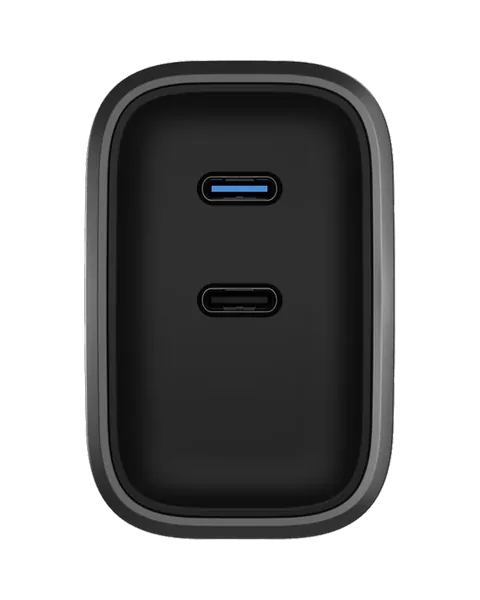
The fix is a matched pair: an adapter that speaks your phone's language and a cable that is never the toll booth. The Fermi45 offers PPS from 5 V to 20 V, above the 30 W a Pixel asks for, and Samsung Super Fast Charging 2.0 with 45 W from one port for the Galaxy S phones that take 45 W.
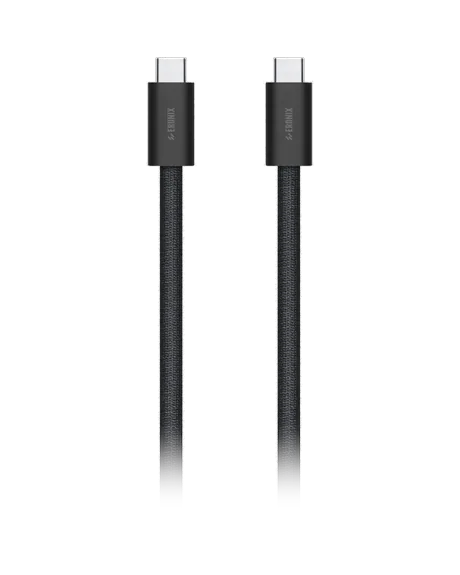
The Power Cable 240 W carries the e-marker chip a 5 A charge mode looks for, braided and 2 m long.
Step by step
- Unplug and replug the cable firmly at both ends.
- Try a different cable rated for your phone's charging current.
- Inspect the phone's port with a torch and remove lint with a wooden toothpick.
- Plug the adapter into a wall socket and let the phone cool out of its case.
- Restart the phone and test again with a known good adapter.
Questions people ask
Why does my phone charge slowly even with a fast charger?
Fast charging needs every part to agree. If the cable is rated lower than the adapter, the port is dirty, or the phone is warm, the phone limits its intake. Samsung, for example, says its 45 W mode needs both a 45 W adapter and a 5 A cable; a standard cable caps it at 25 W.
Is it bad if my phone charges slowly?
Slow charging does not harm the battery. It only takes longer. What matters is why it is slow. If the cause is a damaged cable or a hot phone, deal with that: replace the cable, and let the phone cool before charging. Heat, not slow charging, is the bigger enemy of battery life.
Why does charging slow down after 80 per cent?
Lithium-ion cells charge in two stages. Battery University describes a fast constant-current stage to about 4.20 V per cell, then a constant-voltage stage where the current tapers. That taper is deliberate and protects the cell, so the last part of the charge always takes longer than the first.
Can a laptop USB port charge my phone quickly?
Often not. Many laptop ports supply far less power than a wall adapter, and Google's Pixel guidance recommends a proper power outlet over a laptop USB-C port for faster charging. Some newer laptops have USB-C ports that support USB Power Delivery, but output varies widely, so a dedicated wall adapter is the reliable choice.
Sources
- Google Pixel Help: Charge your Pixel phone · accessed 22 Nov 2026
- Google Pixel Help: Fix a Pixel phone that won't charge or turn on · accessed 22 Nov 2026
- Samsung UK Support: How to use super fast charging on Galaxy S24 Ultra, S24+ and S24 · accessed 22 Nov 2026
- Apple Support: If a Charging On Hold notification appears on your iPhone or iPad · accessed 22 Nov 2026
- Battery University: BU-409 Charging lithium-ion · accessed 22 Nov 2026
USB-C Power Delivery
One connector, a negotiated contract.
Read →Explainer · 4 min readHow to fix 'charging slowly' warnings
The phone is telling you something specific. Five checks find what, in under five minutes.
Read →Explainer · 5 min readUSB Power Delivery explained in one page
How a charger and a phone agree on power before it flows, and how to read the label.
Read →Explainer · 5 min readPPS: why Samsung phones care about it
Three letters on a charger label decide whether a Galaxy charges at full speed or half.
Read →Explainer · 4 min readHotel room charging: making one socket work
One socket behind the bed, three devices, a 7 am meeting. Here is the plan.
Read →Explainer · 4 min readCan you use a Samsung charger on an iPhone?
Different logos, same plug, shared standard. What decides the speed is two letters: PD.
Read →