Journal · Comparison · 4 min read
Silicone vs foam ear tips
Side by side: seal, sound, sweat and lifespan, and the one number that settles it.
Two pairs of earbuds can share the same driver, the same chip and the same price, and still sound completely different in your ears. Very often the difference is a piece of rubber or foam the size of a fingertip.
Short answerFoam tips usually seal better, so they block more outside noise and keep more bass, but a pair lasts roughly 2 to 4 months. Silicone tips last much longer, wash easily and suit sweaty days. The deciding factor is seal, not material: the right size of silicone beats the wrong size of foam.
Foam and silicone compared, with the numbers that exist
Isolation first. SoundGuys, in its guide to ear tips, states plainly that silicone does not isolate sound as well as foam, because foam expands to fill the canal. Sony describes the polyurethane memory foam tips it sells for its flagship earbuds the same way: the softer material grips the canal wall and blocks more noise, especially at high frequencies. Not everyone agrees. Loop, which sells both, says its silicone tips give the same noise reduction as its foam ones. None of these sources publishes a decibel figure, so treat any precise isolation claim you see on a box with care.
Seal is where the measurable change lives. In a SoundGuys fit test, a poorly sealing tip lost much of its bass, and the higher frequencies sounded roughly twice as loud by comparison. Large tips blocked low-frequency noise best on their test fixture; small tips let much of it through. Apple makes the same point in its support notes: the seal between tip and canal affects both noise cancellation and bass, which is why AirPods Pro run a fit test.
Lifespan is the clearest number. Comply, a foam-tip maker, says its standard foam lasts about 2 to 3 months per pair on average. Logitech's support page puts the same brand's Ultra foam at 3 to 4 months. Both say earwax, skin oil and sweat shorten that. Silicone has no published figure, but every source here agrees it outlasts foam by a wide margin.
Comfort is personal. A Tom's Guide writer found foam raised comfortable wearing time from about two or three hours to about five. Others find foam's slow expansion feels like pressure.
| Measure | Foam | Silicone |
|---|---|---|
| Passive isolation | Usually higher | Usually lower; Loop reports parity |
| Bass | Fuller when sealed | Depends on the right size |
| Lifespan | 2–3 months (Comply); 3–4 months (Logitech) | Not published; longer |
| Care | Replace when worn | Rinse and dry |
Source: SoundGuys; Loop; Comply; Logitech Support
How a tip changes what you hear
An earbud's driver is tiny, and it cannot move enough air to make deep bass in open space. It relies on a sealed pocket of air between the driver and your eardrum. Seal that pocket and pressure builds, so bass appears. Break it and bass leaks out, while treble, which needs little pressure, carries on. The sound turns thin and harsh.
Silicone seals by shape: a flexible dome pressing against the canal. Foam seals by filling: you squeeze it, insert it, and it expands into the canal's exact contours. What Hi-Fi? likens the choice of tip material to fitting damping panels in a room: each absorbs different frequencies, and some tips soak up midrange and treble, leaving the bass to stand out. That can soften harshness, or dull detail.
Think of a pressure cooker lid. A well-fitted gasket of either material holds pressure. A cracked or wrong-sized one hisses, however good the cooker.
Which one suits Indian use
Hot, humid days and long commutes favour silicone for many people: it can be rinsed and dried, and it does not soak up sweat. Foam suits flights, noisy offices and train rides where passive isolation helps and you accept replacing tips every few months. If your earbuds have active noise cancelling, a good seal of either type lets the ANC work properly.
For gym sessions, many people prefer silicone because it can be rinsed straight after, while foam holds on to sweat. For sleep or long flights, some people prefer foam because it presses less on one point of the canal. If you cannot decide, keep both: silicone for daily wear, foam in the bag for travel.
What to check before you buy
Check how many sizes are in the box. Apple's AirPods Pro range uses sizes from XXS to L, and many brands include three or four. More sizes mean a better chance of a true seal.
Look for an in-app fit test. Apple calls it Ear Tip Fit Test or, on AirPods Pro 3, Acoustic Seal Test. Some Android earbuds offer something similar. Run it before deciding a pair sounds weak.
If you plan to fit foam tips, confirm the earbuds still close inside the charging case. A taller tip can stop the lid seating or the buds charging.
Try left and right separately. Apple notes the two ears may need different sizes.
Myth corner
Myth: foam tips always mean better sound. Foam often adds isolation and a fuller low end, but it also absorbs some treble, and a worn foam tip that springs back too quickly loses its seal. A fresh, well-sized silicone tip can sound cleaner than tired foam.
The right one for you
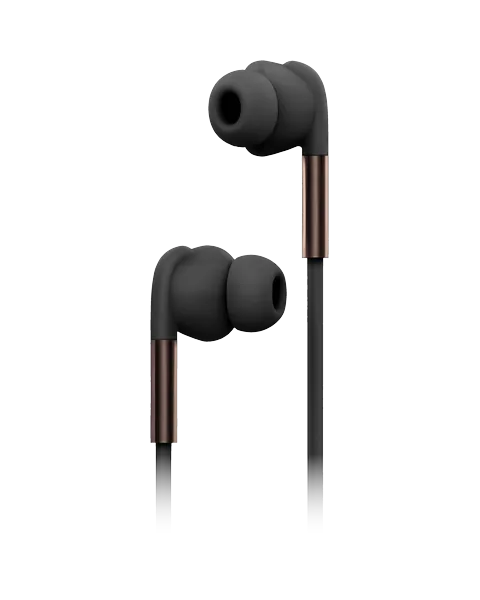
Fit comes first, so start with a choice of sizes. The Xenon USB-C earphone comes with ear tips in three sizes, so you can find the one that seals, and the seal is what lets its 14 mm dual titanium drivers deliver their bass. Its own 24-bit, 96 kHz DAC sits in the cable, and it plugs into every USB-C phone, iPhone 15 and later included, with nothing to pair and nothing to charge.
Step by step
- Start with the medium tip and run the earbud app's fit or seal test if it has one.
- Play a bass-heavy track and pause it to judge outside noise.
- Try one size up and one size down, checking each ear separately.
- Choose silicone for sweat and easy washing, foam for maximum passive isolation.
- Check the earbuds still seat and charge in the case with the new tips.
- Replace foam tips when they flake, tear or expand too quickly.
Questions people ask
How do I know if my ear tips are the right size?
A well-fitting tip feels secure without pressure, blocks noticeable outside noise even with music paused, and gives clear bass. If bass sounds thin or the earbud loosens when you talk or chew, try one size up. Apple's AirPods Pro include a seal test, and some other earbud apps offer similar checks.
Can I wash foam ear tips?
Silicone tips can be removed and washed. Foam needs gentler care: Logitech's support page advises cleaning Comply foam tips occasionally and storing them in a case. SoundGuys suggests cleaning earbuds and tips about once a week with daily use, and after every workout, letting them dry fully before they go back in the case.
Do foam ear tips improve noise cancelling?
Active noise cancelling works best when the earbud seals well, and foam's expanding fit often helps that seal. Apple notes that seal affects both noise cancellation and bass. A correctly sized silicone tip can achieve the same effect, so a good fit matters more than the material.
Why do foam tips wear out?
Foam slowly loses its ability to expand slowly and evenly, and it absorbs earwax, oil and sweat. Comply says its standard foam lasts about 2 to 3 months per pair, and Logitech lists 3 to 4 months for Comply Ultra foam. Replace them when they flake, tear or spring back quickly.
Sources
- How to find the best ear tips (SoundGuys) · 21 Nov 2024
- How your in-ears fit matters a lot (SoundGuys) · 3 Dec 2024
- Choose your AirPods Pro ear tips (Apple Support) · 7 Oct 2026, accessed 22 Nov 2026
- EP-NI1010 Noise Isolation Earbud Tips (Sony Asia) · Accessed 22 Nov 2026
- Difference between silicone and foam ear tips (Loop) · 18 Jun 2025
- How often should you replace ear tips? (Comply) · Accessed 22 Nov 2026
- What is the lifespan of my Comply Ultra foam tips? (Logitech Support) · Accessed 22 Nov 2026
- You could be spoiling the sound of your wireless earbuds (What Hi-Fi?) · 31 Jan 2025
- I tried foam ear tips with my AirPods Pro 2 (Tom's Guide) · 22 Jan 2023
Acoustics
What a driver actually does.
Read →Explainer · 4 min readEar tips: the cheapest upgrade in audio
Before you blame the earbuds, check the little silicone sleeve holding them in your ear.
Read →Explainer · 4 min readHow to get a proper seal with earbuds
Three seconds of technique: lift, twist, settle. Then one simple test to prove it worked.
Read →Comparison · 4 min readEarbuds vs neckbands vs over-ear
Five grams or nearly four hundred. Weight says a lot about what each style does best.
Read →Comparison · 5 min readANC earbuds vs ANC headphones
Same idea, two shapes. The deciding number is how long they stay on your head.
Read →Explainer · 5 min readWhat ANC can and cannot block
Why the bus engine fades but the conductor's voice does not, and what to check.
Read →